← Baza znanja Balanset-1A — vsa poglavja
Dva sistema ocenjevanja — ne zamenjujte ju
| Sistem | Enota | Kaj se ocenjuje | Kdaj uporabiti |
|---|---|---|---|
| ISO 10816 / 20816 | mm/s (efektivna hitrost vibracij, RMS) | Sestavljen stroj na svojih oporah | Terensko uravnoteženje, prevzem stroja |
| ISO 1940 / 21940-11 | g·mm (preostala neuravnoteženost), razredi G | Sam rotor | Stroji za uravnoteženje, tehnični list rotorja |
Naprava prikazuje oboje: vibracije v mm/s in preostalo neuravnoteženost v g·mm.
Ocena po vibracijah (mm/s)
Splošna lestvica (tipični industrijski stroji):
| Območje | RMS, mm/s | Pomen |
|---|---|---|
| A | do 1,4 | odlično — kot nov stroj |
| B | 1,4 – 2,8 | dobro — primerno za dolgotrajno obratovanje |
| C | 2,8 – 4,5 | sprejemljivo za omejen čas — načrtujte ukrepe |
| D | nad 4,5 | nesprejemljivo — tveganje poškodbe |
Terenske prilagoditve:
- Mulčerji/kosilnice: do 4,8 mm/s je normalno; na mehkih (vzmetnih) oporah do 7,1 mm/s; ob kmetijskem faktorju 1,2–1,3 velja “pod 8 mm/s je že dobro”. Loviti 0,5 mm/s na mulčerju nima smisla.
- Ventilatorji (ISO 14694): prožna montaža (gumijasti nosilci) ima svoje lastne meje — stroj s komponento 1x pri 3.05 mm/s na gumijastih nosilcih je ocenjen kot “dobro”. Včasih proizvajalec določi svojo lastno mejo (realni primer: 2.78 mm/s).
- Ne spremljajte le skupnih vibracij, temveč tudi komponento 1x: uravnoteženje zmanjšuje prav njo. Če so skupne vibracije 5 mm/s, komponenta 1x pa le 1 mm/s, dodatno uravnoteženje skoraj ničesar ne izboljša, saj preostale vibracije povzročajo drugi vzroki.
Ocena po preostali neuravnoteženosti (g·mm, razredi G)
Razred G označuje dopustno »specifično neuravnoteženost« ob upoštevanju vrtljajev. Višja kot je hitrost vrtenja, manjša je toleranca.
| Razred | Tipična uporaba |
|---|---|
| G16 | kardanske gredi, kmetijski rotorji |
| G6.3 | ventilatorji, bobni, jermenice, univerzalni elektromotorji — privzeta izbira |
| G2.5 | turbine, obdelovalni stroji, precizni rotorji |
| G1.0 / G0.4 | vretena, visokoprecizni rotorji |
Program ima kalkulator toleranc po ISO 1940: masa rotorja + vrtljaji + kakovostni razred → dovoljena preostala neuravnoteženost na ravnino. Polje »balancing tolerance« je neobvezno in služi le kot informacija.
Primeri iz resnične podpore:
- rotor ~80 kg pri 3000 rpm: G6.3 ≈ 802 g·mm na ravnino, G16 ≈ 2037 g·mm;
- vretena so uravnotežena na G1.0–G0.4 (v praksi podpore dosežen G0.1);
- morski/industrijski ventilator po uravnoteženju: 0.5–0.6 mm/s je odličen rezultat.
Kakšen je rezultat običajnega dela
Referenčne vrednosti »pred → po« iz resničnih primerov:
- mulčer: 25 → 3 mm/s in 40 → 11 mm/s (močno upognjen rotor — tam je 11 mm/s zgornja meja);
- mulčer Seppi: >50 mm/s → »deluje zelo tiho«;
- rotor drobilnika 4500 kg: 6 in 8 → 0,9 in 1,3 mm/s;
- univerzitetni ventilator: 4 in 7 → 0.5 in 0.6 mm/s;
- sladkorni razvlaknjevalnik 24 ton: 3,2 → 0,47 mm/s;
- kardanska gred: končno 0.5 mm/s.
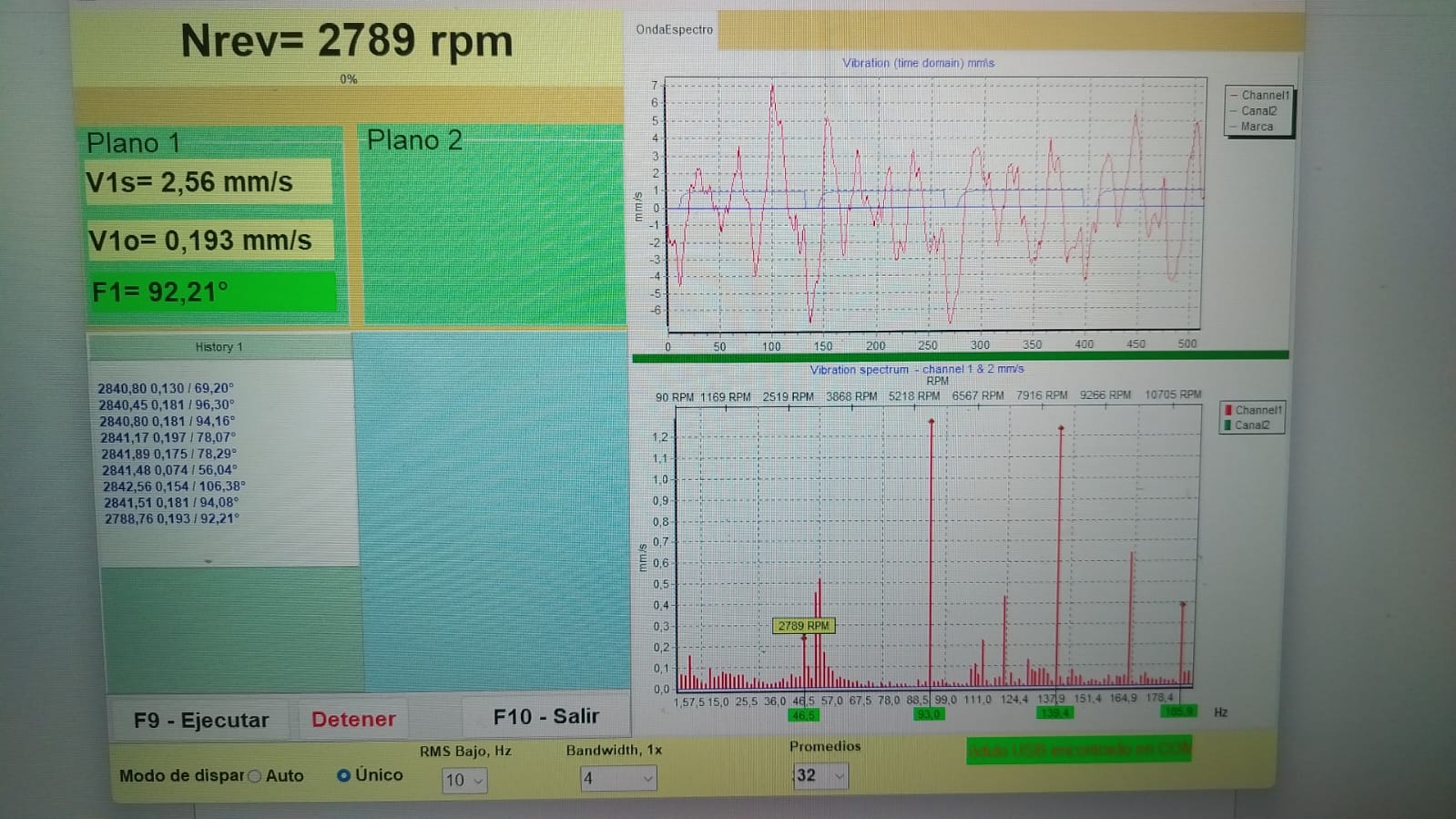
Padec 3–10× v 1–2 iteracijah je normalen za brezhiben stroj. Če po dveh iteracijah ni padca — ne privarjajte še več teže; preklopite na iskanje temeljnega vzroka (poglavje 07).
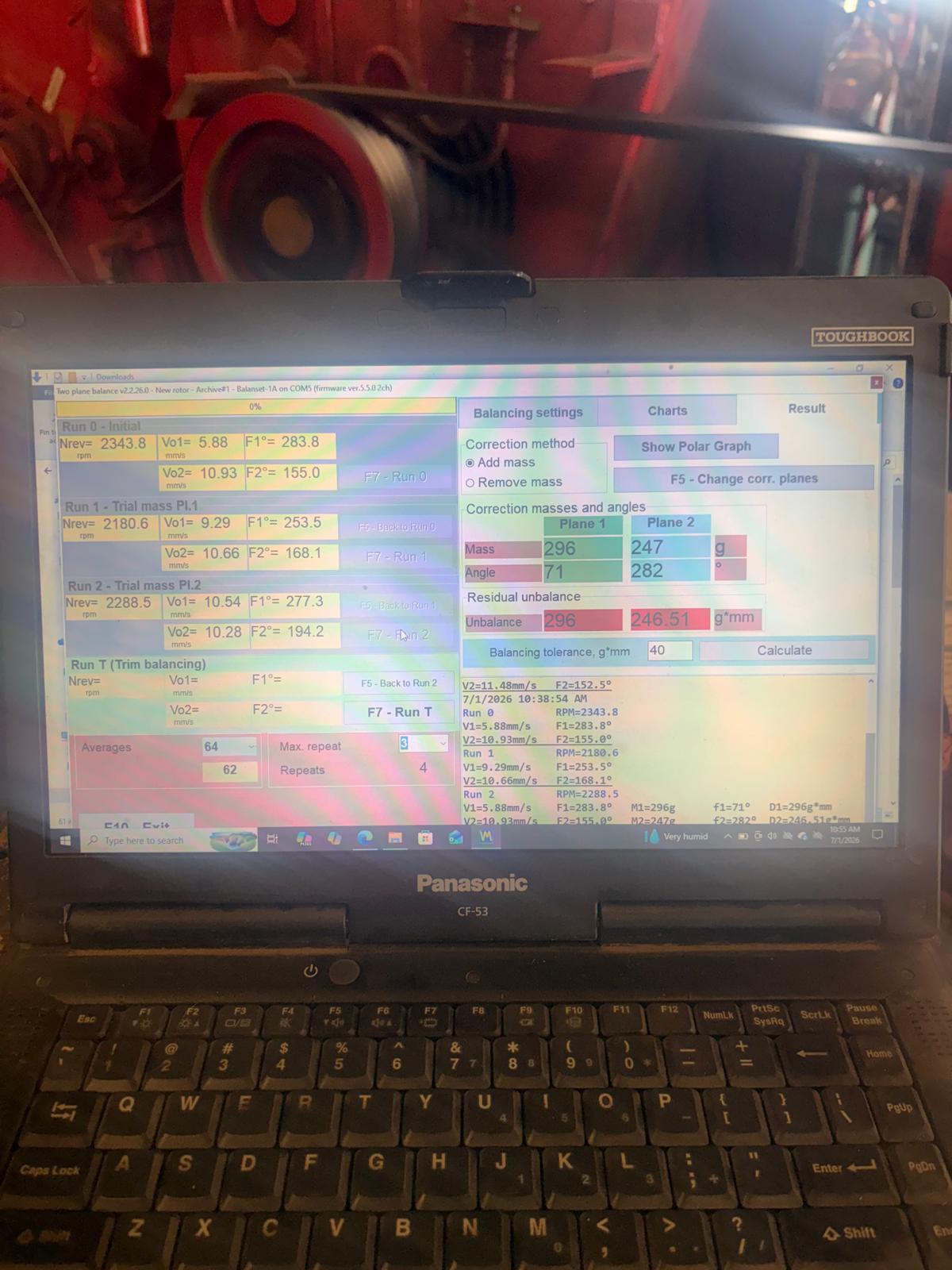
Poročilo
Program izdela poročilo o uravnoteženju. Predloge so v mapi reporttpl; uporabite lahko svojo glavo dopisa. Poročilo vsebuje začetne in končne vibracije, vrtljaje, mase in kote uteži ter preostalo neuravnoteženost. Za stranko to zadostuje kot dokument o opravljenem delu.
O »certifikatih«: napravi je priložen proizvajalčev kalibracijski certifikat. Če stranka zahteva certifikat akreditiranega laboratorija (ISO/IEC 17025), ga izda lokalni laboratorij za dodatno plačilo. Sama naprava ne potrebuje letne kalibracije.

