Wyważanie wirników na tokarkach: Ekonomiczne rozwiązanie poprawiające jakość produktu
W współczesnej produkcji, gdzie jakość produktu ma ogromne znaczenie, wyważanie wirnika staje się nieodłączną częścią procesu technologicznego. Jednak zakup specjalistycznego sprzętu do wyważania może być kosztowny dla małych i średnich przedsiębiorstw. W niniejszym artykule analizujemy możliwość wykorzystania tokarek do wirnik wyważanie, co może znacznie obniżyć koszty sprzętu i poprawić wydajność produkcji.
Tokarka jako narzędzie do wyważania
Tokarka, dzięki swojej konstrukcji i funkcjonalności, może być z powodzeniem wykorzystywana do wyważania wirników różnych typów i rozmiarów. Główną zaletą tego podejścia jest oszczędność kosztów, ponieważ nie ma potrzeby zakupu drogiego specjalistycznego sprzętu. Dodatkowo zastosowanie tokarki pozwala na wyważanie bezpośrednio podczas procesu produkcji wirnika, co skraca czas produkcji i poprawia jakość wyrobu.
Przygotowanie do wyważania
Przed rozpoczęciem procesu wyważania należy podjąć kilka kroków przygotowawczych:
- Wybór odpowiedniej tokarki: Tokarka powinna mieć wystarczającą sztywność i precyzję, aby zapewnić niezawodny montaż wirnika i dokładne pomiary drgań.
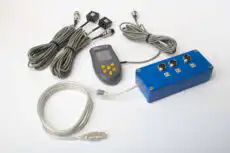
- Instalacja systemu pomiarowego: Aby zmierzyć wirnik wibracja na tokarce, przenośna wyważarka, taka jak Balanset-1A można z niego korzystać. Zawiera czujniki drgań, tachometr oraz oprogramowanie do analizy danych i obliczania masy korygującej.
- Radzenie sobie z własnym niewyważeniem wrzeciona: Nie musisz wyważać samego wrzeciona tokarki. Uruchom tokarkę z samym uchwytem (bez wirnika) i zarejestruj wektor drgań: to wartość bazowa pochodząca od wrzeciona i uchwytu. Jeśli stanowi ona znaczną część odczytu z wirnika, albo ją odejmij, albo — lepiej — użyj przebiegu indeksowego 180° (funkcja “Mandrel eccentricity elimination”, “F7 - Run Ecc”), która automatycznie oddziela wszystko, co nie obraca się razem z wirnikiem.
- Dopasowanie wirnika do maszyny, a nie do wrzeciona: Liczy się to, że siła niewyważenia wirnika wywołuje mierzalną odpowiedź na obudowach łożysk. Ciężka, sztywna tokarka reaguje bardzo słabo na gram niewyważenia, więc przy bardzo lekkim wirniku sygnał ginie w szumie, natomiast bardzo ciężki wirnik może przekroczyć dopuszczalne obciążenie uchwytu lub łożysk. W praktyce sprawdź, czy odpowiednio dobrana masa próbna daje czystą, powtarzalną zmianę amplitudy i fazy, zanim zaufasz jakiemukolwiek współczynnikowi wpływu.
- Sprawdzanie bicia promieniowego gumowej osłony przed wyważaniem: Na wale gumowanym niewyważenie masowe i bicie geometryczne okładziny to dwa różne defekty. Wyważanie znosi siłę składowej 1×; nie sprawi jednak, że mimośrodowa lub owalna okładzina stanie się okrągła. Przyłóż czujnik zegarowy do pokrytej powierzchni i obróć wał ręcznie: jeśli całkowite zmierzone bicie przekracza tolerancję produktu, najpierw przeszlifuj lub przetocz okładzinę do współosiowości — na tej samej tokarce — i dopiero wtedy wyważ. Wał, który jest wyważony, ale nadal ma bicie, będzie nadal powodował nierówności grubości, smugi i wahania docisku szczeliny (nip pressure), niezależnie od tego, jak niski będzie odczyt drgań.
W niniejszym artykule omówię nasze doświadczenia i metodologię w zakresie dynamiczne wyważanie gumowanych wałów na tokarce – rozwiązanie, co do którego, przyznaję, początkowo byłem sceptyczny ze względu na nieodłączną sztywność i znaczną masę takich maszyn. Zaskakująco, operacja przebiegła bezproblemowo, osiągając klasę jakości wyważenia G 6.3 (ISO 21940-11, dawniej ISO 1940-1).
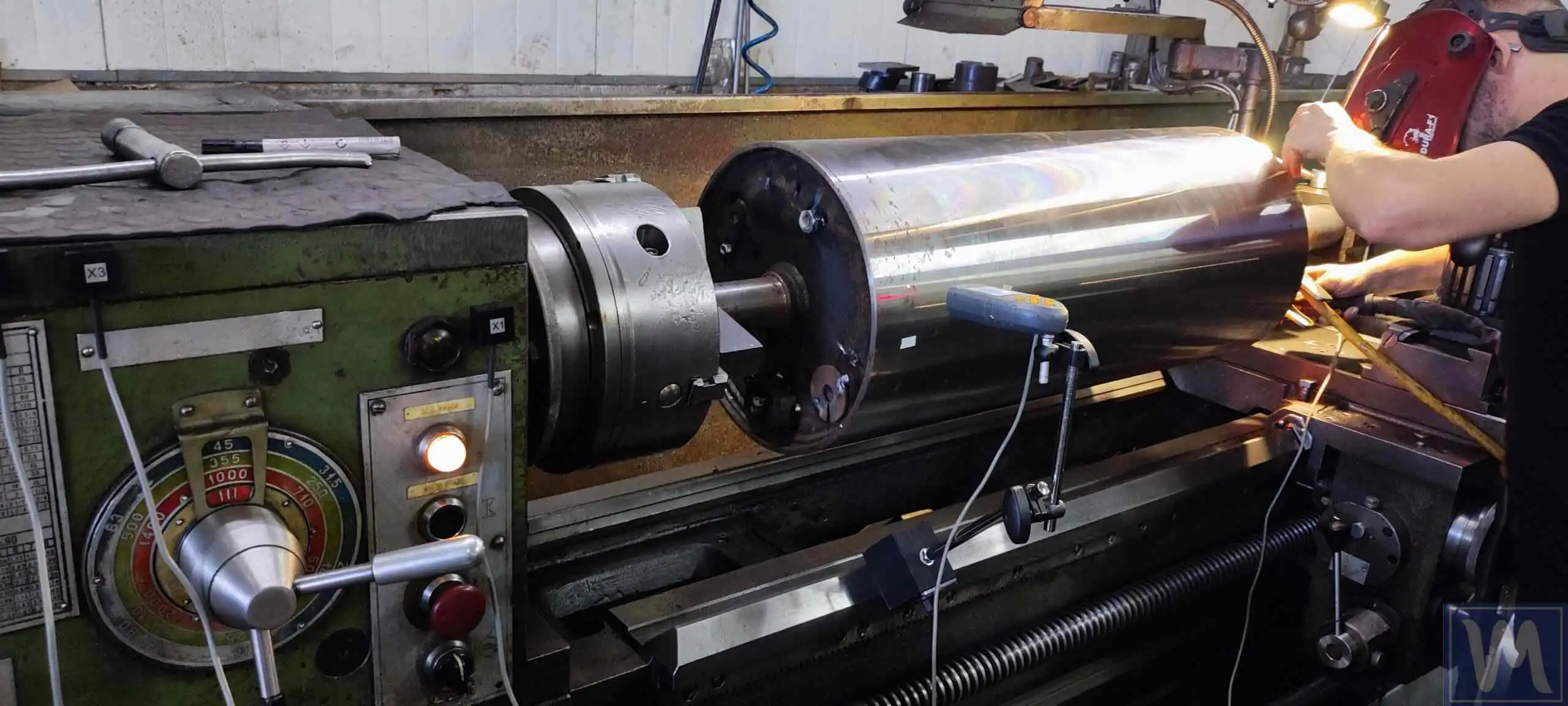
Proces wyważania wirnika na tokarce w teorii
Proces wyważania wirnika na tokarce obejmuje następujące kroki:
Zabezpieczanie wirnika
Wirnik jest bezpiecznie zamontowany w uchwycie tokarskim lub na centrach, aby zapewnić stabilność podczas procesu wyważania.
Instalacja czujników
Zamontuj po jednym czujniku drgań na każdą płaszczyznę korekcji — jeden na obudowie łożyska wrzeciennika, a drugi na obudowie konika lub podtrzymki — promieniowo, jak najbliżej łożyska, na czystej, obrobionej metalowej powierzchni za pomocą podstawy magnetycznej. Nie montuj czujników na łożu tokarki, fartuchu ani osłonie: sygnał 1× jest tam tłumiony i zdominowany przez konstrukcję. Przyklej taśma odblaskowa na metalowej powierzchni (końcówce wału lub uchwycie), a nie na gumowej powłoce, i skieruj tachometr laserowy prostopadle do niej.
Pomiar drgań początkowych
Początkowy poziom drgań mierzy się przy prędkości, która będzie używana przez całe zadanie. Wszystkie przebiegi — Run 0, przebiegi próbne i przebieg kontrolny — muszą być wykonane przy tej samej prędkości, ponieważ współczynniki wpływu są ważne wyłącznie dla prędkości, przy której zostały zmierzone.
Uwzględnianie mimośrodowości (bezpośrednio po Przebiegu 0)
Uchwyt i trzpień ekscentryczność dodaje do odczytu Run 0 wektor, który nie jest niewyważeniem, a korygowanie go byłoby błędem. Zajmij się tym przed masą próbną, nie po niej: zaznacz pole wyboru “Mandrel eccentricity elimination” w oprogramowaniu Balanset-1A, wykonaj Run 0, następnie obróć wirnik o 180° w uchwycie i naciśnij “F7 - Run Ecc”. Oprogramowanie przyjmuje połowę sumy wektorów jako mimośrodowość, a połowę różnicy wektorów jako rzeczywiste niewyważenie, i dopiero wtedy odblokowuje przebieg próbny. Wykonanie tego po tym, jak ciężarki korekcyjne zostały już przyspawane, oznacza konieczność ponownego przeliczenia i powtórzenia całej procedury.
Jak duży powinien być ciężarek próbny?
Bezpiecznym punktem wyjścia jest ciężarek, którego siła odśrodkowa mieści się w granicach 5–10% ciężaru wirnika. Jako wzór:
mtrial = k · M · g / (R · ω²), k = 0.05–0.10
gdzie M to masa wirnika (kg), g = 9.81 m/s², R to promień montażu ciężarka (m), a ω = 2π·obr./min/60 (rad/s). Przykład: wirnik o masie 50 kg przy 3000 obr./min z ciężarkiem przy R = 0,2 m daje m ≈ 0,07·50·9,81/(0,2·314²) ≈ 1.7 g — gramy, a nie setki gramów. To wygląda zaskakująco mało jak na wirnik 50 kg, ale sprawdź siłę: przy 3 000 obr/min te 1,7 g już ciągną z siłą F = m·R·ω² ≈ 34 N — około 7% masy wirnika. Zaczynanie od małej wartości to sedno sprawy: zwiększanie jest tanie, podczas gdy zbyt duży ciężarek stanowi realne obciążenie dla łożysk i spoin. Ta sama kontrola siły działa odwrotnie dla każdego ciężarka, który zamierzasz przykręcić.
Nie musisz obliczać tego ręcznie: oprogramowanie Balanset zawiera Funkcja First Trial Weight Estimator która rekomenduje zarówno masę, jak i kąt początkowy na podstawie danych Twojego wirnika, oraz Test uderzeniowy aby sprawdzić, że nie pracujesz w pobliżu częstotliwości własnej.
Dobry ciężarek próbny zmienia odczyt o co najmniej 20–30% amplitudy lub 20–30° fazy. Jeśli odpowiedź jest mniejsza, zwiększaj masę stopniowo — nigdy nie przechodź od razu do ciężkiego obciążnika, "żeby coś się wreszcie zadziało".
Instalowanie ciężarka próbnego
A ciężarek próbny o znanej masie jest montowany na wirniku, a drgania są mierzone ponownie. Przy wyważaniu dwupłaszczyznowym wykonuje się to kolejno w każdej płaszczyźnie — przebieg próbny z ciężarkiem w płaszczyźnie 1 (Run 1), następnie przebieg próbny z ciężarkiem w płaszczyźnie 2 (Run 2) — dzięki czemu oprogramowanie może zmierzyć wpływ każdej płaszczyzny korekcyjnej osobno.
Obliczanie mas korygujących
Oprogramowanie Balanset-1A analizuje wyniki pomiarów i oblicza niezbędne masy korekcyjne oraz kąty ich ustawienia.
Korekta masy wirnika
W zależności od konstrukcji wirnika i możliwości tokarki, korekta masy może być wykonana poprzez wiercenie, frezowanie, spawanie lub innymi metodami.
Weryfikacja wyważenia
Po wprowadzeniu poprawek przeprowadzany jest kontrolny pomiar drgań. W razie potrzeby proces jest powtarzany do momentu osiągnięcia wymaganego poziomu wyważenia.
Wyważanie dynamiczne w praktyce
- Częstotliwość obrotów: Zazwyczaj robocza prędkość obrotowa tych wałów mieści się w zakresie od 300 do 500 obrotów na minutę (obr./min). W tym konkretnym przypadku wyważanie przeprowadziliśmy przy 550 obr./min.
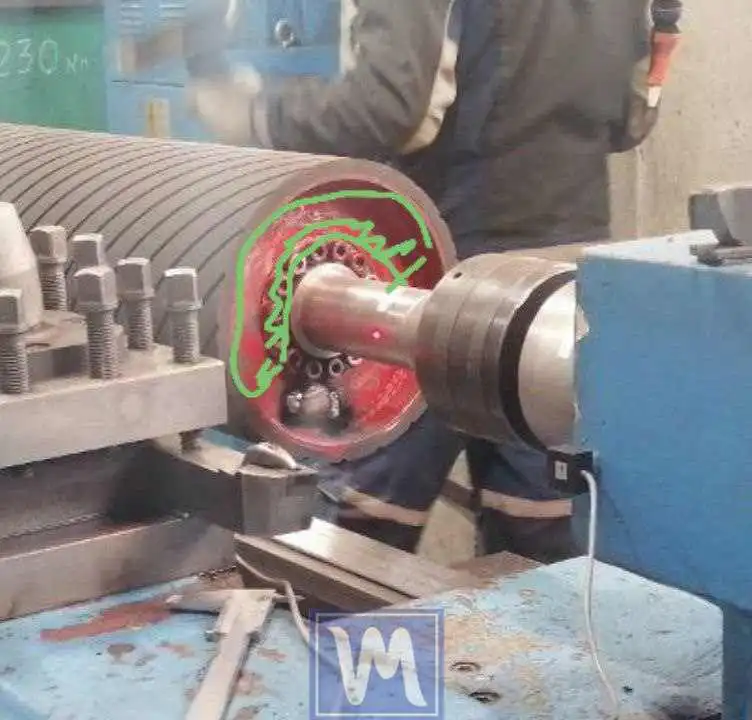
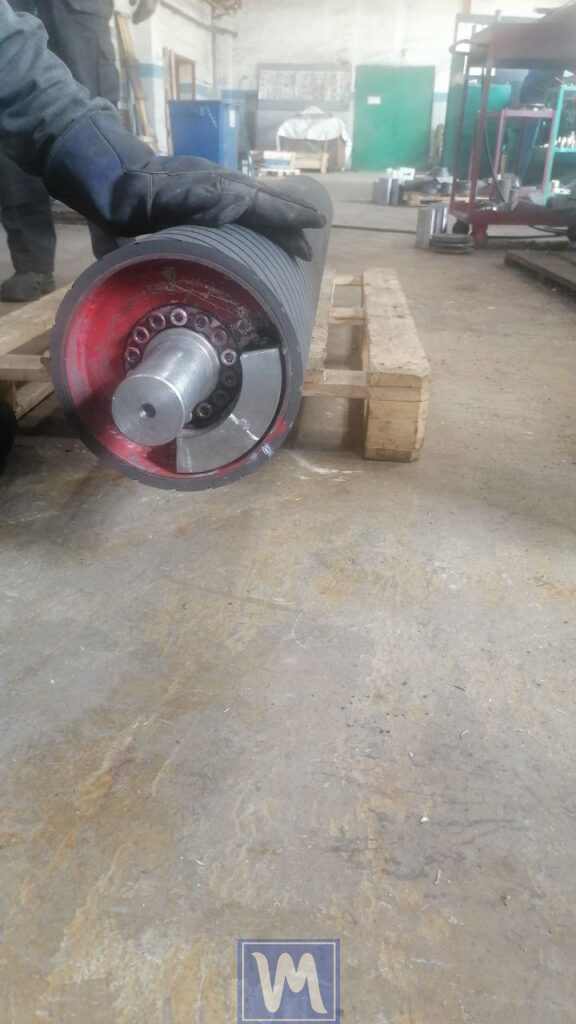
- Konfiguracja: Gumowany wał został zamontowany na tokarce, po czym nastąpiło strategiczne rozmieszczenie czujników, jak pokazano na załączonych zdjęciach.
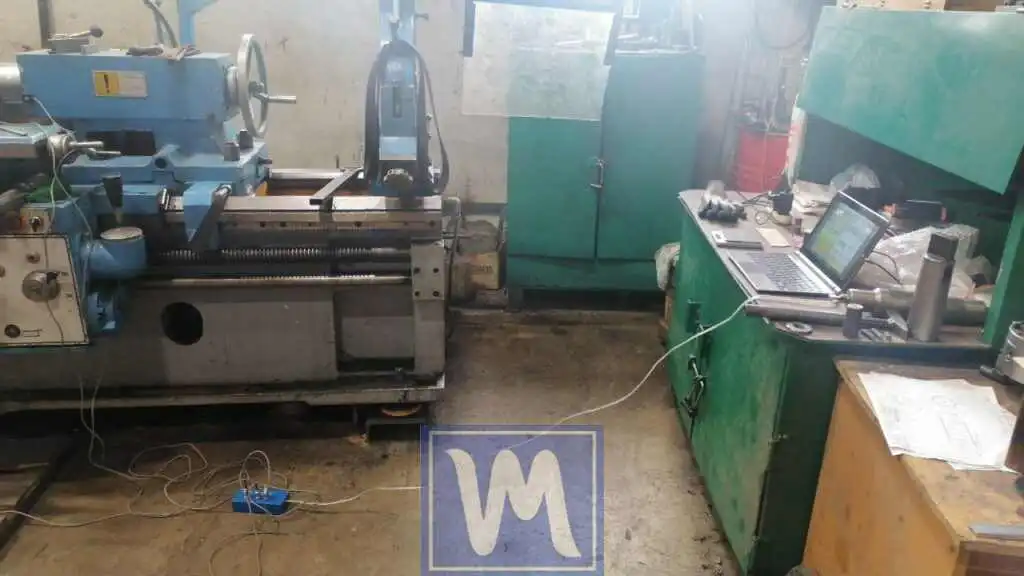
Dynamiczne wyważanie gumowanych wałów na miejscu przy użyciu tokarki
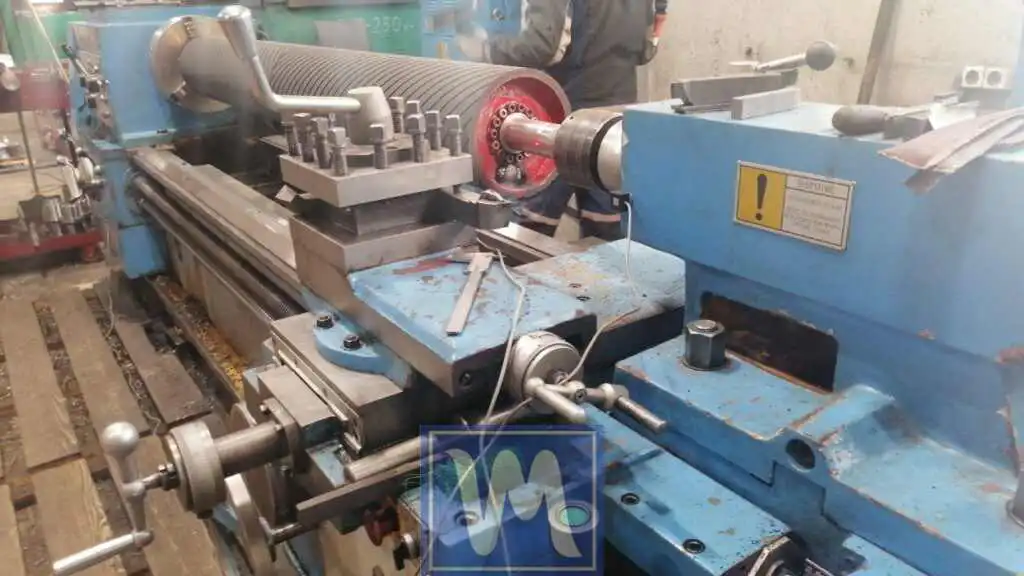
Dynamiczne wyważanie wałów gumowanych
- Początkowe odczyty wibracji: Przed wyważeniem wstępny odczyty drgań wynosiły 9 mm/s i 17 mm/s.
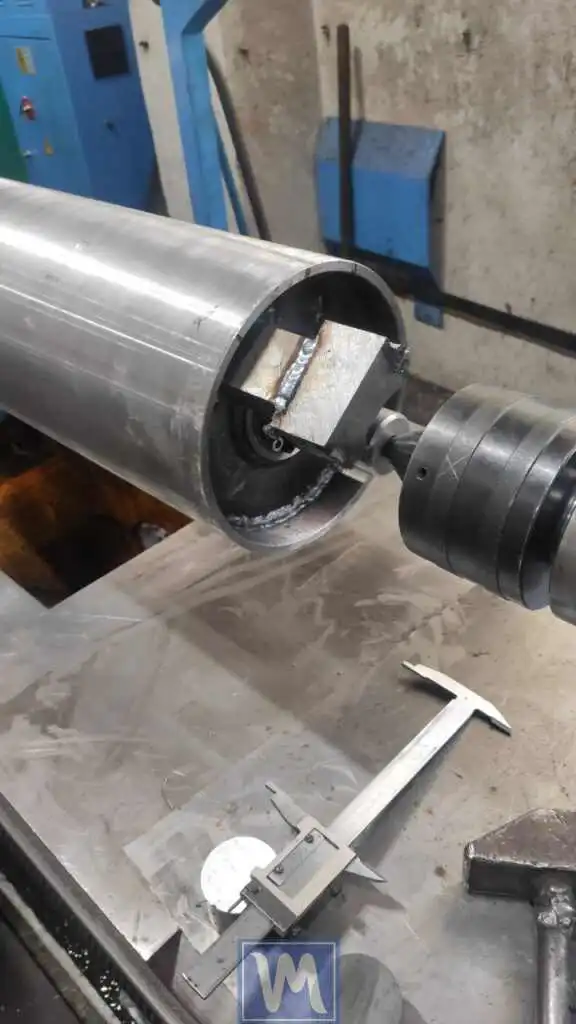
- Przebiegi próbne: Zadanie dwupłaszczyznowe wymaga kolejnych przebiegów próbnych w każdej płaszczyźnie — Run 1 z ciężarkiem w płaszczyźnie 1, następnie Run 2 z ciężarkiem w płaszczyźnie 2. Przyspawano obciążnik próbny o masie 340 gramów; zmienił on drgania i faza odczyty o mniej więcej 10%. Taką reakcję należy traktować jako absolutne minimum: dla wyraźnego, pewnego pomiaru zazwyczaj dążymy do obciążnika próbnego, który przesuwa wektor drgań o 25–50%, ale ciężka, sztywna tokarka reaguje bardzo słabo na gram masy próbnej.
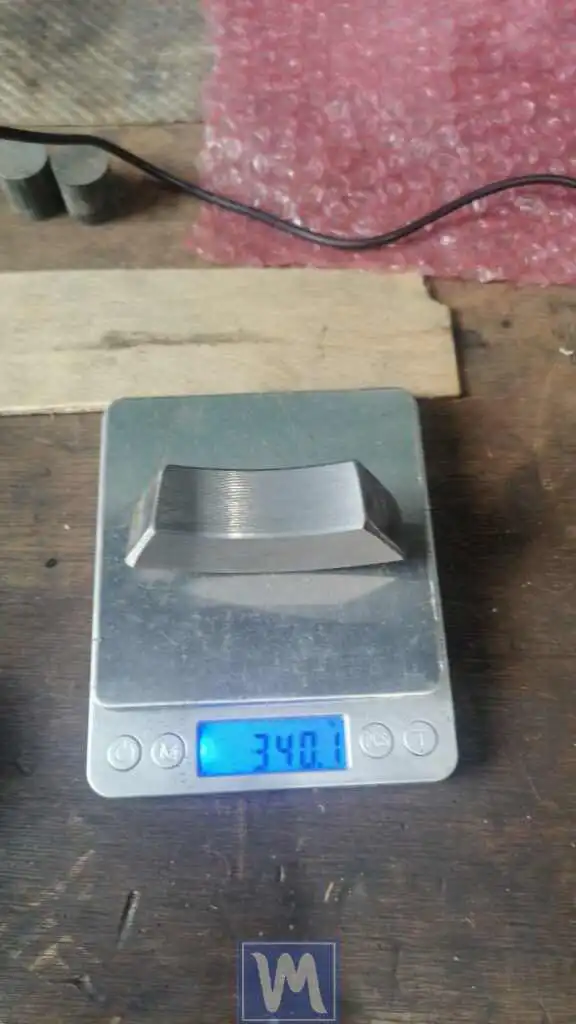
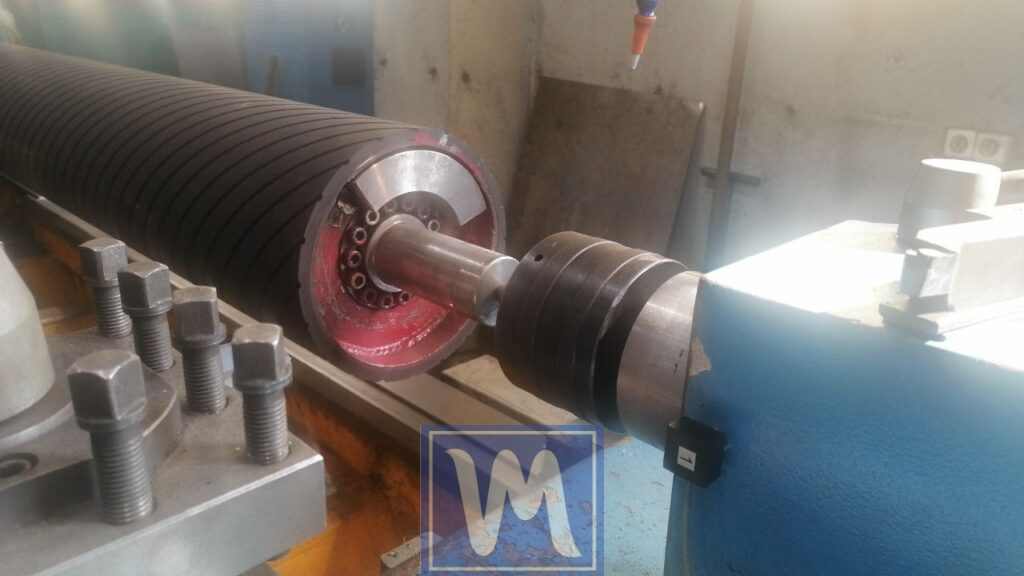
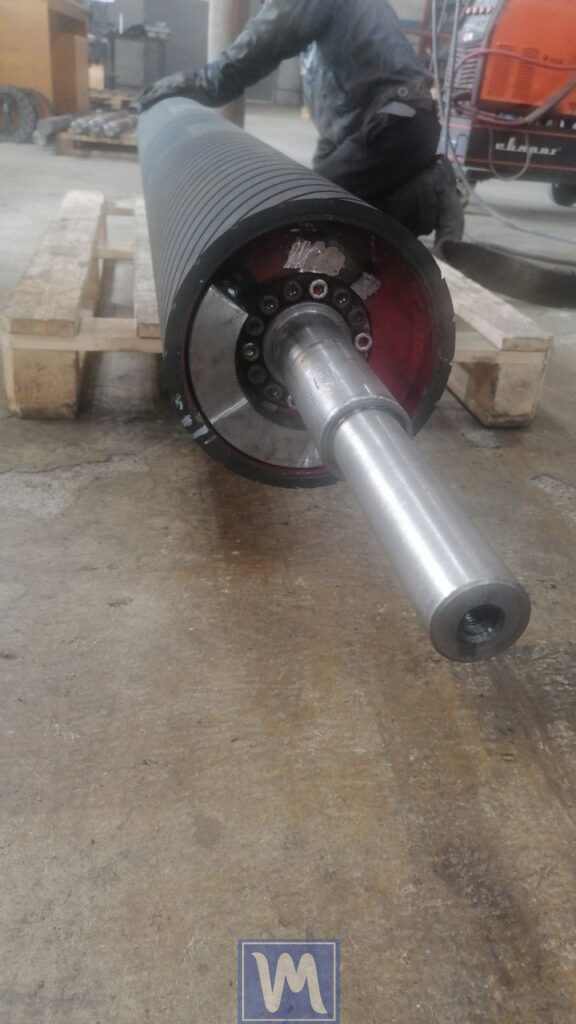
- Korekty wyważające: Po przebiegach próbnych z obciążnikiem próbnym nasz przyrząd Balanset-1A wskazał potrzebę dodania 3100 gramów po jednej stronie wału i 4300 gramów po drugiej, co odpowiada korektom w dwie płaszczyzny. Po tych korektach poziomy drgań spadły do 2 mm/s i 4 mm/s.
Dynamiczne wyważanie gumowanych wałów na miejscu przy użyciu tokarki
Dynamiczne wyważanie gumowanych wałów na miejscu przy użyciu tokarki
- Dostrajanie: Aby dalej zoptymalizować wyniki, dodaliśmy ciężarki 400 gramów i 700 gramów. Następnie przeprowadzono kolejną rundę precyzyjnego dostrajania, dodając 200 gramów i 400 gramów. Ze względu na ograniczenia przestrzenne ciężarki były spawane jeden na drugim. Ostatecznie te tymczasowe ciężarki zastąpiono precyzyjnie wyciętymi, estetycznymi przeciwwagami wykonanymi specjalnie dla tego wału. Ostateczne odczyty drgań wyniosły imponujące 0,1 mm/s w obu płaszczyznach (wartość zaokrąglona — poniżej 1 mm/s sam przyrząd wyświetla odczyty z dokładnością do trzech miejsc po przecinku).
Dynamiczne wyważanie gumowanych wałów na miejscu przy użyciu tokarki
Dynamiczne wyważanie gumowanych wałów na miejscu przy użyciu tokarki
Dynamiczne wyważanie gumowanych wałów na miejscu przy użyciu tokarki






Zalety wyważania wirników na tokarkach
Efektywność kosztowa
Użycie tokarki do wyważania pozwala uniknąć kosztów zakupu specjalistycznego sprzętu do wyważania.
Wygoda
Wyważanie może być wykonywane bezpośrednio podczas procesu produkcji wirnika, co skraca czas produkcji.
Wysoka jakość
Nowoczesne przenośne wyważarki, takie jak Balanset-1A, zapewniają wysoką dokładność wyważania, umożliwiając niski poziom wibracji i lepszą jakość produktu.
Wnioski
Wyważanie wirników na tokarkach jest skutecznym i ekonomicznym rozwiązaniem dla firm dążących do poprawy jakości produktów i obniżenia kosztów produkcji. Zastosowanie przenośnych wyważarek, takich jak Balanset-1A, sprawia, że proces ten jest prosty i dostępny nawet dla małych warsztatów.
Ważne uwagi
- Aby uzyskać najlepsze wyniki, zaleca się stosowanie wysokiej jakości przyrządów pomiarowych oraz ścisłe przestrzeganie procedury wyważania. Można oszacować dopuszczalne niewyważenie resztkowe do Twojego wirnika z naszym kalkulator niewyważenia resztkowego (ISO 1940).
Wyważanie wirników na tokarkach to krok w kierunku przyszłości produkcji, opłacalny dzięki poprawie jakości produktów, obniżeniu kosztów i zwiększeniu konkurencyjności firmy.

Nikolai Shelkovenko
Nikolai Shelkovenko jest inżynierem analizy wibracji oraz założycielem i prezesem firmy Vibromera. Od ponad 15 lat wyważa maszyny wirujące w terenie, a nie na stanowisku badawczym: mulczery, wentylatory przemysłowe, kruszarki, wirówki, wały i wrzeciona. To właśnie z tej pracy wyrosły przyrządy Balanset — zaprojektowano je jako narzędzie, które specjalista może zabrać do maszyny i obsłużyć samodzielnie, na miejscu, a nie jako sprzęt laboratoryjny. Vibromera powstała w 2017 roku, a od 2023 roku ma siedzibę w Porto w Portugalii. Tutaj odbywają się prace rozwojowe, montaż i wsparcie linii Balanset. Flagowym przyrządem jest Balanset-1A, przenośny analizator do wyważania w jednej i w dwóch płaszczyznach oraz do diagnostyki wibracji. Nikolai osobiście uczestniczy we wsparciu klientów, w rozwiązywaniu trudnych przypadków wyważania i w rozwoju oprogramowania. Pracuje z klientami na całym świecie, w każdym języku.


0 Komentarze