ISO 1940-2 — Erros de Balanceamento (agora ISO 21940-14)
O padrão histórico para avaliação de erros de balanceamento de rotores rígidos — fontes de erro sistemático, aleatoriamente variável e escalar no processo de balanceamento. Retirado e substituído pela ISO 21940-14:2012. O próprio vocabulário de balanceamento é definido na ISO 21940-2 (antiga ISO 1925) e é resumido abaixo.
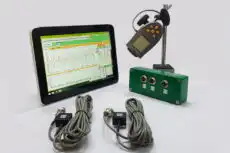
Os engenheiros da Vibromera ainda utilizam a taxonomia de erros da ISO 1940-2 ao investigar desbalanceamento residual que persiste após a correção com instrumentos portáteis como o Balanset-1A.






Termos-Chave de Balanceamento em Resumo
As definições mais importantes do vocabulário de balanceamento ISO — ISO 21940-2 (antiga ISO 1925) — os termos que todo profissional de balanceamento deve conhecer
Referência Completa de Terminologia
Todos os principais termos do vocabulário de balanceamento, ISO 21940-2 (antiga ISO 1925), organizados por categoria
| Termo | Definição | Significado |
|---|---|---|
| Rotor Rotor | Um corpo capaz de rotação em torno de um eixo definido. No contexto do balanceamento, inclui qualquer componente rotativo: eixos, impelidores, armaduras, tambores, fusos. | O objeto fundamental do balanceamento. Todos os outros termos descrevem propriedades do rotor ou ações sobre ele. |
| Rotor Rotor Rígido | Um rotor cujo desbalanceamento pode ser corrigido em quaisquer dois planos arbitrários e, após a correção, o desbalanceamento residual não muda significativamente em nenhuma velocidade até a velocidade máxima de serviço. | Determina que ISO 1940-1 (sistema de grau G) se aplica. O balanceamento em baixa velocidade em uma máquina de oficina é válido. A vasta maioria dos rotores industriais é rígida. |
| Rotor Rotor Flexível | Um rotor que se deforma elasticamente na sua velocidade de serviço de tal forma que seu estado de desbalanceamento muda. Deve ser corrigido na ou perto da velocidade de serviço em mais de dois planos. | Requer ISO 21940-12. Turbinas de alta velocidade, grandes geradores, compressores multietapa. Equipamento especializado de balanceamento de alta velocidade necessário. |
| Rotor Eixo do Eixo | A linha reta que une os centros dos munhões do eixo. O eixo geométrico de rotação. | O eixo de referência para todas as medições de desbalanceamento. O runout dos munhões afeta a precisão da medição. |
| Rotor Eixo Principal de Inércia | O eixo em torno do qual o rotor giraria livremente sem produzir força centrífuga ou momento. Coincide com o eixo do eixo para um rotor perfeitamente balanceado. | A incompatibilidade entre o eixo principal e o eixo do eixo é desbalanceamento. Toda correção visa alinhar esses dois eixos. |
| Rotor Centro de Massa (Gravidade) | O ponto onde toda a massa do rotor pode ser considerada concentrada. Para um rotor balanceado, fica exatamente no eixo do eixo. | Desbalanceamento estático = CoM deslocado do eixo do eixo. Desbalanceamento específico (e) = distância de deslocamento. |
| Rotor Velocidade de Serviço | A velocidade de rotação máxima na qual o rotor opera em sua aplicação pretendida. | Crítico para o cálculo de tolerância: Uper = (9 549 × G × M) / n. Use sempre a velocidade de serviço, não a velocidade de balanceamento. |
| Rotor Velocidade Crítica | Uma velocidade de rotação na qual um sistema rotor-mancal experimenta ressonância, resultando em vibração amplificada. | Determina a classificação rígido/flexível. Um rotor rígido opera bem abaixo da primeira velocidade crítica de flexão. |
| Termo | Definição | Fórmula / Unidades |
|---|---|---|
| Desbalanceamento Desbalanceamento | Condição em que o eixo principal de inércia não coincide com o eixo de rotação. Causa força centrífuga proporcional à massa, excentricidade e velocidade ao quadrado. | U = m × r (g·mm ou kg·m) |
| Desbalanceamento Desbalanceamento Estático | Eixo principal paralelo ao eixo de rotação, mas deslocado. Equivalente a uma única massa em um único raio. Detectável sem rotação (bicos de faca). Vibração em fase nos mancais. | Corrigido em 1 plano |
| Desbalanceamento Desbalanceamento de Momento | O eixo principal intersecta o eixo de rotação no centro de massa, mas está inclinado. Duas manchas pesadas iguais e opostas em planos diferentes criam um momento de balanço. Detectável apenas durante a rotação. | Corrigido em 2 planos |
| Desbalanceamento Desbalanceamento Dinâmico | O caso geral: eixo principal nem paralelo nem intersectando o eixo de rotação. Combinação de desbalanceamento estático e de momento. A condição mais comum no mundo real. | Corrigido em 2 planos |
| Desbalanceamento Desbalanceamento Específico | Razão entre o desbalanceamento e a massa do rotor. Representa a excentricidade — o deslocamento do centro de massa em relação ao eixo do rotor. Permite comparação de qualidade entre diferentes tamanhos de rotor. | e = U / M (µm ou g·mm/kg) |
| Desbalanceamento Desbalanceamento Residual | O desbalanceamento que permanece no rotor após o processo de balanceamento. Não deve exceder o valor admissível (Uper) para o Grau G. | Ures ≤ Uper |
| Desbalanceamento Desbalanceamento Inicial | O desbalanceamento de um rotor conforme recebido, antes de qualquer correção de balanceamento. Medido na primeira operação. | Valor de referência para o procedimento de balanceamento |
| Desbalanceamento Vetor de Desbalanceamento | A magnitude e a posição angular do desbalanceamento em um plano dado. Representado como um vetor polar com amplitude (g·mm) e ângulo de fase (°). | U∠θ (g·mm a ° da ref) |
| Termo | Definição | Notas Práticas |
|---|---|---|
| Processo Balanceamento | O processo de verificação e ajuste da distribuição de massa de um rotor para que o desbalanceamento residual esteja dentro de uma tolerância especificada. | Iterativo: medir → calcular → corrigir → verificar. |
| Processo Plano de Correção | Um plano perpendicular ao eixo do rotor no qual a massa é adicionada ou removida. A localização fisicamente acessível para a colocação da massa. | Pode diferir dos planos de tolerância (rolamento) — requer conversão geométrica. |
| Processo Plano de Tolerância | O plano no qual o desbalanceamento admissível é especificado — tipicamente o plano do rolamento. O desbalanceamento aqui afeta diretamente as cargas nos rolamentos. | Uper é especificado para planos de tolerância; deve ser convertido para planos de correção. |
| Processo Massa de Correção | A massa física (peso) adicionada ou removida do rotor em um raio e ângulo específicos dentro do plano de correção. | Adicionada: clip-on, parafusada, soldada, epóxi. Removida: perfuração, fresamento, retificação. |
| Processo Massa de teste | Uma massa conhecida temporariamente acoplada ao rotor em um raio e ângulo conhecidos durante o procedimento de balanceamento. Usada para determinar a resposta do rotor (coeficiente de influência). | O método de massa de teste do Balanset-1A: operar → fixar massa de teste → operar → software calcula a correção. |
| Processo Coeficiente de Influência | A mudança na resposta de vibração (amplitude e fase) em um ponto de medição causada por uma unidade de desbalanceamento em uma localização específica. Caracteriza a sensibilidade do rotor-rolamento. | Calculado a partir de operações com massa de teste. O balanceamento em dois planos requer uma matriz de influência 2×2. |
| Processo Balanceamento em Plano Único | Procedimento que corrige o desbalanceamento estático em um plano de correção. Apropriado para rotores curtos (tipo disco) com L/D < 0,5. | Balanset-1A Modo F2. Um sensor, um plano. |
| Processo Balanceamento em Dois Planos | Procedimento que corrige tanto o desbalanceamento estático quanto o de momento em dois planos de correção. Necessário para rotores alongados ou quando o desbalanceamento de momento é significativo. | Balanset-1A Modo F3. Dois sensores, dois planos. |
| Processo Balanceamento de Ajuste Fino | Um ajuste final e fino de balanceamento realizado em um rotor montado para compensar o desbalanceamento introduzido pela montagem (excentricidade de rotação do acoplamento, tolerâncias de ajuste). | Frequentemente realizado em campo na máquina instalada. |
| Processo Divisão de Massa | Distribuir uma massa de correção calculada entre duas localizações acessíveis adjacentes (por exemplo, dois furos de parafuso ou posições de pá) quando a posição angular exata não é acessível. | O Balanset-1A fornece cálculo automático de divisão de massa. |
| Termo | Definição | Comparação |
|---|---|---|
| Máquina Máquina de Balanceamento | Um dispositivo que mede o desbalanceamento em um rotor (magnitude e posição angular) para que a distribuição de massa possa ser corrigida. | Baseada em oficina (estacionária) ou em campo (portátil como Balanset-1A). |
| Máquina Máquina de Rolamento Flexível | A suspensão é muito flexível. O rotor opera acima da frequência natural da suspensão. Mede o deslocamento físico. Deve ser calibrada para cada geometria de rotor. | Menos comum hoje. Custo mais baixo, mas o operador deve recalibrar por rotor. Sensor de deslocamento. |
| Máquina Máquina de Rolamento Rígido | A suspensão é muito rígida. O rotor opera abaixo da frequência natural da suspensão. Os sensores medem a força centrífuga diretamente. Calibração permanente — aceita uma ampla gama de rotores sem configuração específica do rotor. | Tipo dominante na indústria moderna. Mais versátil, configuração mais rápida. Sensor de força. |
| Máquina Balanceador de Campo | Instrumento portátil usado para balancear rotores in situ (instalados na máquina) sem desmontagem. Usa sensores de vibração e um tacômetro. Método de massa de teste. | Balanset-1A (2 canais) e Balanset-4 (4 canais). Calculadora de tolerância ISO 1940 integrada. |
| Máquina Mandril (Eixo de Montagem) | Um eixo ou adaptador no qual um rotor é montado para balanceamento em uma máquina. Deve ser precisamente concêntrico e ter excentricidade de rotação desprezível. | A excentricidade do mandril é uma fonte importante de erro sistemático de balanceamento. Verificada por teste de indexação. |
| Termo | Definição | Fórmula / Padrão |
|---|---|---|
| Qualidade Grau de Qualidade de Balanceamento (G) | Uma classificação que especifica a velocidade máxima admissível do centro de massa do rotor. G = eper × ω. Os graus formam uma escala logarítmica com fator 2,5. | G 0,4 … G 4000 Definido em ISO 1940-1 |
| Qualidade Desbalanceamento Residual Admissível (Uper) | Desbalanceamento residual máximo permitido para o grau G especificado, massa do rotor e velocidade de serviço. O critério de aceitação. | Uper = (9549 × G × M) / n |
| Qualidade Tolerância de Balanceamento | A faixa na qual o desbalanceamento residual deve cair para atender ao requisito de qualidade especificado. Igual a Uper. | Especificado por plano após alocação |
| Qualidade Taxa de Redução de Desbalanceamento (URR) | Razão entre o desbalanceamento inicial e o desbalanceamento residual após um ciclo de correção. Indica a eficiência da máquina/procedimento de balanceamento. | URR = Uinicial / Uresidual Típico: 5–50× |
| Medição Ângulo de Fase | A posição angular do vetor de desbalanceamento em relação a uma marca de referência no rotor (medida por tacômetro). Combinada com a amplitude, define o vetor de desbalanceamento completo. | ° (graus, 0–360) |
| Medição Velocidade de Vibração (RMS) | Valor RMS da velocidade de vibração na caixa do rolamento. O parâmetro de medição padrão para avaliação da condição da máquina por ISO 10816. | mm/s RMS (10–1000 Hz) |
| Medição Teste de Indexação | Procedimento de verificação: rotacionar o rotor em um ângulo definido (ex. 180°) em relação aos suportes da máquina e remedir. Detecta erros de mandril e fixação. | Obrigatório para verificação formal por ISO 1940-1 Cap. 10 |
| Medição Desbalanceamento Residual Mínimo Alcançável (Umar) | O menor desbalanceamento residual alcançável em uma dada máquina de balanceamento para um rotor específico. Determinado pela sensibilidade da máquina, ruído de fundo e condições dos rolamentos. | Umar deve ser ≤ Uper para que a máquina seja adequada para o grau G exigido. |
O que é a ISO 1940-2?
ISO 1940-2:1997 (Vibração mecânica — Requisitos de qualidade de balanceamento de rotores rígidos — Parte 2: Erros de balanceamento) era o padrão internacional para identificar, avaliar e considerar os erros que surgem ao balancear rotores rígidos — desde desbalanceamento de mandril e eixo de acionamento até excentricidade de rotação de componentes e dispersão de instrumentação. Foi retirado e substituído por ISO 21940-14:2012 (Vibração mecânica — Balanceamento de rotores — Parte 14: Procedimentos para avaliação de erros de balanceamento), que estende os mesmos procedimentos a rotores com comportamento flexível. Nota: é frequentemente confundido com o vocabulário de balanceamento vocabulário — esse é um padrão diferente, ISO 21940-2 (antiga ISO 1925), cuja terminologia esta página resume abaixo.
Quando um engenheiro na Alemanha especifica "correção de desbalanceamento dinâmico para G 6.3 em dois planos", um técnico no Japão deve entender exatamente o que é necessário — a mesma condição do rotor, o mesmo procedimento de balanceamento e o mesmo critério de aceitação. O vocabulário de balanceamento da ISO — ISO 21940-2 (antiga ISO 1925) — torna isso possível ao fornecer um vocabulário único e internacionalmente acordado para toda a área.
A própria ISO 1940-2, em contraste, não era nem um dicionário nem uma especificação de tolerância — ela lidava com erros de balanceamento. Ela classificava as fontes de erro do processo de balanceamento como sistemáticos (magnitude e ângulo podem ser avaliados — por exemplo, desbalanceamento do mandril ou do eixo de acionamento, excentricidade de rotação radial e axial, chavetas e rasgos de chaveta, magnetismo residual, erros de remontagem e instrumentação), variáveis aleatoriamente (peças soltas, líquidos retidos, distorção térmica, resistência ao ar) e escalares (apenas a magnitude máxima pode ser estimada, o ângulo é indeterminado — por exemplo, folgas de montagem e tolerâncias de fabricação), e fornecia procedimentos para avaliá-los e levá-los em conta para que o desbalanceamento residual permaneça genuinamente dentro do valor admissível Uper de ISO 1940-1 (agora ISO 21940-11). Sua sucessora, a ISO 21940-14, mantém exatamente esse papel dentro da série ISO 21940.
Análise Detalhada dos Termos
A Distinção Rígido / Flexível
Esta é a classificação mais importante no balanceamento. A distinção determina tudo: qual padrão se aplica, que equipamento é necessário, quantos planos são necessários e em que velocidade o balanceamento deve ser realizado.
Um rotor cujo desbalanceamento pode ser corrigido em quaisquer dois planos arbitrários e, após a correção, o desbalanceamento residual não muda significativamente em nenhuma velocidade até a velocidade máxima de serviço. Teste prático: se a primeira frequência crítica velocidade crítica estiver bem acima da velocidade máxima de serviço (tipicamente > 1,5× ou mais), o rotor é rígido.
Um rotor que se deforma elasticamente em sua velocidade de serviço, de modo que seu estado de desbalanceamento muda. Deve ser balanceado na ou perto da velocidade de serviço em mais de dois planos. Aplica-se a: grandes turbogeradores, compressores de alta velocidade em múltiplos estágios, rolos longos de máquinas de papel em alta velocidade. Coberto pela ISO 21940-12.
A vasta maioria dos rotores industriais — motores elétricos, ventiladores, bombas, volantes, eixos — são rotores rígidos. O ISO 1940-1 O sistema de graus G aplica-se diretamente a rotores rígidos.
Os Três Tipos de Desbalanceamento
O vocabulário (ISO 21940-2) define três tipos fundamentais com base na relação geométrica entre o eixo principal de inércia e o eixo de rotação. Compreendê-los é essencial para selecionar o procedimento de balanceamento correto:
- Desbalanceamento estático produz uma força — ambos os rolamentos vibram em fase a 1× RPM. O rotor pode ser detectado como desbalanceado sem rotação (a gravidade o revela em arestas de faca). Um plano de correção é suficiente. Típico para rotores estreitos em forma de disco (L/D < 0,5): polias estreitas, impelidores de ventiladores, volantes finos.
- Desbalanceamento de momento produz uma momento — os rolamentos vibram 180° fora de fase a 1× RPM. A força resultante é zero (o centro de massa está no eixo), mas dois pontos pesados iguais e opostos em posições axiais diferentes criam um par de balanço. Detectável apenas enquanto gira. Exige dois planos de correção.
- Desbalanceamento dinâmico = estático + momento combinados. O caso geral para todos os rotores reais que não são perfeitamente simétricos. Tanto a força quanto o momento estão presentes. Os rolamentos vibram a 1× sem relação em fase nem exatamente 180° fora de fase. Exige balanceamento em dois planos.
Desbalanceamento Específico e a Conexão com o Grau G
Desbalanceamento específico (e = U/M) é a métrica-chave que permite a comparação universal da qualidade de balanceamento. Um rotor de 5 kg com desbalanceamento de 50 g·mm tem e = 10 µm. Um rotor de 500 kg com desbalanceamento de 5 000 g·mm também tem e = 10 µm — qualidade de balanceamento idêntica, apesar da diferença de massa de 100×.
Grau G estende isso ao incorporar a velocidade: G = e × ω, fornecendo um único número (mm/s) que caracteriza a qualidade de balanceamento independentemente da massa e da velocidade. Esta é a base do ISO 1940-1 sistema de tolerâncias.
Planos de Correção vs. Planos de Tolerância
O vocabulário faz uma distinção crítica que é frequentemente negligenciada na prática:
- Planos de tolerância = os planos dos mancais onde a vibração e as cargas dinâmicas são mais críticas. O desbalanceamento admissível Uper é especificado aqui.
- Planos de correção = localizações fisicamente acessíveis onde as massas podem ser colocadas (centro do ventilador, anéis de extremidade do motor, ombreiras do eixo). Frequentemente em posições axiais diferentes das dos mancais.
Convertendo Uper dos planos de tolerância para os planos de correção requer conhecimento da geometria do rotor. Para rotores assimétricos ou em balanço, essa conversão pode alterar significativamente as tolerâncias por plano. O Balanset-1A lida com essa conversão automaticamente quando as dimensões do rotor são inseridas.
Tipos de Máquina de Balanceamento
Os dois tipos fundamentais de máquina refletem diferentes princípios físicos de medição:
- Mancais flexíveis: Frequência natural da suspensão bem abaixo da velocidade de operação → a máquina mede deslocamento. Requer calibração para cada novo rotor. Historicamente significativo; em declínio de uso.
- Mancais rígidos: Frequência natural da suspensão bem acima da velocidade de operação → a máquina mede força. Calibração permanente — aceita diferentes rotores sem calibração individual. O tipo moderno dominante.
Instrumentos de balanceamento em campo como o Balanset-1A usem um princípio diferente: não são uma "máquina" no sentido da ISO, mas utilizam os próprios rolamentos e o suporte do rotor como sistema de medição, empregando o método da massa de teste (coeficiente de influência) para determinar a correção sem exigir uma máquina de balanceamento dedicada.
Referência Cruzada: Onde Cada Termo é Usado
ISO 1940-1 / ISO 21940-11: Usa todos os termos de tolerância e qualidade — grau G, Uper, tolerância de balanceamento, desbalanceamento residual. O principal consumidor desse vocabulário.
ISO 14694: Usa termos de rotor (rígido), termos de desbalanceamento e estende com categorias de aplicação BV específicas para ventiladores, graus de balanceamento e tabelas de limites de vibração.
ISO 10816 / ISO 20816: Usa termos de medição — velocidade de vibração, RMS, pontos de medição na caixa do mancal.
ISO 21940-12: Estende a definição de rotor flexível com procedimentos de múltiplas velocidades e múltiplos planos.
API 610 / API 617: Normas do setor de petróleo referenciam os graus G da ISO 1940 e a terminologia de desbalanceamento para especificações de bombas e compressores.
ISO 1940-2 → ISO 21940-14: Transição
A ISO 21940-14:2012 cancelou e substituiu formalmente a ISO 1940-2:1997, da qual constitui uma revisão técnica — a principal mudança sendo a extensão de sua aplicabilidade a rotores com comportamento flexível. O vocabulário de balanceamento seguiu um caminho separado: a ISO 1925 foi revisada como ISO 21940-2. A numeração ISO 21940 reflete a integração na abrangente série ISO 21940, que cobre todos os aspectos do balanceamento de rotores. As antigas designações ainda aparecem amplamente na literatura da indústria.
Norma oficial: ISO 21940-14:2012 (substitui ISO 1940-2) na ISO Store →
Perguntas Frequentes — ISO 1940-2
Erros de balanceamento, a transição ISO 21940 e a terminologia de balanceamento
▸ O que é a ISO 1940-2?
▸ Qual é a diferença entre desbalanceamento estático e dinâmico?
▸ Qual é a diferença entre um rotor rígido e um rotor flexível?
▸ O que é desbalanceamento residual?
▸ Qual é a diferença entre plano de correção e plano de tolerância?
▸ Máquina de balanceamento de rolamento macio vs. rolamento rígido?
▸ O que é desbalanceamento específico (excentricidade)?
Artigos Relacionados do Glossário
Fale a Língua — Com as Ferramentas Certas
Os balanceadores Vibromera implementam o vocabulário ISO diretamente: seleção de grau G, vetores de desbalanceamento, planos de correção, comparação residual vs. admissível — tudo em um único instrumento portátil.
Navegar Equipamentos de Balanceamento →
