ISO 1940-2 — Errores de balanceo (ahora ISO 21940-14)
La norma histórica para evaluar los errores de balanceo de rotores rígidos: fuentes de error sistemático, aleatorio y escalar en el proceso de balanceo. Retirada y reemplazada por la ISO 21940-14:2012. El vocabulario de balanceo en sí se define en la ISO 21940-2 (antes ISO 1925) y se resume a continuación.
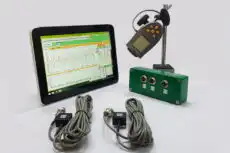
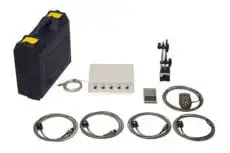
Los ingenieros de Vibromera siguen consultando la taxonomía de errores de la norma ISO 1940-2 al diagnosticar el desbalance residual que persiste después de la corrección con instrumentos portátiles como el Balanset-1A.




Términos clave de balanceo de un vistazo
Las definiciones más importantes del vocabulario de balanceo ISO — ISO 21940-2 (antes ISO 1925) — los términos que todo profesional del balanceo debe conocer
Referencia completa de terminología
Todos los términos principales del vocabulario de balanceo, ISO 21940-2 (antes ISO 1925), organizados por categoría
| Término | Definición | Significado |
|---|---|---|
| Rotor Rotor | Un cuerpo capaz de rotar alrededor de un eje definido. En el contexto del balanceo, incluye cualquier componente rotativo: ejes, impulsores, armaduras, tambores, husillos. | El objeto fundamental del balanceo. Todos los demás términos describen propiedades del rotor o acciones sobre él. |
| Rotor Rotor rígido | Un rotor cuyo desbalance puede corregirse en cualquier par de planos arbitrarios y, después de la corrección, el desbalance residual no cambia significativamente a ninguna velocidad hasta la velocidad de servicio máxima. | Determina que ISO 1940-1 (sistema de grados G) aplica. El balanceo a baja velocidad en una máquina de taller es válido. La gran mayoría de los rotores industriales son rígidos. |
| Rotor Rotor flexible | Un rotor que se deforma elásticamente a su velocidad de servicio de tal manera que su estado de desbalance cambia. Debe corregirse a o cerca de la velocidad de servicio en más de dos planos. | Requiere ISO 21940-12. Turbinas de alta velocidad, generadores grandes, compresores multietapa. Se necesita equipo especializado de balanceo a alta velocidad. |
| Rotor Eje del eje | La línea recta que une los centros de los muñones del eje. El eje geométrico de rotación. | El eje de referencia para todas las mediciones de desbalance. La excentricidad de giro de los muñones afecta la precisión de la medición. |
| Rotor Eje principal de inercia | El eje alrededor del cual el rotor rotaría libremente sin producir fuerza centrífuga ni momento. Coincide con el eje del eje para un rotor perfectamente balanceado. | La discrepancia entre el eje principal y el eje del eje es desbalance. Toda corrección busca alinear estos dos ejes. |
| Rotor Centro de masa (gravedad) | El punto donde toda la masa del rotor puede considerarse concentrada. Para un rotor balanceado, se encuentra exactamente en el eje del eje. | Desbalance estático = CoM desplazado del eje del eje. Desbalance específico (e) = distancia de desplazamiento. |
| Rotor Velocidad de servicio | La velocidad de rotación máxima a la que el rotor opera en su aplicación prevista. | Crítico para el cálculo de tolerancia: Uper = (9 549 × G × M) / n. Siempre usar la velocidad de servicio, no la velocidad de balanceo. |
| Rotor Velocidad crítica | Una velocidad de rotación a la que un sistema rotor-rodamiento experimenta resonancia, resultando en una vibración enormemente amplificada. | Determina la clasificación rígido/flexible. Un rotor rígido opera muy por debajo de la primera velocidad crítica de flexión. |
| Término | Definición | Fórmula / Unidades |
|---|---|---|
| Desbalance Desbalance | Condición en la que el eje principal de inercia no coincide con el eje de rotación. Causa fuerza centrífuga proporcional a la masa, la excentricidad y el cuadrado de la velocidad. | U = m × r (g·mm o kg·m) |
| Desbalance Desbalance estático | Eje principal paralelo al eje de rotación pero desplazado. Equivalente a una masa única en un radio único. Detectable sin rotación (cuchillas). Vibración de rodamientos en fase. | Corregido en 1 plano |
| Desbalance Desbalance de par | El eje principal intersecta el eje de rotación en el centro de masas, pero está inclinado. Dos puntos pesados iguales y opuestos en planos diferentes crean un momento de balanceo. Solo detectable mientras gira. | Corregido en 2 planos |
| Desbalance Desbalance dinámico | El caso general: el eje principal no es paralelo ni intersecta el eje de rotación. Combinación de desbalance estático y de par. La condición más común en la práctica. | Corregido en 2 planos |
| Desbalance Desbalance específico | Relación entre el desbalance y la masa del rotor. Representa la excentricidad: el desplazamiento del centro de masas respecto al eje del rotor. Permite comparar la calidad entre rotores de diferentes tamaños. | e = U / M (µm o g·mm/kg) |
| Desbalance Desbalance residual | El desbalance que permanece en un rotor después del proceso de balanceo. No debe exceder el valor permisible (Uper) para el Grado G. | Ures ≤ Uper |
| Desbalance Desbalance inicial | El desbalance de un rotor tal como se recibe, antes de cualquier corrección de balanceo. Medido en la primera ejecución. | Valor de referencia para el procedimiento de balanceo |
| Desbalance Vector de desbalance | La magnitud y la posición angular del desbalance en un plano dado. Representado como un vector polar con amplitud (g·mm) y ángulo de fase (°). | U∠θ (g·mm a ° desde ref) |
| Término | Definición | Notas prácticas |
|---|---|---|
| Proceso Balanceo | El proceso de verificar y ajustar la distribución de masa de un rotor para que el desbalance residual se mantenga dentro de una tolerancia especificada. | Iterativo: medir → calcular → corregir → verificar. |
| Proceso Plano de corrección | Un plano perpendicular al eje del rotor en el que se añade o retira masa. La ubicación físicamente accesible para la colocación de pesos. | Puede diferir de los planos de tolerancia (rodamientos): requiere conversión geométrica. |
| Proceso Plano de tolerancia | El plano en el que se especifica el desbalance permisible: típicamente el plano del rodamiento. El desbalance aquí afecta directamente las cargas en los rodamientos. | Uper se especifica para planos de tolerancia; debe convertirse a planos de corrección. |
| Proceso Masa de corrección | La masa física (peso) que se añade o retira del rotor en un radio y ángulo específicos dentro del plano de corrección. | Añadida: con clip, atornillada, soldada, con epoxi. Retirada: perforación, fresado, rectificado. |
| Proceso Peso de prueba | Una masa conocida unida temporalmente al rotor en un radio y ángulo conocidos durante el procedimiento de balanceo. Se utiliza para determinar la respuesta del rotor (coeficiente de influencia). | El método de peso de prueba del Balanset-1A: ejecutar → fijar peso de prueba → ejecutar → el software calcula la corrección. |
| Proceso Coeficiente de influencia | El cambio en la respuesta de vibración (amplitud y fase) en un punto de medición causado por un desbalance unitario en una ubicación específica. Caracteriza la sensibilidad del rotor-rodamiento. | Calculado a partir de ejecuciones con peso de prueba. El balanceo en dos planos requiere una matriz de influencia de 2×2. |
| Proceso Balanceo en un solo plano | Procedimiento que corrige el desbalance estático en un plano de corrección. Adecuado para rotores cortos (tipo disco) con L/D < 0.5. | Balanset-1A Modo F2. Un sensor, un plano. |
| Proceso Balanceo en dos planos | Procedimiento que corrige tanto el desbalance estático como el de par en dos planos de corrección. Requerido para rotores alargados o cuando el desbalance de par es significativo. | Balanset-1A Modo F3. Dos sensores, dos planos. |
| Proceso Balanceo de ajuste | Un ajuste final y fino de balanceo realizado en un rotor ensamblado para compensar el desbalance introducido por el ensamblaje (excentricidad de giro del acoplamiento, tolerancias de ajuste). | A menudo se realiza en campo en la máquina instalada. |
| Proceso Distribución de pesos | Distribuir una masa de corrección calculada entre dos ubicaciones accesibles adyacentes (por ejemplo, dos agujeros para pernos o posiciones de álabes) cuando la posición angular exacta no es accesible. | El Balanset-1A proporciona cálculo automático de división de peso. |
| Término | Definición | Comparación |
|---|---|---|
| Máquina Máquina de balanceo | Un dispositivo que mide el desbalance en un rotor (magnitud y posición angular) para que se pueda corregir la distribución de masa. | Basada en taller (estacionaria) o en campo (portátil como Balanset-1A). |
| Máquina Máquina de rodamientos blandos | La suspensión es muy flexible. El rotor gira por encima de la frecuencia natural de la suspensión. Mide el desplazamiento físico. Debe calibrarse para cada geometría de rotor. | Menos común hoy en día. Menor costo, pero el operador debe recalibrar por rotor. Detección de desplazamiento. |
| Máquina Máquina de rodamientos duros | La suspensión es muy rígida. El rotor gira por debajo de la frecuencia natural de la suspensión. Los sensores miden la fuerza centrífuga directamente. Calibración permanente: acepta una amplia gama de rotores sin configuración específica del rotor. | Tipo dominante en la industria moderna. Más versátil, configuración más rápida. Detección de fuerza. |
| Máquina Balanceador de campo | Instrumento portátil utilizado para balancear rotores in situ (instalados en la máquina) sin desmontaje. Utiliza sensores de vibración y un tacómetro. Método de peso de prueba. | Balanset-1A (2 canales) y Balanset-4 (4 canales). Calculadora de tolerancia ISO 1940 integrada. |
| Máquina Mandril (Árbol) | Un eje o adaptador sobre el cual se monta un rotor para balancearlo en una máquina. Debe ser concéntrico con precisión y tener una excentricidad de giro despreciable. | La excentricidad del mandril es una fuente importante de error sistemático de balanceo. Verificada mediante prueba de indexación. |
| Término | Definición | Fórmula / Norma |
|---|---|---|
| Calidad Grado de calidad de balanceo (G) | Una clasificación que especifica la velocidad máxima permisible del centro de masa del rotor. G = eper × ω. Los grados forman una escala logarítmica con factor 2.5. | G 0.4 … G 4000 Definido en ISO 1940-1 |
| Calidad Desbalance residual permisible (Uper) | Desbalance residual máximo permitido para el grado G especificado, la masa del rotor y la velocidad de servicio. El criterio de aceptación. | Uper = (9549 × G × M) / n |
| Calidad Tolerancia de balanceo | El rango dentro del cual debe caer el desbalance residual para cumplir con el requisito de calidad especificado. Igual a Uper. | Especificado por plano después de la asignación |
| Calidad Relación de reducción de desbalance (URR) | Relación entre el desbalance inicial y el desbalance residual después de un ciclo de corrección. Indica la eficiencia de la máquina/procedimiento de balanceo. | URR = Uinicial / Uresidual Típico: 5–50× |
| Medición Ángulo de fase | La posición angular del vector de desbalance con respecto a una marca de referencia en el rotor (medida por tacómetro). Combinada con la amplitud, define el vector de desbalance completo. | ° (grados, 0–360) |
| Medición Velocidad de vibración (RMS) | Valor cuadrático medio de la velocidad de vibración en el soporte del rodamiento. El parámetro de medición estándar para la evaluación de la condición de la máquina según ISO 10816. | mm/s RMS (10–1000 Hz) |
| Medición Prueba de indexación | Procedimiento de verificación: girar el rotor un ángulo definido (p. ej. 180°) con respecto a los soportes de la máquina y volver a medir. Detecta errores del mandril y del dispositivo de sujeción. | Requerido para la verificación formal según ISO 1940-1 Cap. 10 |
| Medición Desbalance residual mínimo alcanzable (Umar) | El desbalance residual más bajo alcanzable en una máquina de balanceo dada para un rotor específico. Determinado por la sensibilidad de la máquina, el nivel de ruido y las condiciones de los rodamientos. | Umar debe ser ≤ Uper para que la máquina sea adecuada para el grado G requerido. |
¿Qué es la ISO 1940-2?
ISO 1940-2:1997 (Vibración mecánica — Requisitos de calidad de balanceo de rotores rígidos — Parte 2: Errores de balanceo) fue la norma internacional para identificar, evaluar y tener en cuenta los errores que surgen al balancear rotores rígidos: desde el desbalance del mandril y el eje de transmisión hasta la excentricidad de giro de los componentes y la dispersión de los instrumentos. Ha sido retirada y reemplazada por ISO 21940-14:2012 (Vibración mecánica — Balanceo de rotores — Parte 14: Procedimientos para evaluar errores de balanceo), que extiende los mismos procedimientos a rotores con comportamiento flexible. Nota: a menudo se confunde con el vocabulario de balanceo vocabulario — esa es una norma diferente, ISO 21940-2 (antes ISO 1925), cuya terminología esta página resume a continuación.
Cuando un ingeniero en Alemania especifica "corrección de desbalance dinámico a G 6.3 en dos planos", un técnico en Japón debe entender exactamente lo que se requiere: la misma condición del rotor, el mismo procedimiento de balanceo y el mismo criterio de aceptación. El vocabulario de balanceo ISO — ISO 21940-2 (antes ISO 1925) — hace esto posible al proporcionar un vocabulario único e internacionalmente acordado para todo el campo.
La norma ISO 1940-2 en sí, por el contrario, no era ni un diccionario ni una especificación de tolerancias; trataba sobre errores de balanceo. Clasificó las fuentes de error del proceso de balanceo como sistemáticas (la magnitud y el ángulo pueden evaluarse, p. ej., desbalance del mandril o del eje de transmisión, excentricidad de giro radial y axial, chavetas y cuñeros, magnetismo residual, errores de reensamblaje e instrumentación), aleatorias variables (piezas sueltas, líquidos atrapados, distorsión térmica, rozamiento por aire) y escalares (solo se puede estimar la magnitud máxima, el ángulo es indeterminado, p. ej., juegos de montaje y tolerancias de fabricación), y dio procedimientos para evaluarlos y tenerlos en cuenta para que el desbalance residual se mantenga genuinamente dentro del valor permisible Uper de ISO 1940-1 (ahora ISO 21940-11). Su sucesora, la ISO 21940-14, mantiene exactamente este papel dentro de la serie ISO 21940.
Análisis detallado de términos
La distinción rígido / flexible
Esta es la clasificación más importante en el balanceo. La distinción determina todo: qué norma aplica, qué equipo se necesita, cuántos planos se requieren y a qué velocidad debe realizarse el balanceo.
Un rotor cuyo desbalance puede corregirse en cualquier par de planos arbitrarios y, después de la corrección, el desbalance residual no cambia significativamente a ninguna velocidad hasta la velocidad máxima de servicio. Prueba práctica: si la primera velocidad crítica velocidad crítica está muy por encima de la velocidad máxima de servicio (típicamente > 1.5× o más), el rotor es rígido.
Un rotor que se deforma elásticamente a su velocidad de servicio de tal manera que su estado de desbalance cambia. Debe balancearse a o cerca de la velocidad de servicio en más de dos planos. Aplica a: grandes turbogeneradores, compresores de alta velocidad de múltiples etapas, rodillos largos de máquinas de papel a alta velocidad. Cubiertos por la ISO 21940-12.
La inmensa mayoría de los rotores industriales, motores eléctricos, ventiladores, bombas, volantes de inercia, ejes, son rotores rígidos. La ISO 1940-1 El sistema de grados G aplica directamente a rotores rígidos.
Los tres tipos de desbalance
El vocabulario (ISO 21940-2) define tres tipos fundamentales basados en la relación geométrica entre el eje principal de inercia y el eje de rotación. Comprenderlos es esencial para seleccionar el procedimiento de balanceo correcto:
- Desbalance estático produce una fuerza — ambos rodamientos vibran en fase a 1× RPM. El rotor puede detectarse como desbalanceado sin rotación (la gravedad lo revela sobre cuchillas). Un solo plano de corrección es suficiente. Típico de rotores tipo disco estrecho (L/D < 0.5): poleas estrechas, impulsores de ventilador, volantes de inercia delgados.
- Desbalance de par produce una momento — los rodamientos vibran 180° fuera de fase a 1× RPM. La fuerza neta es cero (el centro de masa está sobre el eje), pero dos puntos pesados iguales y opuestos en diferentes posiciones axiales crean un par de balanceo. Solo detectable mientras gira. Requiere dos planos de corrección.
- Desbalance dinámico = estático + par combinados. El caso general para todos los rotores reales que no son perfectamente simétricos. Están presentes tanto la fuerza como el momento. Los rodamientos vibran a 1× sin una relación ni en fase ni exactamente 180° fuera de fase. Requiere balanceo en dos planos.
Desbalance específico y la conexión con el grado G
Desbalance específico (e = U/M) es la métrica clave que permite la comparación universal de la calidad de balanceo. Un rotor de 5 kg con 50 g·mm de desbalance tiene e = 10 µm. Un rotor de 500 kg con 5 000 g·mm de desbalance también tiene e = 10 µm: calidad de balanceo idéntica a pesar de la diferencia de masa de 100×.
Grado G extiende esto incorporando la velocidad: G = e × ω, lo que da un solo número (mm/s) que caracteriza la calidad de balanceo independientemente de la masa y la velocidad. Esta es la base del ISO 1940-1 sistema de tolerancias.
Planos de corrección vs. planos de tolerancia
El vocabulario establece una distinción crítica que a menudo se pasa por alto en la práctica:
- Planos de tolerancia = los planos de los rodamientos donde la vibración y las cargas dinámicas son más críticas. El desbalance permisible Uper se especifica aquí.
- Planos de corrección = ubicaciones físicamente accesibles donde se pueden colocar pesos (centro del ventilador, anillos finales del motor, escalones del eje). A menudo en posiciones axiales diferentes a las de los rodamientos.
Convertir Uper desde los planos de tolerancia a los planos de corrección requiere conocer la geometría del rotor. Para rotores asimétricos o en voladizo, esta conversión puede cambiar significativamente las tolerancias por plano. El Balanset-1A maneja esta conversión automáticamente cuando se ingresan las dimensiones del rotor.
Tipos de máquinas de balanceo
Los dos tipos fundamentales de máquina reflejan diferentes principios físicos de medición:
- Soporte blando: La frecuencia natural de la suspensión está muy por debajo de la velocidad de operación → la máquina mide desplazamiento. Requiere calibración para cada nuevo rotor. Históricamente significativa; su uso está disminuyendo.
- Soporte rígido: La frecuencia natural de la suspensión está muy por encima de la velocidad de operación → la máquina mide fuerza. Calibración permanente: acepta diferentes rotores sin calibración individual. El tipo moderno dominante.
Los instrumentos de balanceo en campo como el Balanset-1A utilizan un principio diferente: no son una «máquina» en el sentido de la ISO, sino que utilizan los propios rodamientos y el soporte del rotor como sistema de medición, empleando el método de peso de prueba (coeficiente de influencia) para determinar la corrección sin requerir una máquina de balanceo dedicada.
Referencia cruzada: dónde se usa cada término
ISO 1940-1 / ISO 21940-11: Usa todos los términos de tolerancia y calidad: grado G, Uper, tolerancia de balanceo, desbalance residual. El principal consumidor de este vocabulario.
ISO 14694: Utiliza términos de rotor (rígido), términos de desbalance y se extiende con categorías de aplicación de ventiladores BV específicas, grados de balanceo y tablas de límites de vibración.
ISO 10816 / ISO 20816: Usa términos de medición: velocidad de vibración, RMS, puntos de medición en el soporte del rodamiento.
ISO 21940-12: Amplía la definición de rotor flexible con procedimientos de múltiples velocidades y múltiples planos.
API 610 / API 617: Las normas petroleras hacen referencia a los grados G de la ISO 1940 y a la terminología de desbalance para especificaciones de bombas y compresores.
ISO 1940-2 → ISO 21940-14: Transición
La norma ISO 21940-14:2012 ha cancelado y reemplazado formalmente la ISO 1940-2:1997, de la cual constituye una revisión técnica; el cambio principal es la extensión de su aplicabilidad a rotores con comportamiento flexible. El vocabulario de balanceo siguió una ruta separada: la ISO 1925 se revisó como ISO 21940-2. La numeración ISO 21940 refleja la integración en la serie integral ISO 21940 que cubre todos los aspectos del balanceo de rotores. Las designaciones antiguas aún aparecen ampliamente en la literatura de la industria.
Norma oficial: ISO 21940-14:2012 (reemplaza a ISO 1940-2) en ISO Store →
Preguntas frecuentes — ISO 1940-2
Errores de balanceo, la transición a la norma ISO 21940 y la terminología de balanceo
▸ ¿Qué es la ISO 1940-2?
▸ ¿Cuál es la diferencia entre desbalance estático y dinámico?
▸ ¿Cuál es la diferencia entre un rotor rígido y uno flexible?
▸ ¿Qué es el desbalance residual?
▸ ¿Cuál es la diferencia entre plano de corrección y plano de tolerancia?
▸ ¿Máquina de balanceo de soporte blando vs. soporte rígido?
▸ ¿Qué es el desbalance específico (excentricidad)?
Artículos relacionados del glosario
Hable el idioma — Con las herramientas adecuadas
Los balanceadores Vibromera implementan el vocabulario ISO directamente: selección de grado G, vectores de desbalance, planos de corrección, comparación residual vs. permisible — todo en un solo instrumento portátil.
Explorar equipos de balanceo →
