現場動平衡的影響係數法


一個 影響係數 是一個複合向量——同時包含振幅與 相位 相位角——用以描述轉子系統對已知 不平衡的反應。它捕捉了因在 振動 上某一位置添加已知 試重 而在單一測點產生的 校正平面變化。簡言之,該係數表示:「對於此大小的試重,置於此角度時,軸承處的振動改變了這麼多,且方向如此。」這組單一數值對即是現代 現場動平衡.
動平衡校正的核心動力。其最大優點在於,它能讓您精確地對機器進行平衡, 而 了解轉子的物理特性——如質量、剛性或阻尼。您只需測量系統反應,並讓該反應代表整個系統。
1. 定義:影響係數所代表的意義
由不平衡所引起的振動是一個向量:它既有大小(軸承移動的幅度),也有方向(峰值相對於轉軸的角度位置,由 轉速計 脈衝)。同樣地,不平衡也是一個向量——某個半徑與角度上的質量。影響係數不過是兩者之間的比值,即每單位施加不平衡量所對應的響應,以諸如某半徑下每公克對應之 mm/s 這類單位表示。由於它是兩個向量的比值,其本身也是一個向量,因此平衡的一切運算便 向量加法 脈衝固定)。同樣地,不平衡也是一個向量——即位於特定半徑與角度的質量。影響係數僅是兩者之間的比率,即單位施加不平衡所產生的反應,以特定半徑下每克 mm/s 等單位表示。由於它是兩個向量的比率,因此它本身也是一個向量,所有動平衡校正的運算皆為
向量加法
此方法的優勢在於將機器視為一個「黑箱」。它並非嘗試以理論方式建立轉子模型,而是透過實際測試來量測系統自身獨特的響應。由此便可直接獲得以下優點:
- 高準確度: 它一次性納入了所有真實世界的動態效應——軸承剛性、支撐結構的柔性、基礎的行為特性,以及 氣動力 此方法的优势在於將機器視為「黑盒子」。與其嘗試理論上對轉子進行建模,不如進行實際測試以測量系統自身的獨特反應。其效益直接顯現:
- 多功能性: 它一次性納入所有真實世界的動態效應——軸承剛性、支撐結構柔度、基礎行為與 單平面 不對心 ——因為所有這些因素都已內建於測得的反應中。 它同樣適用於 剛性 與 柔性 剛性轉子
- 無需拆卸: 它是現場作業的標準方法,是在機器已安裝的狀態下,於真實的運行負載、轉速與溫度條件——即其實際運行狀態——下進行平衡。
多平面
對於單平面平衡,此方法遵循清晰、合乎邏輯的順序。每次運轉都會產生一個振動向量,而影響係數則來自這些向量之間的差值。
- 剛性 在機械正常運轉狀態下,於軸承處測量初始振動向量——振幅A₁與相位P₁。此為原始不平衡的響應,稱之為O。
- 它是現場作業的標準,在機器安裝狀態下,於真實運轉負荷、轉速與溫度條件中進行動平衡校正——即其實際運轉狀態。 停止機器,並在校正平面上一個已知的角度位置(例如0°)加裝已知質量的試重T。
- 對於單平面平衡,此方法遵循清晰、合乎邏輯的步驟。每次運轉產生一個振動向量,係數則由兩者之差得出。 重新啟動並讀取新的向量,振幅A₂與相位P₂。這是原始不平衡與試重效應的向量和,即O + T。
- 在機器處於正常運轉條件下,測量軸承處的初始振動向量——振幅 A₁ 與相位 P₁。這是對原始不平衡(稱為 O)的反應。 儀器執行向量相減 A₂ − A₁,以分離出僅由試重造成的向量,T效應.
- 停止機器,在校正平面的已知角位置(例如 0°)安裝已知試重 T。 divide the trial weight’s effect by the trial weight itself — 重新啟動並讀取新向量,振幅 A₂ 與相位 P₂。這是原始不平衡與試重效應的向量和,即 O + T。效應 找出變化: 儀器執行向量減法 A₂ − A₁,以分離僅由試重產生的向量 T
- 。 若要抵銷原始振動,所需配重的效應必須恰好為−A₁,因此所需的 校正配重 即 將試重的效應除以試重本身——.
- 安裝與驗證: 移除試重,裝上計算所得的校正配重,再次運轉以確認振動已降至可接受水平。
整個流程其實只需三個向量與兩次運算:相減以求出試重效應,相除以求出影響係數,再將不需要的振動除以該係數,即可求出解決方案。
向量運算手算很容易出錯,因此大多數工程師交由軟體處理。我們的 影響係數計算器 要抵消原始振動,您需要一個效應恰好為 −A₁ 的配重,因此所需的 試重計算器 W = −A₁ / α
安裝並驗證:
移除試重,安裝計算出的校正配重,並再次運轉以確認振動已降至可接受水平。 雙平面平衡 整個循環僅涉及三個向量與兩次運算:減法找出試重效應,除法找出係數,再將不需要的振動除以該係數以找出校正方案。 向量運算手算容易出錯,因此多數工程師交由軟體處理。我們的 Balanset 會為您完成單平面案例的運算,而 以及原則上幾乎所有旋轉機器的原因。對於會在一或多個臨界轉速下彎曲的柔性轉子,此概念進一步延伸至 模態動平衡校正,其中針對每個顯著模態分別測量影響係數。
5. 實務條件與常見陷阱
此方法基於一個關鍵假設——系統必須是 線性且穩定的,如此今日測得的影響係數明日依然有效。由此衍生出數項實務要點:
- 轉速可重複性: 影響係數取決於轉速。每次運轉必須保持相同的 RPM,特別是在接近 臨界轉速 時,因為此處系統響應會劇烈變化。
- 清晰的試重響應: 試重必須足以改變振動,使其能被可靠測量;若試重過小,A₂ − A₁ 的向量減算結果將被雜訊淹沒。
- 穩定的運轉條件: 溫度、負載或 鬆動 的變化會改變真實的影響係數並破壞結果——在進行動平衡校正前,務必排除此類故障。
- 已儲存的影響係數: 一旦針對特定機器確定了影響係數,便可重複使用該係數進行快速 微調平衡 ,無需重新進行試重運轉,這正是生產線上轉子單次運轉動平衡校正的基礎。
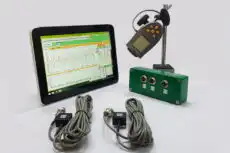
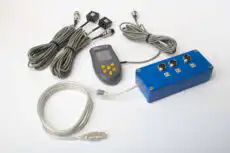
在現場,所有這些操作都在一台便攜式雙通道分析儀內完成。 Balanset-1A 會測量每次運轉的 1× 振幅與相位,自動計算影響係數,解算單平面或雙平面的校正配重,並驗證 剩餘不平衡 是否符合選定的 ISO 21940-11 等級——將上述理論轉化為現場的幾個引導步驟。
比工作壽命更長久的係數
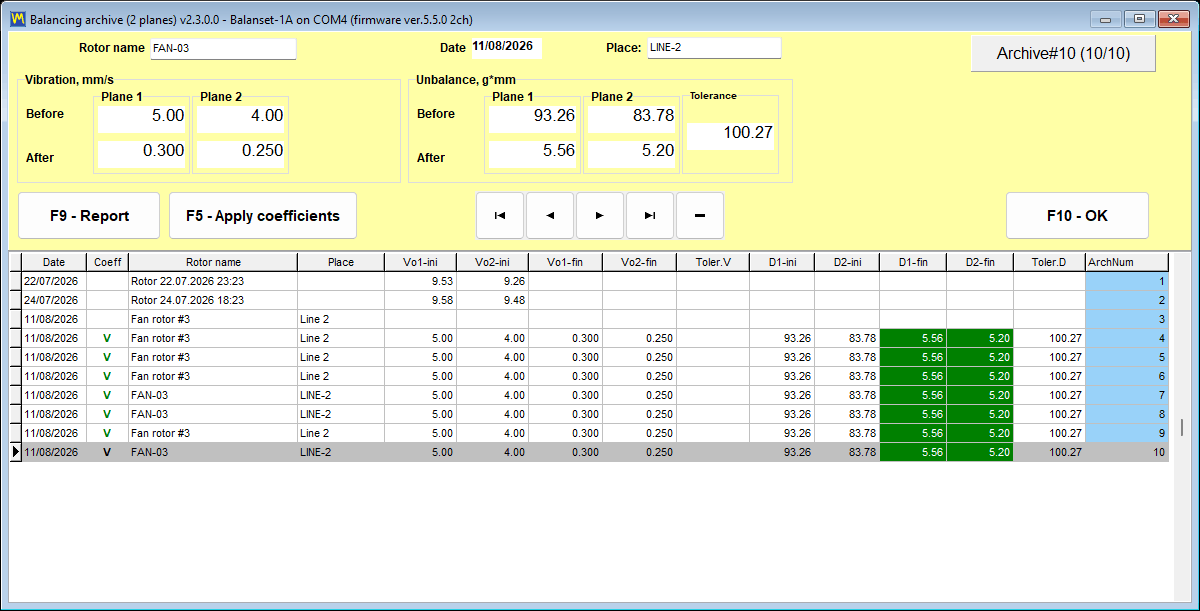
在 Balanset-1A 此儲存係數的概念已內建於工作階段封存記錄中。每筆已儲存的動平衡結果都會連同試重、其安裝半徑、固定位置與公差一起,攜帶其影響係數矩陣;擁有可重複使用係數組的記錄,會在封存記錄的「Coeff」欄中以綠色勾號標示。
對同一轉子重新動平衡時,可完全略過試重運轉:開啟封存記錄(F8),選取已標記勾號的記錄,按下「F5 – 套用係數」——動平衡表單即會以已儲存係數模式開啟,隱藏試重運轉面板,只需一次 Run 0,程式便能輸出校正配重與角度,接著再進行一般的微調運轉。
其注意事項與上述理論所要求的相同:係數僅適用於感測器位置與轉動方式不變的同一台機器與同型轉子,且校正角度是以首次取得係數時試重所在的位置為基準測量——若計劃重複使用,建議在轉子上做記號。