Torna Tezgahlarında Rotor Balanslama: Ürün Kalitesini Artırmak İçin Uygun Maliyetli Bir Çözüm
Ürün kalitesinin son derece önemli olduğu modern imalat sektöründe, rotor dengeleme teknolojik sürecin vazgeçilmez bir parçası haline gelir. Ancak, özel dengeleme ekipmanlarının satın alınması küçük ve orta ölçekli işletmeler için maliyetli olabilir. Bu makalede, torna tezgahlarının rotor dengeleme, bu da ekipman maliyetlerini önemli ölçüde azaltabilir ve üretim verimliliğini artırabilir.
Dengeleme Aracı Olarak Torna Tezgahı
Torna tezgahı, tasarımı ve işlevselliği sayesinde çeşitli tip ve boyutlardaki rotorların dengelenmesi için başarıyla kullanılabilir. Bu yaklaşımın en büyük avantajı, pahalı özel ekipman satın almaya gerek kalmaması nedeniyle maliyet tasarrufudur. Ayrıca, bir torna tezgahının kullanılması, dengelemenin doğrudan rotorun üretim süreci sırasında yapılmasına olanak tanır, bu da üretim süresini kısaltır ve ürün kalitesini artırır.
Dengeleme için Hazırlık
Dengeleme işlemine başlamadan önce birkaç hazırlık adımının atılması gerekir:
- Uygun torna tezgahının seçilmesi: Torna, güvenilir rotor montajı ve doğru titreşim ölçümleri sağlamak için yeterli sertliğe ve hassasiyete sahip olmalıdır.
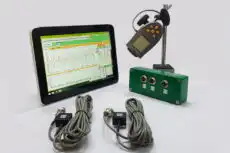
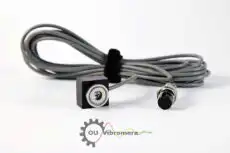
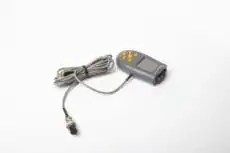
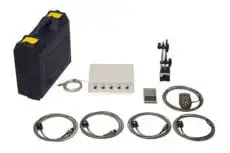
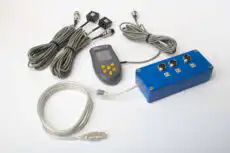
- Ölçüm sisteminin kurulması: Rotoru ölçmek için titreşim torna tezgahında, örneğin Balanset-1A kullanılabilir. Titreşim sensörleri ve bir takometre ve veri analizi ile düzeltme kütlesi hesaplamasına yönelik yazılımlar.
- Milin kendi dengesizliğiyle başa çıkmak: Torna milinin kendisini dengelemenize gerek yok. Tornayı yalnızca ayna ile (rotor çıkarılmış olarak) çalıştırın ve titreşim vektörünü kaydedin: bu, mil ve ayna tarafından katkıda bulunulan temel seviyedir. Rotor okumasının önemli bir kısmıysa, ya bunu çıkarın ya da — daha iyisi — her rotorla birlikte dönmeyen her şeyi otomatik olarak ayıran 180° endeks koşusunu (“Mandrel eccentricity elimination” işlevi, “F7 - Run Ecc”) kullanın.
- Rotoru mile değil, makineye uydurmak: Önemli olan, rotorun dengesizlik kuvvetinin yatak gövdelerinde ölçülebilir bir tepki üretmesidir. Ağır, rijit bir torna, dengesizliğin her gramı için çok az tepki verir, bu yüzden çok hafif bir rotorda sinyal gürültüde kaybolur, çok ağır bir rotor ise aynanın veya yatakların nominal yükünü aşabilir. Pratikte, herhangi bir etki katsayısına güvenmeden önce, doğru boyutlandırılmış bir deneme ağırlığının temiz, tekrarlanabilir bir genlik ve faz değişimi verdiğini kontrol edin.
- Dengelemeden önce kauçuk kaplamanın salgısının kontrol edilmesi: Kauçuk kaplı bir milde, kütle dengesizliği ve kaplamanın geometrik salgısı iki farklı kusurdur. Dengeleme 1× kuvvetini giderir; dış merkezli veya oval bir kaplamayı yuvarlak yapamaz. Kaplanmış yüzeye bir komparatör yerleştirin ve mili elle çevirin: eğer toplam gösterilen salgı ürün toleransını aşıyorsa, önce kaplamayı — aynı tornada — eş merkezli hale getirecek şekilde taşlayın veya tornalayın, ancak ondan sonra dengeleyin. Dengelenmiş ama hâlâ salgısı olan bir mil, titreşim okuması ne kadar düşük olursa olsun ölçü bantları, çizikler ve sıkışma basıncı değişimleri üretmeye devam edecektir.
Bu makalede, şu konulardaki deneyimlerimizi ve metodolojimizi ayrıntılı olarak anlatacağım: dinamik dengeleme torna tezgahında kauçuk kaplı şaftların – itiraf etmeliyim ki, bu tür makinelerin doğasında olan rijitlik ve önemli ağırlık nedeniyle başlangıçta şüpheyle yaklaştığım bir çözüm. Şaşırtıcı bir şekilde işlem sorunsuzca gerçekleştirildi ve G 6.3 denge kalite sınıfına ulaşıldı (ISO 21940-11 (eskiden ISO 1940-1)).
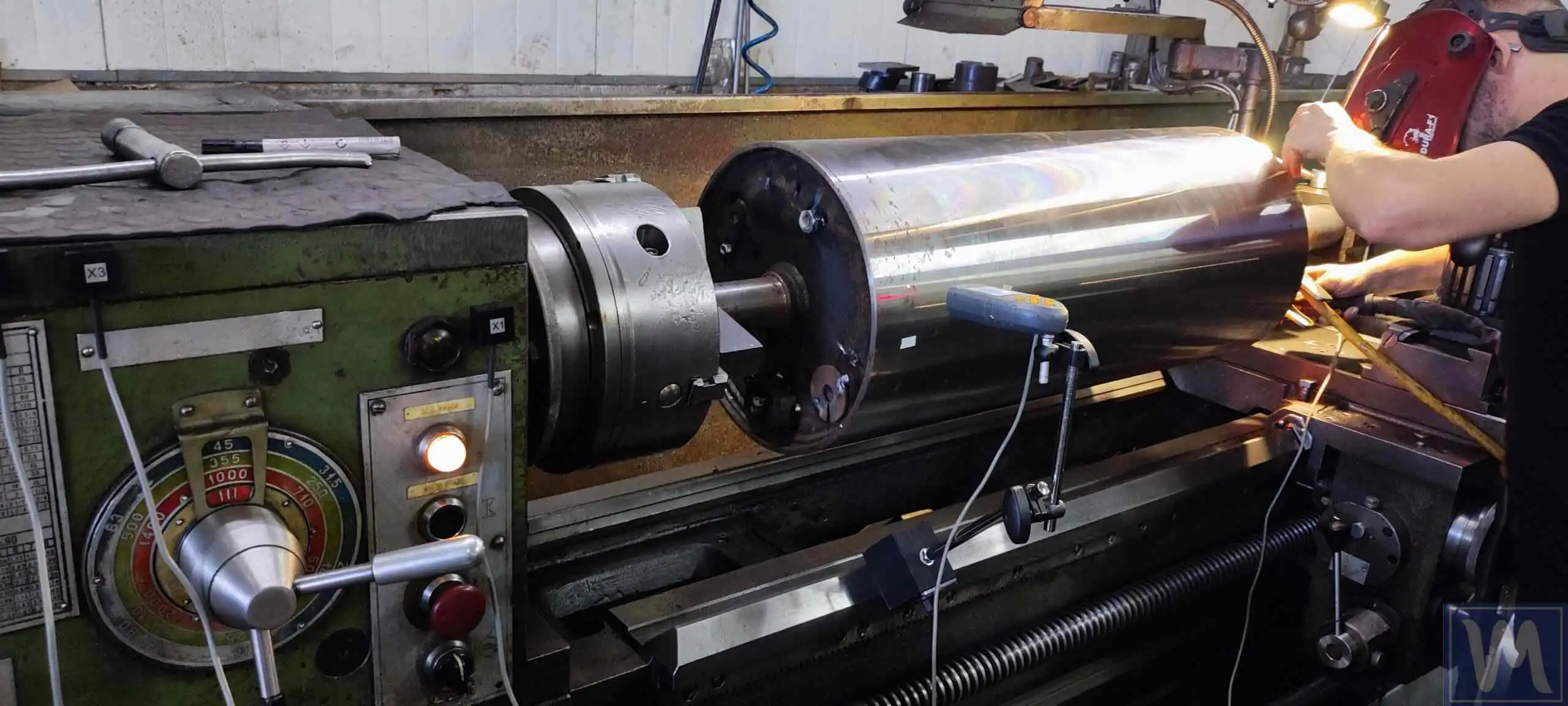
Teoride Torna Tezgahında Rotor Balanslama İşlemi
Bir torna tezgahında rotor balanslama işlemi aşağıdaki adımları içerir:
Rotorun Sabitlenmesi
Rotor, dengeleme işlemi sırasında dengeyi sağlamak için torna aynasına veya merkezlere güvenli bir şekilde monte edilir.
Sensörlerin Kurulumu
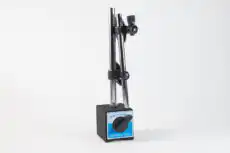
Her düzeltme düzlemine bir titreşim sensörü takın — biri ön babanın yatak gövdesine, biri arka baba veya destek yatağı gövdesine — radyal yönde, yatağa mümkün olduğunca yakın, temiz işlenmiş bir metal yüzeye manyetik bir taban ile. Sensörleri torna gövdesine, önlüğe veya siperliğe monte etmeyin: oradaki 1× sinyali zayıflatılmıştır ve yapının kendisi tarafından baskılanır. Yapıştırın yansıtıcı bant metal bir yüzeye (şaft ucu veya ayna), kauçuk kaplamaya değil, ve lazer takometreyi buna dik olarak yöneltin.
İlk Titreşimin Ölçülmesi
Başlangıç titreşim düzeyi, işin tamamında kullanacağınız hızda ölçülür. Tüm çalıştırmalar — Run 0, deneme çalıştırmaları ve trim çalıştırması — aynı hızda yapılmalıdır, çünkü etki katsayıları yalnızca ölçüldükleri hız için geçerlidir.
Eksantrikliğin Hesaba Katılması (Run 0'dan hemen sonra)
Tespit aparatı ve mandren eksantriklik Run 0 okumasına dengesizlik olmayan bir vektör ekler ve bunu düzeltmeye çalışmak yanlış olur. Bunu deneme ağırlığından önce halledin, sonra değil: Balanset-1A yazılımında “Mandrel eccentricity elimination” onay kutusunu işaretleyin, Run 0'ı tamamlayın, ardından rotoru aparatta 180° döndürün ve “F7 - Run Ecc” tuşuna basın. Yazılım, vektör yarı toplamını dış merkezlilik, vektör yarı farkını ise gerçek dengesizlik olarak alır ve ancak bundan sonra deneme koşusunun kilidini açar. Bunu düzeltme ağırlıkları zaten kaynaklandıktan sonra yapmak, onları yeniden hesaplamak ve yeniden yapmak anlamına gelir.
Deneme ağırlığı ne kadar büyük olmalıdır?
Güvenli bir başlangıç noktası şu ağırlıktır: merkezkaç kuvveti rotor ağırlığının %5–10'u içinde kalır. Formül olarak:
mtrial = k · M · g / (R · ω²), k = 0,05–0,10
nerede M rotor kütlesidir (kg), g = 9,81 m/s², R ağırlığın montaj yarıçapıdır (m) ve ω = 2π·RPM/60 (rad/s). Örnek: 3.000 rpm'de 50 kg'lık bir rotor için ağırlık R = 0.2 m'de m ≈ 0.07·50·9.81/(0.2·314²) ≈ verir 1,7 g — gram, yüzlerce gram değil. Bu, 50 kg'lık bir rotor için şaşırtıcı derecede küçük görünüyor, ama kuvveti kontrol edin: 3.000 rpm'de bu 1,7 g bile F = m·R·ω² ≈ 34 N — rotor ağırlığının yaklaşık %7'si kadar bir çekiş oluşturur. Küçük başlamanın amacı budur: kütleyi artırmak ucuzdur, oysa aşırı büyük bir ağırlık yataklar ve kaynaklar üzerinde gerçek bir yüktür. Aynı kuvvet kontrolü, takmak üzere olduğunuz herhangi bir ağırlık için tersine de işler.
Bunu elle hesaplamanıza gerek yok: Balanset yazılımı İlk Deneme Ağırlığı Tahmincisi rotor verilerinizden hem kütleyi hem de başlangıç açısını öneren, ve bir Çarpma Testi bir doğal frekansa yakın çalışmadığınızı kontrol etmek için.
İyi bir deneme ağırlığı okumayı genlikte en az –30 veya fazda 20–30°. Tepki daha küçükse, ağırlığı kademeli olarak artırın — asla “bir şey olsun” diye doğrudan ağır bir ağırlığa atlamayın.
Deneme Ağırlığı Takma
A deneme ağırlığı bilinen kütlede rotora takılır ve titreşim tekrar ölçülür. İki düzlemli dengelemede bu, sırayla her düzlemde yapılır — ağırlık düzlem 1'deyken bir deneme çalıştırması (Run 1), ardından ağırlık düzlem 2'deyken bir deneme çalıştırması (Run 2) — böylece yazılım her düzeltme düzleminin etkisini ayrı ayrı ölçebilir.
Düzeltici Kütlelerin Hesaplanması
Balanset-1A yazılımı ölçüm sonuçlarını analiz eder ve gerekli düzeltici kütleleri ve bunların yerleştirme açılarını hesaplar.
Rotor Kütlesinin Düzeltilmesi
Rotor'un tasarımına ve torna tezgâhının imkânlarına bağlı olarak kütle düzeltmesi delme, frezeleme, kaynak veya başka yöntemlerle yapılabilir.
Dengeleme Doğrulaması
Düzeltmeler yapıldıktan sonra bir kontrol titreşim ölçümü gerçekleştirilir. Gerekli denge seviyesi elde edilene kadar gerekirse işlem tekrarlanır.
Pratikte Dinamik Dengeleme
- Dönüş Frekansı: Tipik olarak, bu şaftların çalışma dönüş hızı dakikada 300 ile 500 devir (rpm) arasında değişir. Bu özel durumda, dengelemeyi 550 rpm'de gerçekleştirdik.
- Kurulum: Lastikli şaft torna makinesine monte edilmiş, ardından ekteki fotoğraflarda gösterildiği gibi sensörler stratejik olarak yerleştirilmiştir.
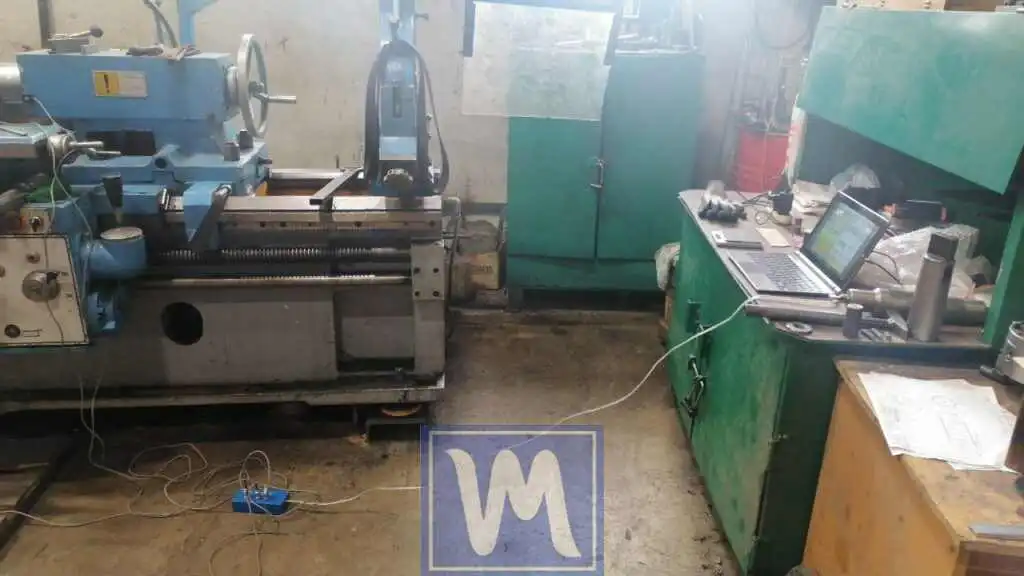
Lastikli Şaftların Torna Tezgahı Kullanılarak Yerinde Dinamik Dengelenmesi
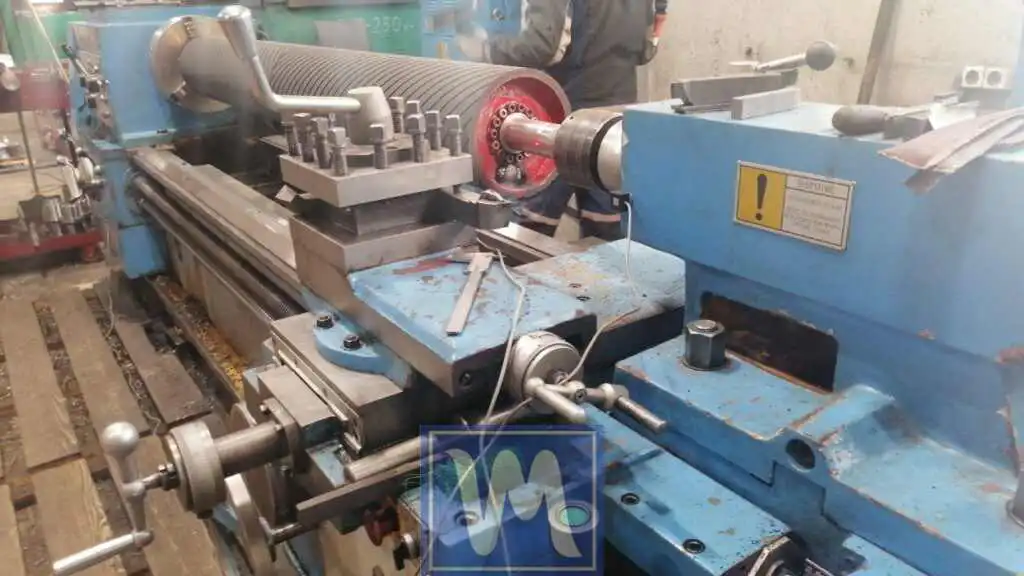
Lastikli Şaftların Dinamik Dengelenmesi
- İlk Titreşim Okumaları: Dengeleme işleminden önce, ilk titreşim değerleri 9 mm/s ve 17 mm/s idi.
- Deneme Koşuları: İki düzlemli bir iş, sırayla her düzlemde bir deneme çalıştırması gerektirir — ağırlık düzlem 1'deyken Run 1, ardından ağırlık düzlem 2'deyken Run 2. 340 gramlık bir deneme ağırlığı kaynaklandı; bu, titreşimi değiştirdi ve faz okumaları kabaca değiştirir. Böyle bir tepkiyi mutlak asgari düzey olarak değerlendirin: net, güvenilir bir ölçüm için genellikle titreşim vektörünü –50 kaydıran bir deneme ağırlığı hedefleriz, ancak ağır, rijit bir torna tezgahı deneme kütlesinin her gramına çok az tepki verir.
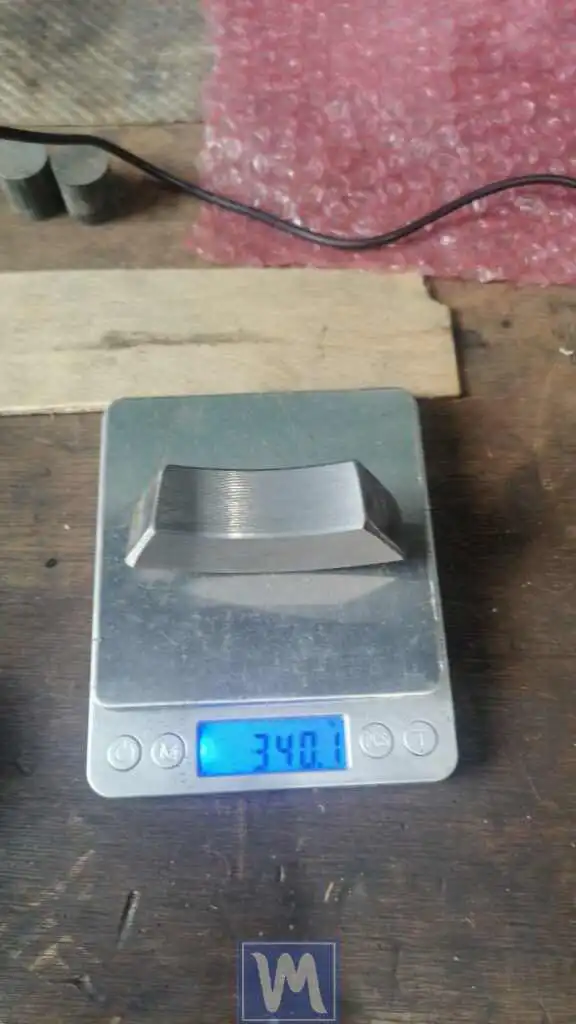
- Dengeleme Ayarlamaları: Deneme ağırlığıyla yapılan deneme çalıştırmalarından sonra, Balanset-1A cihazımız şaftın bir tarafına 3100 gram, diğer tarafına 4300 gram eklenmesi gerektiğini gösterdi; bu da şu düzeltmelere karşılık geliyordu: iki düzlem. Bu ayarlamalardan sonra, titreşim düzeyleri 2 mm/s ve 4 mm/s'ye düştü.
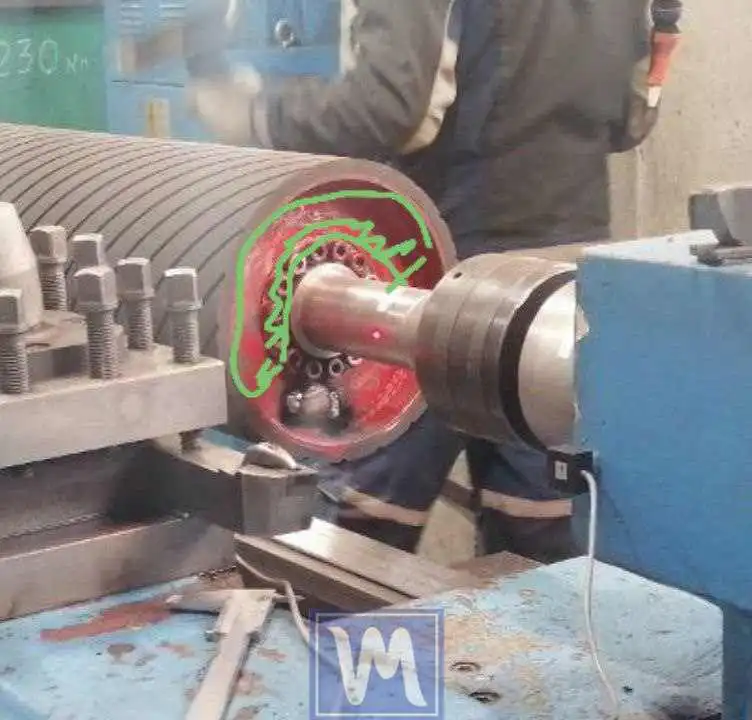
Lastikli Şaftların Torna Tezgahı Kullanılarak Yerinde Dinamik Dengelenmesi
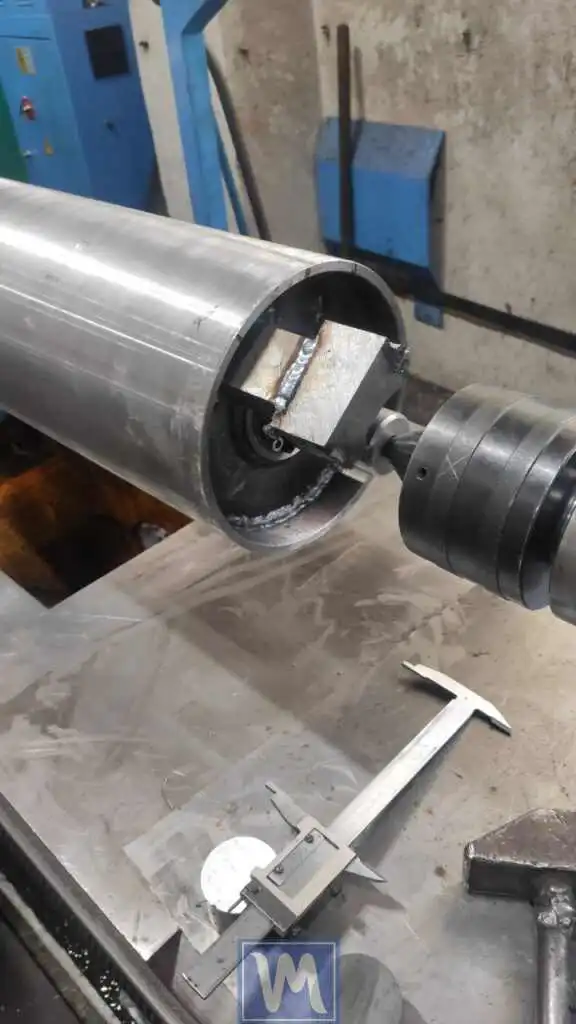
Lastikli Şaftların Torna Tezgahı Kullanılarak Yerinde Dinamik Dengelenmesi
- İnce ayar: Sonuçları daha da optimize etmek için 400 gram ve 700 gramlık ağırlıklar eklemeye devam ettik. Ardından, 200 gram ve 400 gram eklenerek bir ince ayar turu daha yapıldı. Alan kısıtlamaları nedeniyle ağırlıklar üst üste kaynaklandı. Sonunda bu geçici ağırlıklar, özellikle bu mil için hazırlanmış, hassas kesilmiş, estetik açıdan hoş karşı ağırlıklarla değiştirildi. Nihai titreşim okumaları her iki düzlemde de etkileyici bir şekilde 0,1 mm/s oldu (yuvarlatılmış bir rakam — 1 mm/s altında cihazın kendisi okumaları üç ondalık basamağa kadar gösterir).
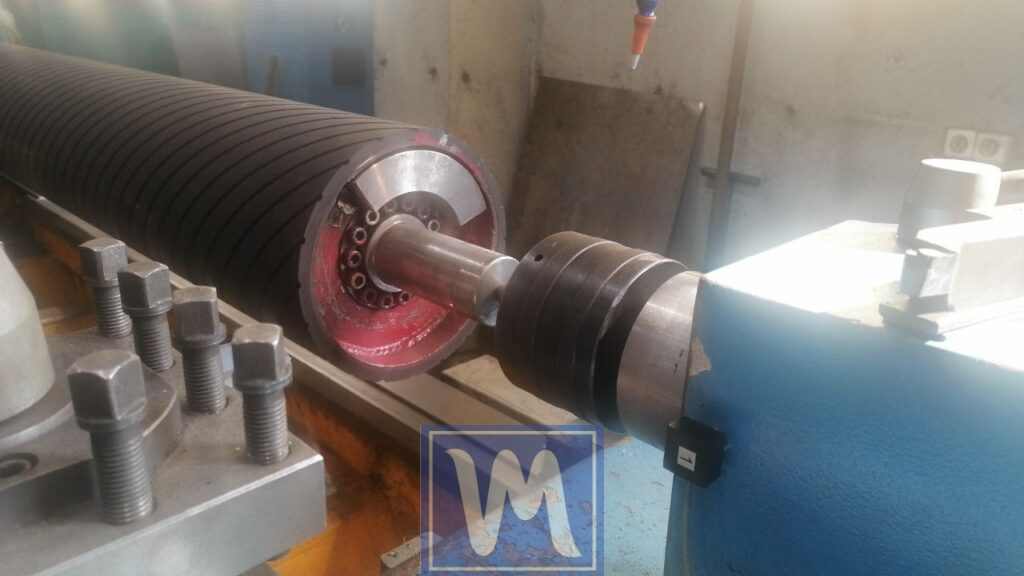
Lastikli Şaftların Torna Tezgahı Kullanılarak Yerinde Dinamik Dengelenmesi
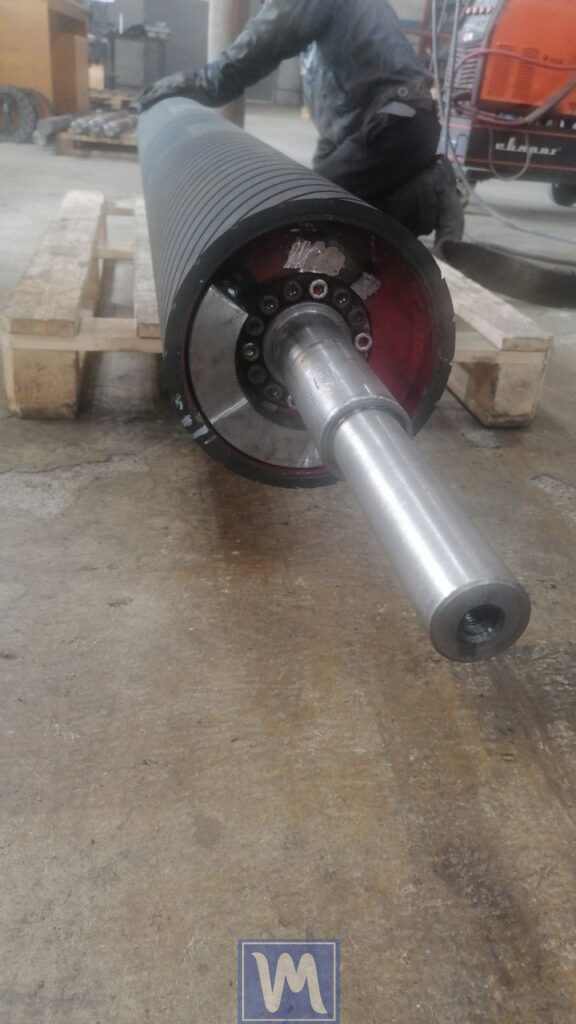
Lastikli Şaftların Torna Tezgahı Kullanılarak Yerinde Dinamik Dengelenmesi
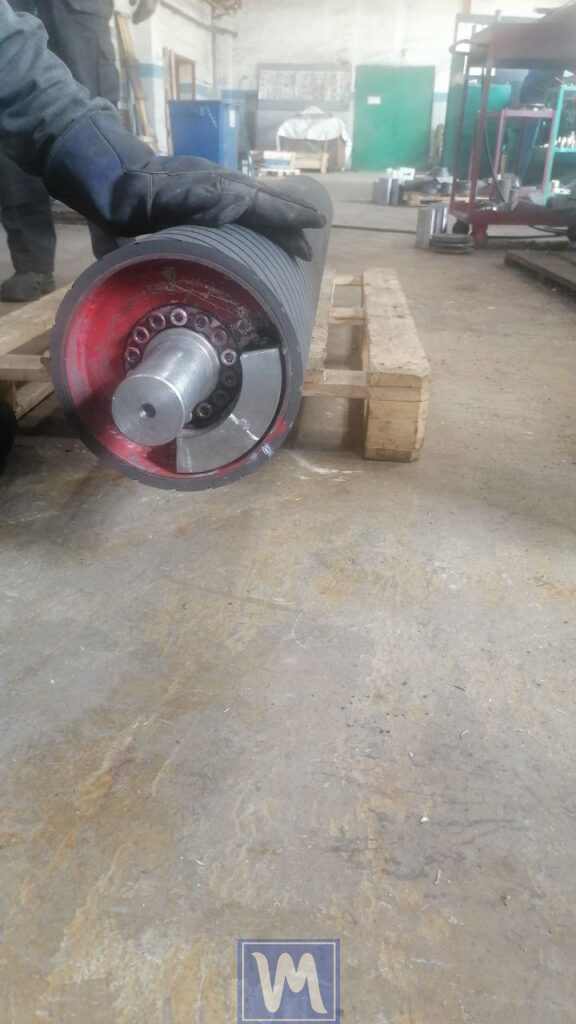
Lastikli Şaftların Torna Tezgahı Kullanılarak Yerinde Dinamik Dengelenmesi

Torna Tezgahlarında Rotor Balanslamanın Avantajları
Maliyet-Etkililik
Balans ayarı için torna tezgahı kullanmak, özel balans ekipmanı satın alma masrafını ortadan kaldırır.
Kolaylık
Balanslama, rotor'un üretim süreci sırasında doğrudan yapılabilir; bu da üretim süresini kısaltır.
Yüksek Kalite
Balanset-1A gibi modern taşınabilir balans makineleri, yüksek balanslama hassasiyeti sağlayarak düşük titreşim seviyeleri ve gelişmiş ürün kalitesi sunar.
Sonuç
Torna tezgahlarında rotor balanslama, ürün kalitesini artırmak ve üretim maliyetlerini düşürmek isteyen işletmeler için etkili ve ekonomik bir çözümdür. Balanset-1A gibi taşınabilir balans makinelerinin kullanımı, bu işlemi küçük atölyeler için bile basit ve erişilebilir hale getirir.
Önemli Hatırlatmalar
- En iyi sonuçları elde etmek için, yüksek kaliteli ölçüm aletleri kullanmanız ve dengeleme prosedürüne harfiyen uymanız önerilir. İzin verilen değeri tahmin edebilirsiniz artık balanssızlık rotorunuz için bizim artık dengesizlik hesaplayıcı (ISO 1940).
Torna tezgahlarında rotor balanslama, üretiminizin geleceğine doğru atılmış bir adımdır ve ürün kalitesinin iyileştirilmesi, maliyetlerin düşürülmesi ve işletmenizin rekabet gücünün artırılmasıyla karşılığını verir.

Nikolai Shelkovenko
Nikolai Shelkovenko, titreşim analizi mühendisi ve Vibromera şirketinin kurucusu ile genel müdürüdür. 15 yılı aşkın süredir dönen ekipmanları test tezgâhında değil, sahada balanslıyor: malçlayıcılar, endüstriyel fanlar, kırıcılar, santrifüjler, miller ve iş milleri. Balanset cihazları işte bu çalışmadan doğdu — bir uzmanın makinenin yanına götürüp sahada tek başına kullanabileceği bir alet olarak tasarlandılar, laboratuvar ekipmanı olarak değil. Vibromera 2017 yılında kuruldu ve 2023 yılından bu yana Portekiz'in Porto şehrinde faaliyet gösteriyor. Balanset serisinin geliştirilmesi, montajı ve desteği burada yapılıyor. Amiral gemisi cihaz, tek ve iki düzlemli balanslama ile titreşim teşhisi için taşınabilir bir analizör olan Balanset-1A'dır. Nikolai müşteri desteğine, zor balanslama vakalarının çözülmesine ve yazılımın geliştirilmesine bizzat katılıyor. Dünyanın her yerinden müşterilerle, her dilde çalışıyor.


0 Yorum