Rotorbalansering på svarvar: En kostnadseffektiv lösning för förbättrad produktkvalitet
Inom modern tillverkning, där produktkvaliteten är av största vikt, rotorbalansering blir en viktig del av den tekniska processen. Att köpa in specialiserad balanseringsutrustning kan dock vara kostsamt för små och medelstora företag. I den här artikeln undersöker vi möjligheten att använda svarvar för rotor balansering, vilket kan sänka utrustningskostnaderna avsevärt och förbättra produktionseffektiviteten.
Svarven som verktyg för balansering
Svarven kan, tack vare sin konstruktion och funktionalitet, framgångsrikt användas för att balansera rotorer av olika typer och storlekar. Den största fördelen med detta tillvägagångssätt är kostnadsbesparingar, eftersom det inte finns något behov av att köpa dyr specialutrustning. Dessutom gör användningen av en svarv det möjligt att utföra balanseringen direkt under rotorns tillverkningsprocess, vilket förkortar produktionstiden och förbättrar produktkvaliteten.
Förberedelser för balansering
Innan balanseringsprocessen påbörjas måste flera förberedande steg tas:
- Välja rätt svarv: Svarven ska ha tillräcklig styvhet och precision för att säkerställa tillförlitlig montering av rotorn och noggranna vibrationsmätningar.
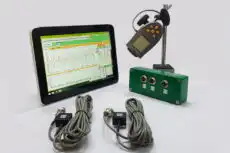
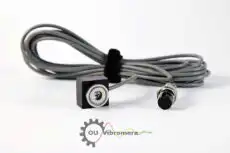
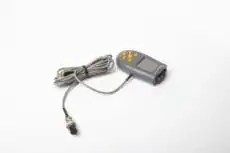
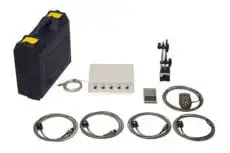
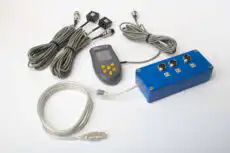
- Installation av mätsystemet: För att mäta rotorn vibration på svarven kan en bärbar balanserare som Balanset-1A kan användas. Den innehåller vibrationssensorer, en varvräknare, samt programvara för dataanalys och beräkning av korrigeringsvikt.
- Att hantera spindelns egen obalans: Du behöver inte balansera själva svarvspindeln. Kör svarven med enbart chucken (rotorn borttagen) och registrera vibrationsvektorn: det är baslinjen som bidrar från spindeln och chucken. Om den utgör en betydande andel av rotoravläsningen, subtrahera antingen den, eller — bättre — använd 180°-indexkörningen (funktionen “Mandrel eccentricity elimination”, “F7 - Run Ecc”), som automatiskt separerar allt som inte roterar med rotorn.
- Att matcha rotorn till maskinen, inte till spindeln: Det som är viktigt är att rotorns obalanskraft ger ett mätbart utslag på lagerhusen. En tung, styv svarv svarar mycket lite per gram obalans, så på en mycket lätt rotor försvinner signalen i bruset, medan en mycket tung rotor kan överskrida chuckens eller lagrens märklast. I praktiken bör du kontrollera att en korrekt dimensionerad provvikt ger en ren, repeterbar amplitud- och fasändring innan du litar på någon inverkanskoefficient.
- Kontroll av kastet på gummibeläggningen före balansering: På en gummerad axel är massobalans och geometriskt kast hos beläggningen två olika defekter. Balansering tar bort 1×-kraften; den kan inte göra en excentrisk eller oval beläggning rund. Sätt en mätklocka mot den belagda ytan och vrid axeln för hand: om det totalt indikerade kastet överstiger produktens tolerans, slipa eller svarva beläggningen koncentrisk först — i samma svarv — och balansera först därefter. En axel som är balanserad men fortfarande har kast fortsätter att ge upphov till mätbandmönster, ränder och variation i nyptrycket oavsett hur lågt vibrationsvärdet blir.
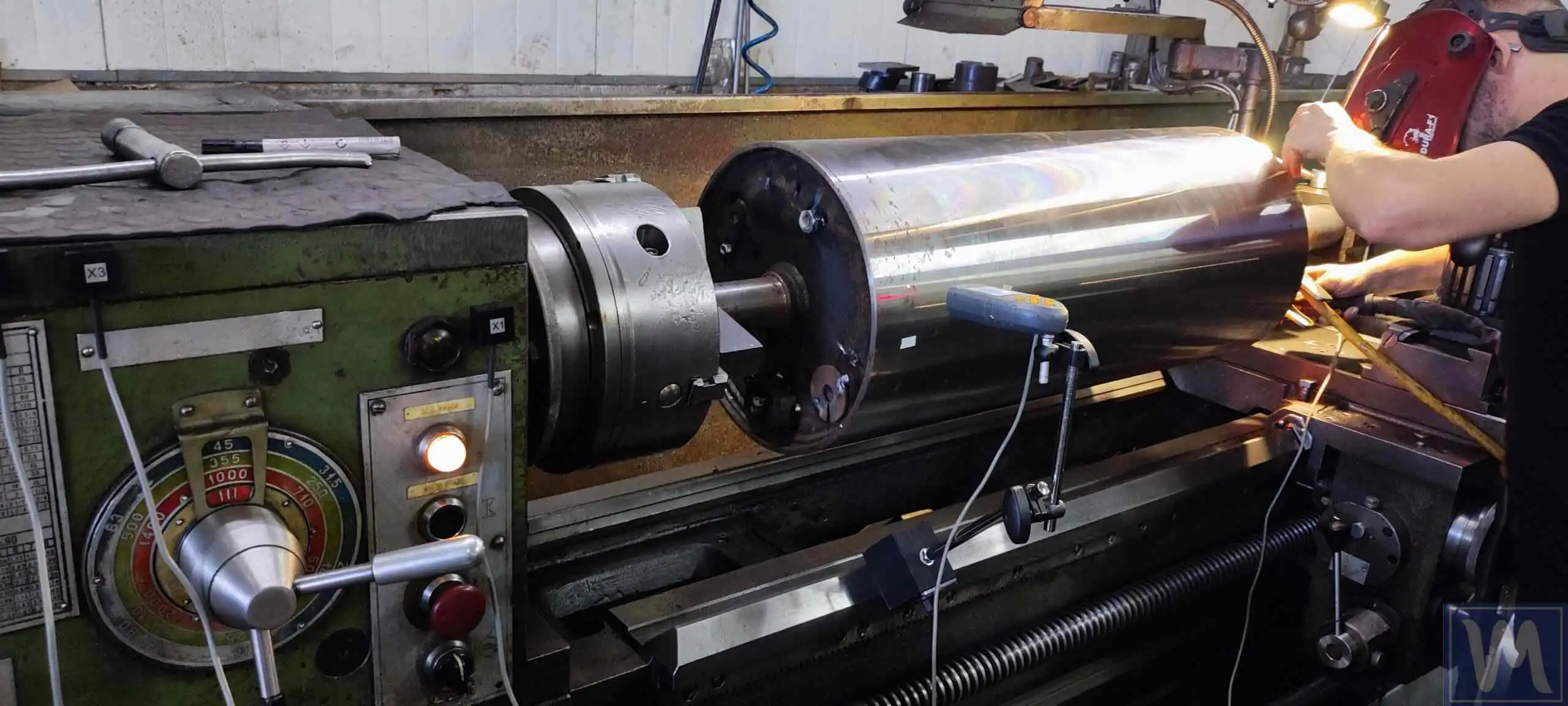
I den här artikeln kommer jag att redogöra för våra erfarenheter och vår metodik när det gäller dynamisk balansering gummerade axlar på en svarv – en lösning som jag, erkänt nog, till en början var skeptisk till på grund av sådana maskiners inneboende stelhet och betydande vikt. Överraskande nog genomfördes åtgärden helt smärtfritt, och balanskvalitetsgraden G 6.3 uppnåddes (ISO 21940-11, tidigare ISO 1940-1).
Rotorbalanseringsprocess på en svarv i teorin
Balanseringen av rotorn på en svarv omfattar följande steg:
Säkring av rotorn
Rotorn är säkert monterad i svarvchucken eller mellan dubbar för att säkerställa stabilitet under balanseringsprocessen.
Installation av sensorer
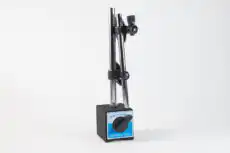
Montera en vibrationssensor per korrigeringsplan — en på spindeldockans lagerhus och en på dubbdockans eller lunettens hus — radiellt, så nära lagret som möjligt, på en ren, bearbetad metallyta via en magnetfot. Montera inte sensorer på svarvbädden, sadeln eller ett skydd: 1×-signalen där är dämpad och domineras av konstruktionen. Fäst reflekterande tejp på en metallyta (axeländen eller chucken), inte på gummibeläggningen, och rikta lasertachometern vinkelrätt mot den.
Mätning av initial vibration
Den initiala vibrationsnivån mäts vid den hastighet du kommer att använda för hela jobbet. Alla körningar — Run 0, provkörningarna och finjusteringskörningen — måste göras vid samma hastighet, eftersom inverkanskoefficienterna endast är giltiga för den hastighet vid vilken de mättes.
Att ta hänsyn till excentricitet (omedelbart efter Run 0)
Fixtur och dorn excentricitet lägger till en vektor i Run 0-avläsningen som inte är obalans, och att korrigera för den skulle vara fel. Åtgärda det före provvikten, inte efteråt: markera kryssrutan “Mandrel eccentricity elimination” i Balanset-1A-programvaran, slutför Run 0, rotera sedan rotorn 180° i fixturen och tryck på “F7 - Run Ecc”. Programvaran använder vektorns halvsumma som excentriciteten och vektorns halvdifferens som den verkliga obalansen, och först då låses provkörningen upp. Om detta görs efter att korrigeringsvikterna redan har svetsats fast innebär det att de måste omberäknas och göras om.
Hur stor bör en provvikt vara?
En säker utgångspunkt är en vikt vars centrifugalkraften håller sig inom 5–10 % av rotorns vikt. Som en formel:
mtrial = k · M · g / (R · ω²), k = 0,05–0,10
där M är rotormassan (kg), g = 9,81 m/s², R är viktens monteringsradie (m), och ω = 2π·RPM/60 (rad/s). Exempel: en 50 kg rotor vid 3 000 varv/min med vikten vid R = 0,2 m ger m ≈ 0,07·50·9,81/(0,2·314²) ≈ 1,7 g — gram, inte hundratals gram. Det ser förvånansvärt litet ut för en 50 kg rotor, men kontrollera kraften: vid 3 000 varv/min drar de där 1,7 g redan med F = m·R·ω² ≈ 34 N — cirka 7 % av rotorns vikt. Att börja litet är poängen: att öka är billigt, medan en överdimensionerad vikt är en verklig belastning på lager och svetsar. Samma kraftkontroll fungerar omvänt för varje vikt du är på väg att bulta fast.
Du behöver inte beräkna detta för hand: Balanset-programvaran innehåller en Uppskattning av första provvikt som rekommenderar både massan och startvinkeln utifrån dina rotordata, och en Bumptest för att kontrollera att du inte arbetar nära en egenfrekvens.
En bra provvikt ändrar avläsningen med minst 20–30 % i amplitud eller 20–30° i fas. Om svaret är mindre, öka vikten stegvis — hoppa aldrig direkt till en tung vikt “för att se att något händer.”
Installation av en provvikt
A provvikt av känd massa monteras på rotorn, och vibrationen mäts igen. Vid tvåplansbalansering görs detta i varje plan i tur och ordning — en provkörning med vikten i plan 1 (Run 1), sedan en provkörning med vikten i plan 2 (Run 2) — så att programvaran kan mäta inverkan av varje korrigeringsplan separat.
Beräkning av korrigeringsmassor
Programvaran Balanset-1A analyserar mätresultaten och beräknar de nödvändiga korrigeringsmassorna och deras placeringsvinklar.
Korrigering av rotormassa
Beroende på rotorns konstruktion och svarvens kapacitet kan masskorrigering utföras genom borrning, fräsning, svetsning eller andra metoder.
Verifiering av balansering
Efter korrigeringar utförs en kontrollvibrationsmätning. Processen upprepas vid behov tills önskad balansnivå har uppnåtts.
Dynamisk balansering i praktiken
- Rotationsfrekvens: Vanligtvis ligger dessa axlars driftrotationshastighet mellan 300 och 500 varv per minut (rpm). I det här specifika fallet utförde vi balanseringen vid 550 varv/min.
- Inställning: Den gummerade axeln monterades på svarvmaskinen, följt av den strategiska placeringen av sensorer, som visas på de medföljande fotografierna.
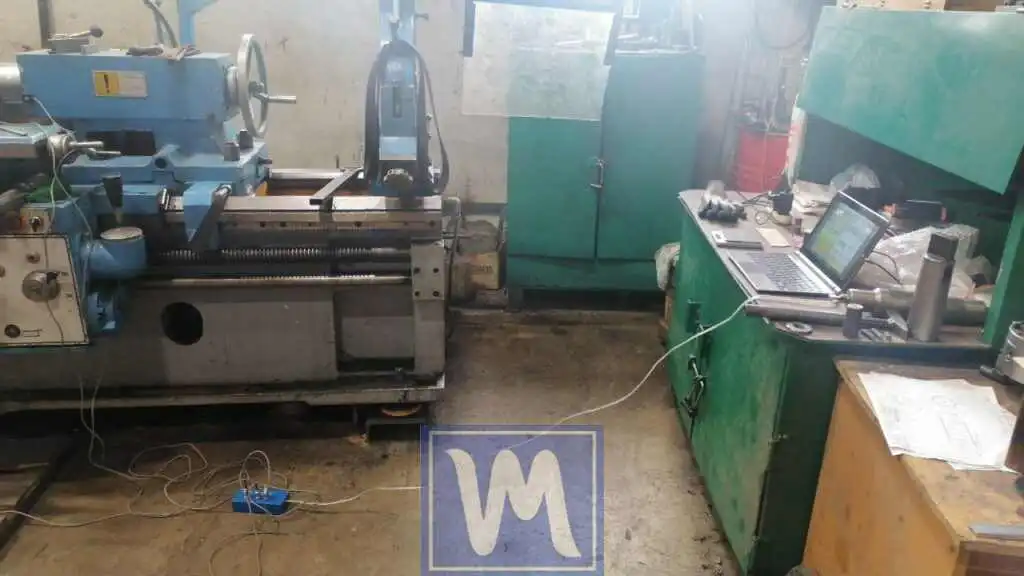
Dynamisk balansering på plats av gummerade axlar med hjälp av en svarv
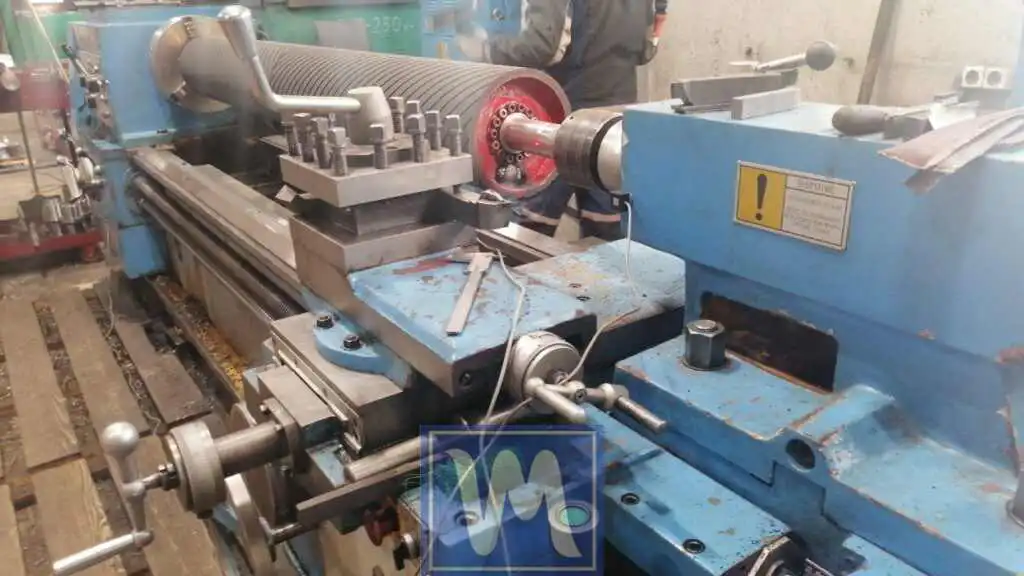
Dynamisk balansering av gummerade axlar
- Inledande vibrationsmätningar: Före balanseringen låg första vibrationsavläsningarna låg på 9 mm/s och 17 mm/s.
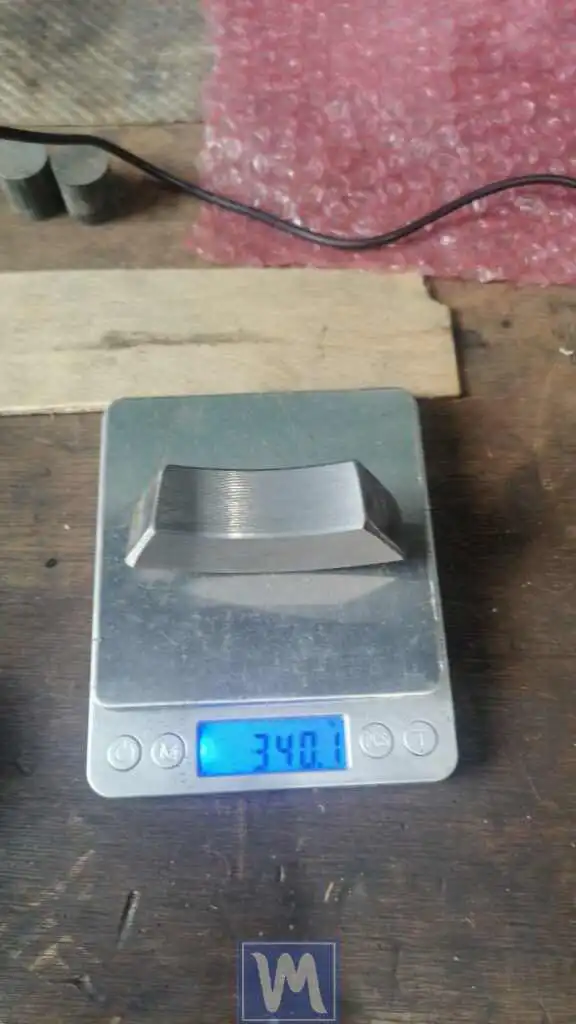
- Provkörningar: Ett tvåplansjobb kräver en provkörning i varje plan i tur och ordning — Run 1 med vikten i plan 1, sedan Run 2 med vikten i plan 2. En provvikt på 340 gram svetsades fast; den ändrade vibrationen och fas avläsningarna med ungefär 10 %. Betrakta en sådan respons som ett absolut minimum: för en tydlig, tillförlitlig mätning siktar vi normalt på en provvikt som förskjuter vibrationsvektorn med 25–50 %, men en tung, styv svarv svarar mycket lite per gram provmassa.
- Balanserande justeringar: Efter provkörningarna med provvikten indikerade vårt Balanset-1A-instrument behovet av att lägga till 3100 gram på ena sidan av axeln och 4300 gram på den andra, motsvarande korrigeringar i två plan. Efter dessa justeringar minskade vibrationsnivåerna till 2 mm/s och 4 mm/s.
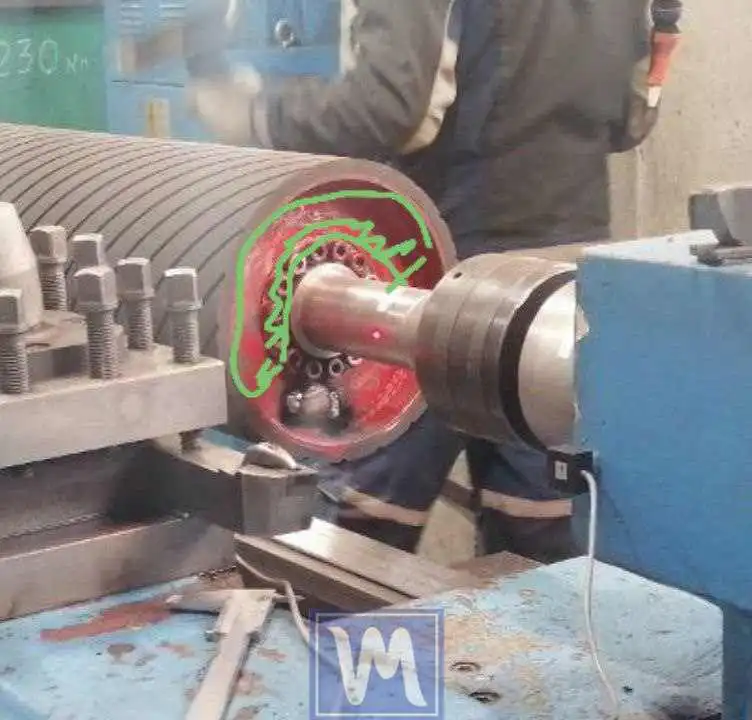
Dynamisk balansering på plats av gummerade axlar med hjälp av en svarv
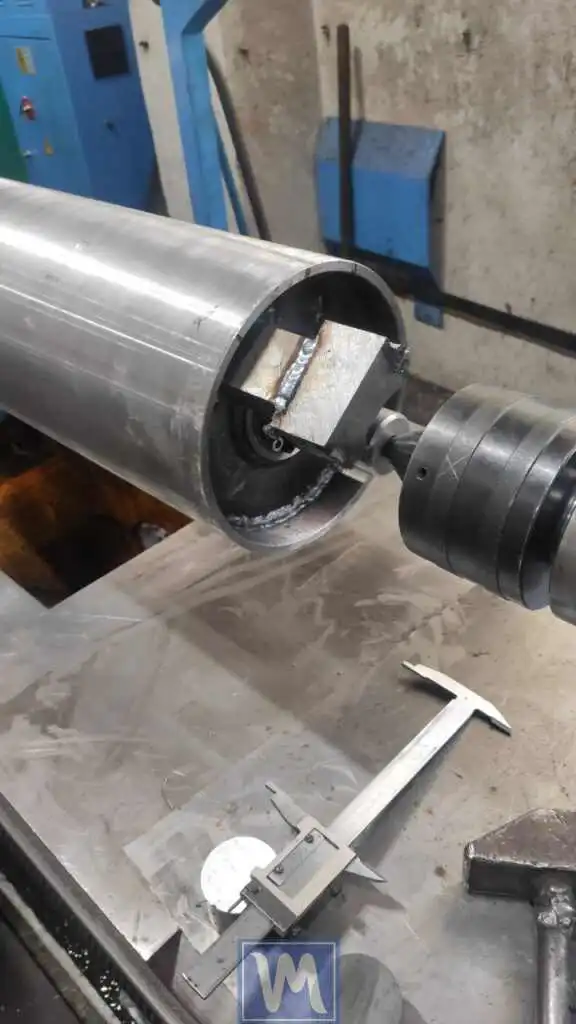
Dynamisk balansering på plats av gummerade axlar med hjälp av en svarv
- Finjustering: För att optimera resultaten ytterligare gick vi vidare med att lägga till vikter på 400 gram och 700 gram. Därefter genomfördes ytterligare en finjusteringsrunda genom att lägga till 200 gram och 400 gram. På grund av platsbrist svetsades vikterna ovanpå varandra. Till sist ersattes dessa tillfälliga vikter med precisionsskurna, estetiskt tilltalande motvikter, specialtillverkade för just denna axel. De slutliga vibrationsvärdena var imponerande 0,1 mm/s i båda planen (ett avrundat värde — under 1 mm/s visar instrumentet självt värden med tre decimaler).
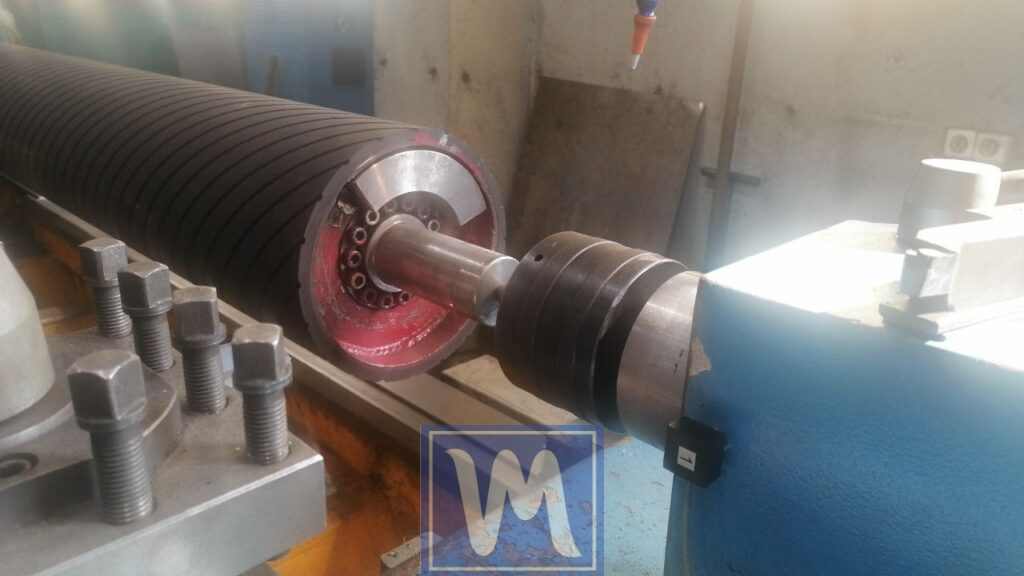
Dynamisk balansering på plats av gummerade axlar med hjälp av en svarv
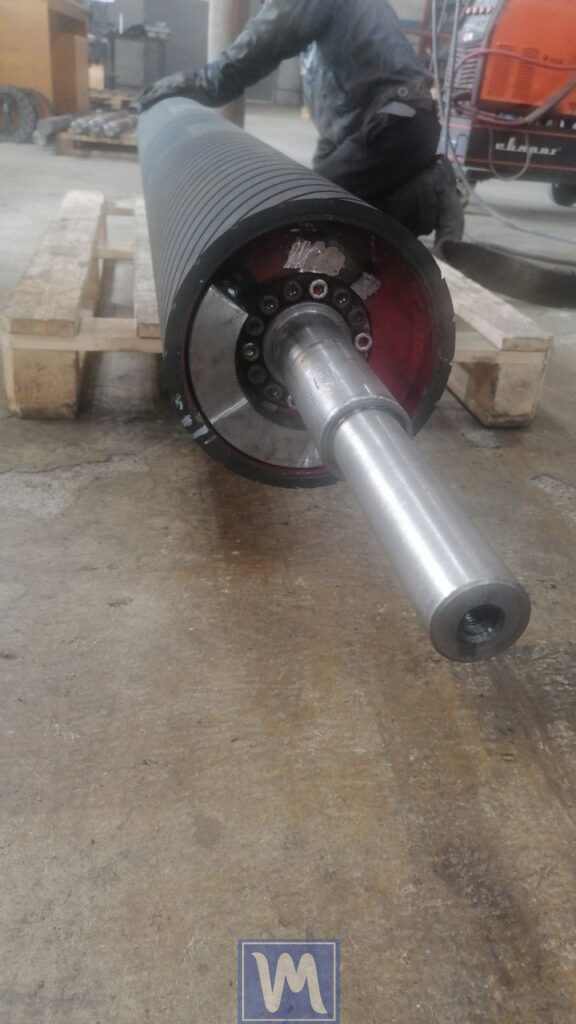
Dynamisk balansering på plats av gummerade axlar med hjälp av en svarv
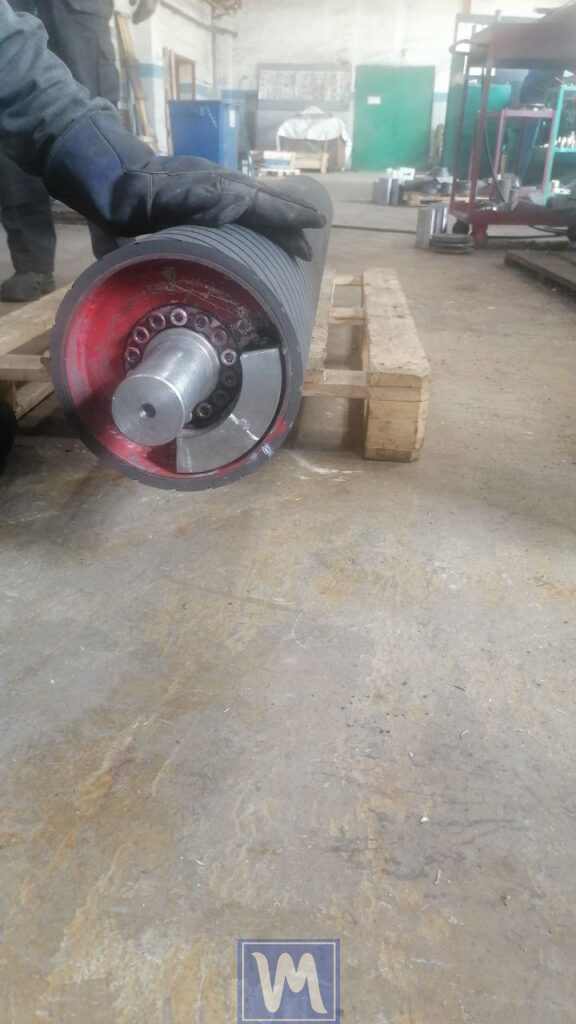
Dynamisk balansering på plats av gummerade axlar med hjälp av en svarv

Fördelar med rotorbalansering på svarvar
Kostnadseffektivitet
Om du använder en svarv för balansering slipper du köpa specialutrustning för balansering.
Bekvämlighet
Balanseringen kan utföras direkt under rotorns tillverkningsprocess, vilket minskar produktionstiden.
Hög kvalitet
Moderna portabla balanserare, som Balanset-1A, ger hög balanseringsnoggrannhet, vilket möjliggör låga vibrationsnivåer och förbättrad produktkvalitet.
Slutsats
Rotorbalansering i svarvar är en effektiv och ekonomisk lösning för företag som vill förbättra produktkvaliteten och sänka produktionskostnaderna. Användningen av portabla balanserare som Balanset-1A gör processen enkel och tillgänglig, även för små verkstäder.
Viktiga påminnelser
- För att uppnå bästa resultat rekommenderas att man använder mätinstrument av hög kvalitet och noggrant följer balanseringsproceduren. Du kan uppskatta det tillåtna kvarvarande obalans till din rotor med vår beräkningsverktyg för restobalans (ISO 1940).
Att balansera rotorer på svarvar är ett steg mot framtiden för din produktion, som betalar sig genom förbättrad produktkvalitet, minskade kostnader och ökad konkurrenskraft för ditt företag.

Nikolai Shelkovenko
Nikolai Shelkovenko är vibrationsanalysingenjör samt grundare och vd för Vibromera. I mer än 15 år har han balanserat roterande utrustning ute i fält i stället för i en provbänk: slaghackar, industrifläktar, krossar, centrifuger, axlar och spindlar. Det är ur det arbetet Balanset-instrumenten har vuxit fram — de utformades som ett verktyg som en specialist kan bära med sig till maskinen och använda på egen hand på plats, inte som laboratorieutrustning. Vibromera grundades 2017 och har sedan 2023 sin bas i Porto i Portugal. Utveckling, montering och support av Balanset-serien sker här. Flaggskeppet är Balanset-1A, en bärbar analysator för balansering i ett och två plan och för vibrationsdiagnostik. Nikolai deltar personligen i kundsupporten, i arbetet med svåra balanseringsfall och i utvecklingen av programvaran. Han arbetar med kunder över hela världen, på vilket språk som helst.


0 Kommentarer