车床上的转子平衡:提高产品质量的经济高效解决方案
在现代制造业中,产品质量至关重要, 转子平衡 已成为技术流程中不可或缺的一部分。然而,对于中小企业而言,购置专业的动平衡设备成本较高。本文将探讨利用车床进行 转子 平衡,这可以显著降低设备成本并提高生产效率。
车床作为平衡工具
车床凭借其结构和功能,完全可以成功用于对各种类型和尺寸的转子进行平衡。这种方法的主要优势在于节省成本,因为无需购买昂贵的专用设备。此外,利用车床还可以在转子加工过程中直接进行平衡,从而缩短生产周期、提高产品质量。
平衡前的准备工作
在开始平衡过程之前,必须采取几个准备步骤:
- 选择合适的车床 车床应具有足够的刚度和精度,以确保转子的可靠安装和精确的振动测量。
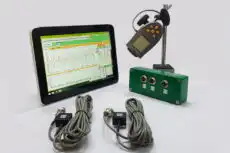
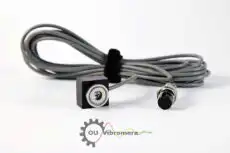
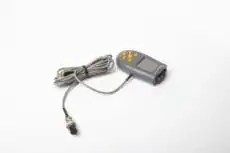
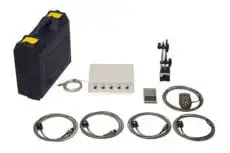
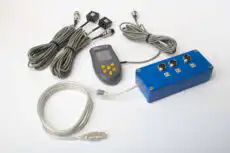
- 安装测量系统: 测量转子 振动 在车床上,使用便携式平衡机,例如 Balanset-1A 可以使用。它包括振动传感器、一个 转速表以及用于数据分析和校正质量计算的软件。
- 处理主轴自身的不平衡: 你并不需要对车床主轴本身进行平衡。可以先只装上卡盘(把转子取下来)运转车床,并记录下此时的振动矢量:这就是主轴和卡盘本身所贡献出来的基准振动。如果这个基准值,在转子读数当中所占的比例已经相当大,那么要么把它从总读数中扣除,要么——更好的做法是——使用180°的索引运行(也就是“消除心轴偏心”这项功能,对应“F7 - 运行偏心”),它会自动把所有并不随转子一起旋转的成分,都分离出去。
- 使转子与平衡机匹配,而非与主轴匹配: 关键在于,转子的不平衡力要能在轴承座上产生可测的响应。笨重刚硬的车床对每克不平衡量的响应很小,因此对非常轻的转子来说信号会淹没在噪声中,而对非常重的转子,不平衡力又可能超过卡盘或轴承的额定负荷。实际操作中,在信任任何影响系数之前,都应先确认合理大小的试重能带来清晰、可重复的振幅和相位变化。
- 平衡前检查橡胶护套的径向跳动: 在一根包胶轴上,质量不平衡和覆盖层的几何跳动,是两种完全不同的缺陷。平衡处理消除的,是1倍频这个力的分量;它并不能把一个偏心或者呈椭圆形的覆盖层,重新变成圆形。做法是:把千分表顶在覆盖层表面上,然后用手转动这根轴——如果测得的总跳动量,超出了产品所规定的公差范围,那就应当先在同一台车床上,把覆盖层磨圆或者车圆,然后才能进行平衡处理。一根已经完成平衡、但仍然存在跳动的轴,不管振动读数降到多低,都还是会持续产生规格条纹、条痕,以及压合压力方面的波动。
在本文中,我将详细介绍我们在 动态平衡 在车床上对包胶轴进行平衡——说实话,考虑到这类机器本身的刚性和相当可观的重量,我起初对这个方案是持怀疑态度的。但令人意外的是,整个操作顺利完成,达到了G 6.3的平衡品质等级(ISO 21940-11(原 ISO 1940-1)).
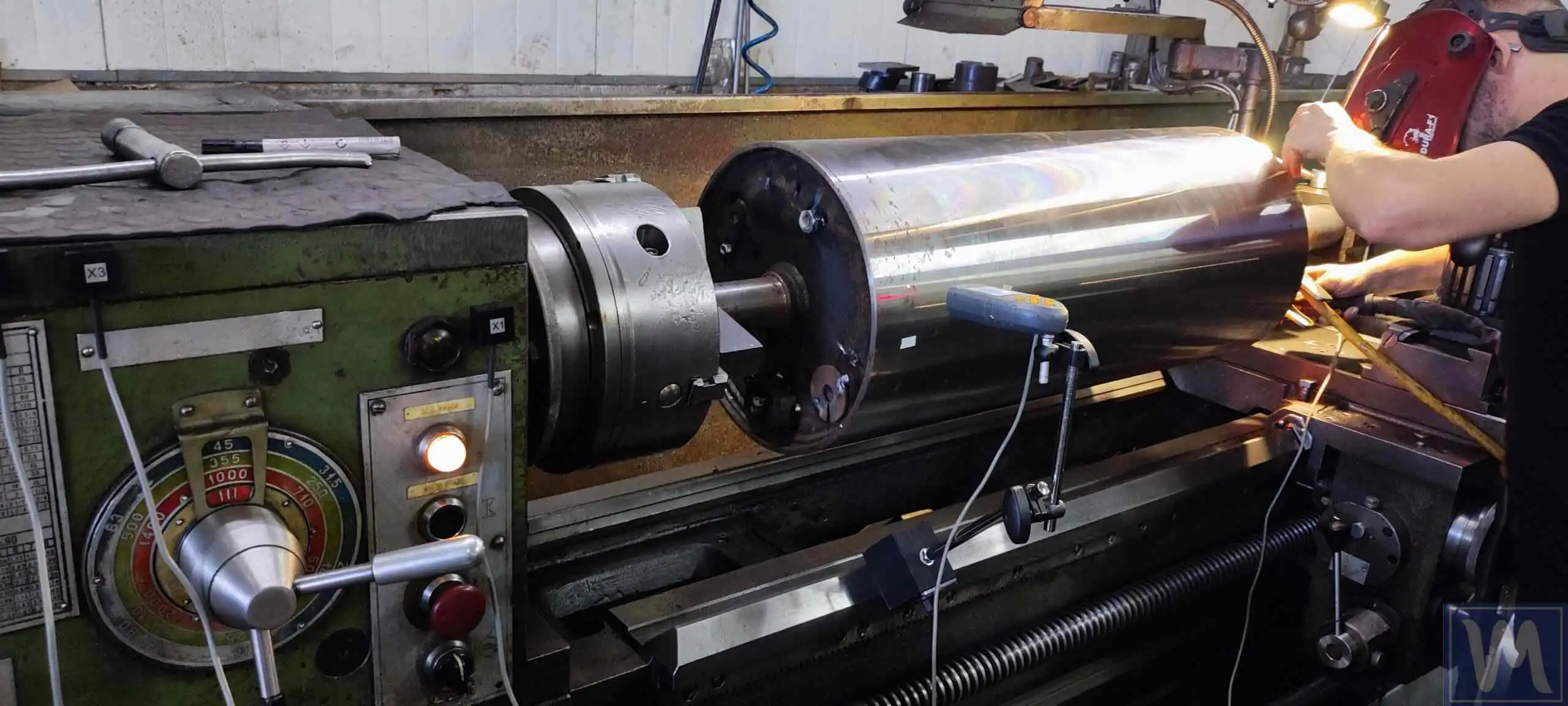
理论上的车床转子平衡过程
车床上的转子平衡过程包括以下步骤:
固定转子
转子牢固地安装在车床卡盘或顶尖上,以确保平衡过程中的稳定性。
安装传感器
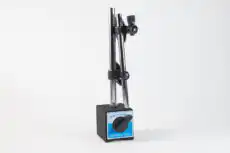
每个校正平面安装一个振动传感器——一个装在主轴箱轴承座上,一个装在尾座或跟刀架座上——沿径向安装,尽量靠近轴承,安装在经过加工的干净金属表面上,用磁性底座固定。不要把传感器装在床身、溜板箱或防护罩上:那些位置的1×信号会被衰减,并主要反映结构本身的振动。将 反光带 在金属表面上(轴端或卡盘),而非橡胶包覆层上,并使激光转速表垂直对准该表面。
测量初始振动
初始振动水平应在你将用于整项作业的转速下测量。所有运转——Run 0、各次试运转以及修正运转——都必须在同一转速下进行,因为影响系数只在测量时所用的转速下才有效。
偏心量的处理(紧接在Run 0之后)
夹具和心轴 偏心率 会在Run 0读数上叠加一个矢量,而这个矢量并非不平衡本身,若对其进行校正就是错误的。应在试重之前处理,而不是之后:在Balanset-1A软件中勾选“消除心轴偏心”复选框,完成Run 0,然后将转子在夹具中旋转180°,按下“F7 - 运行偏心”。软件将矢量半和作为偏心量,矢量半差作为真实不平衡量,只有这时才会解锁试运行。如果在校正配重已经焊接完成之后才这样做,就意味着需要重新计算并重新安装配重。
试重应该多大?
一个安全的起始配重应使其 离心力保持在转子重量的5–10%以内。用公式表示为:
mtrial = k · M · g / (R · ω²), k = 0.05–0.10
其中 M 是转子质量(kg), g = 9.81 m/s², R 是配重的安装半径(m),并且 ω = 2π·RPM/60(rad/s)。示例:一个50 kg的转子在3,000 rpm运转,配重半径R = 0.2 m,可得m ≈ 0.07·50·9.81/(0.2·314²) ≈ 1.7 g — 是克,不是几百克。对于50 kg的转子来说,这个数值小得令人意外,但看看力的大小:在3,000 rpm下,这1.7 g已经产生F = m·R·ω² ≈ 34 N的力——约为转子重量的7%。从小处开始正是关键:加大试重成本很低,而试重过大则会给轴承和焊缝带来实实在在的负荷。同样的受力核算,反过来对你即将拧上去的任何重块也同样适用。
您无需手动计算:Balanset软件内置了一个 首次试重估算器(First Trial Weight Estimator) 它会根据您的转子数据推荐质量和起始角度,并且 碰撞测试 以检查您的工作转速是否接近固有频率。
良好的试重应使读数改变 振幅至少 20–30%,或相位 20–30°。如果响应较小,请逐步增加试重——切勿为“看看有什么变化”而直接跳到很重的试重。
安装试重
A 试验重量 将已知质量的试重安装到转子上,然后再次测量振动。对于两平面平衡,需要依次对每个平面进行这一操作——先在平面1装上试重进行试运转(Run 1),再在平面2装上试重进行试运转(Run 2)——这样软件就能分别测出每个校正平面的影响。
计算修正质量
Balanset-1A 软件对测量结果进行分析,并计算出必要的校正块及其放置角度。
修正转子质量
根据转子的设计和车床的能力,可以通过钻孔、铣削、焊接或其他方法进行质量校正。
平衡验证
修正后,再进行控制振动测量。必要时重复这一过程,直到达到所需的平衡水平。
动态平衡实践
- 旋转频率: 这类轴的工作转速通常在每分钟300至500转(rpm)之间。在这个具体案例中,我们是在550 rpm下进行平衡的。
- 设置: 橡胶轴安装在车床上,然后战略性地放置传感器,如附图所示。
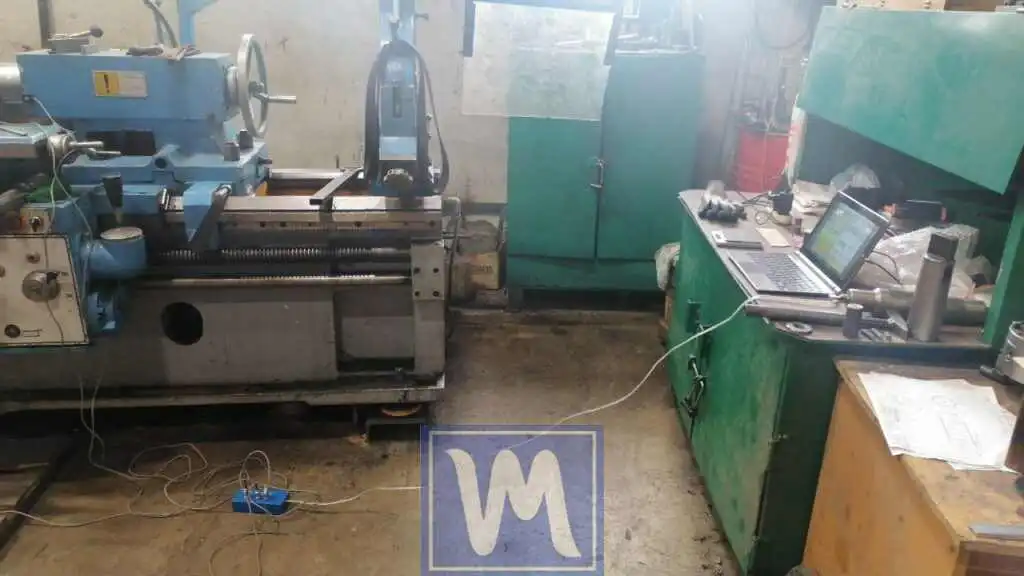
使用车床对橡胶轴进行现场动平衡
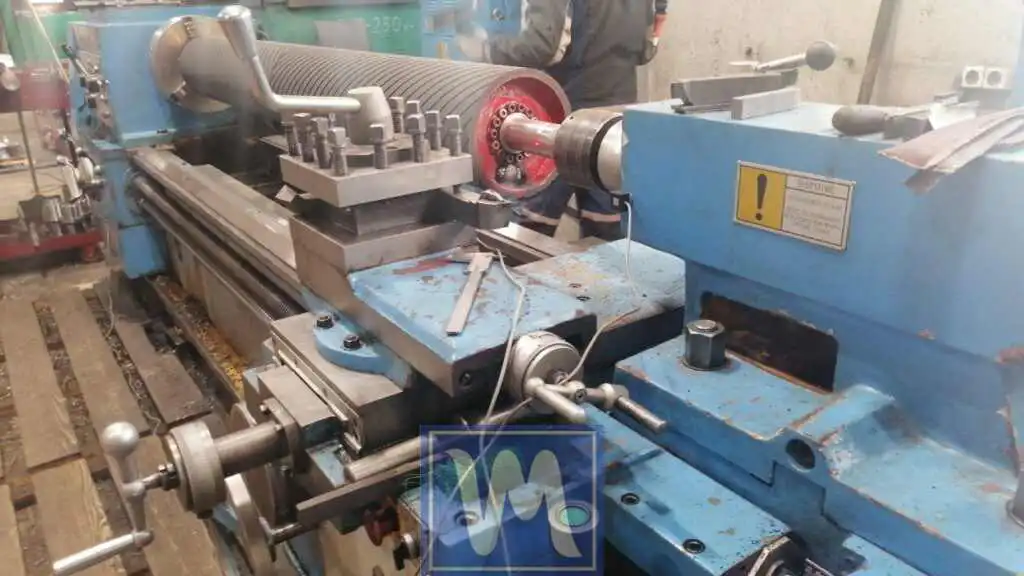
橡胶轴的动态平衡
- 初始振动读数: 在平衡之前, 最初的 振动读数为 9 mm/s 和 17 mm/s。
- 试重运行: 双平面作业需要依次在每个平面上进行试运行—先在1号平面加装试重进行Run 1,再在2号平面加装试重进行Run 2。焊接了一个340克的试重;它改变了振动,并 相位 读数变化约10%。应将这种响应视为最低限度:为获得清晰可靠的测量结果,我们通常要求试重能使振动矢量变化25–50%,但对于笨重刚性的车床而言,每克试重带来的响应都非常小。
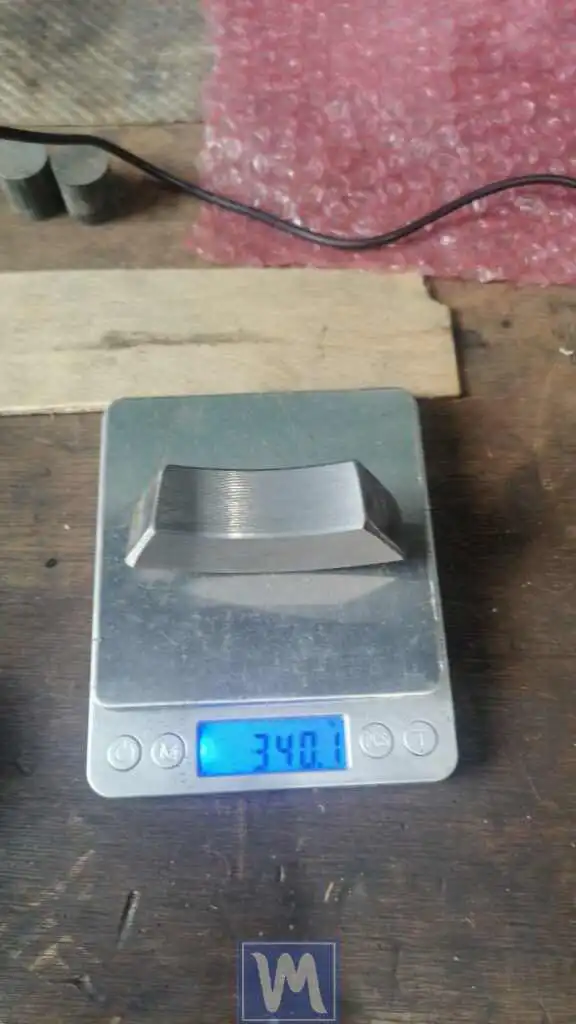
- 平衡调整: 完成带试重的试运行后,我们的Balanset-1A仪器提示需要在轴的一侧增加3100克、另一侧增加4300克,对应的校正位于 双平面。经过这些调整后,振动水平降至2 mm/s和4 mm/s。
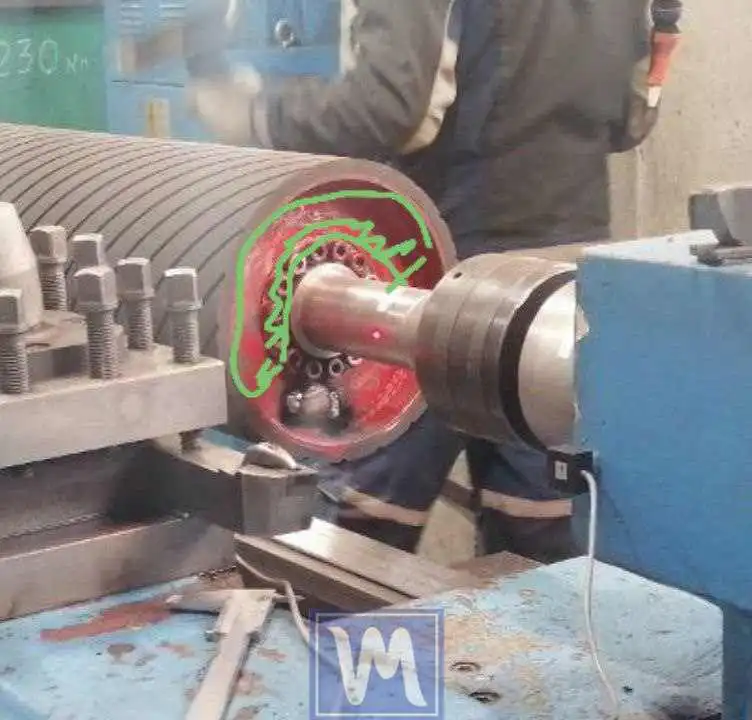
使用车床对橡胶轴进行现场动平衡
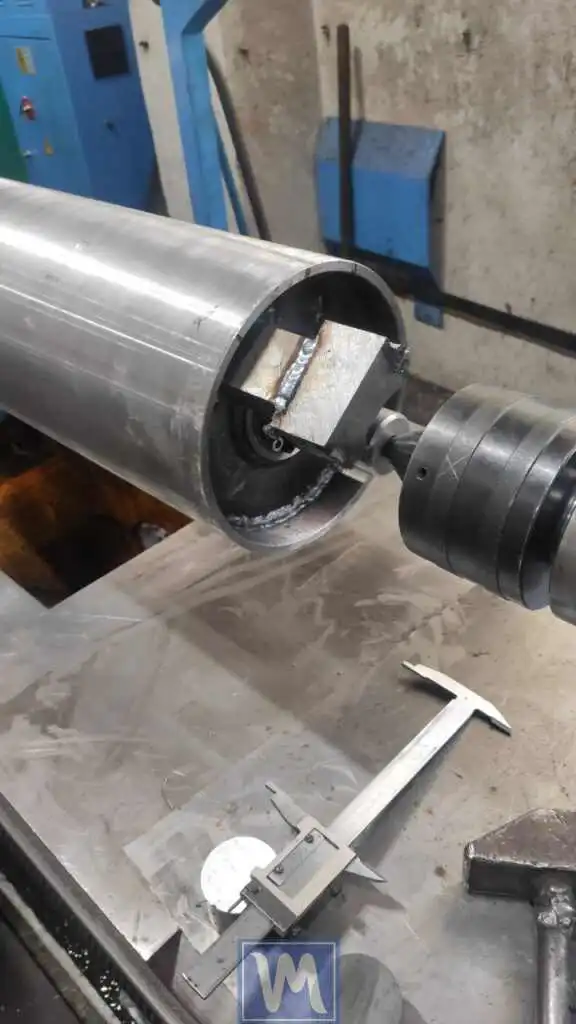
使用车床对橡胶轴进行现场动平衡
- 微调: 为了进一步优化结果,我们接着又加装了400克和700克的配重。随后,又通过加装200克和400克的配重,进行了新一轮的精细调整。由于空间上的限制,这些配重被逐层焊接在了一起。最终,这些临时性的配重,被替换成了专门为这根轴精密切割、外观也更为美观的正式平衡块。最终测得的振动读数,在两个平面上都达到了令人满意的0.1 mm/s(这是一个四舍五入之后的数字——当读数低于1 mm/s的时候,仪器本身会把读数精确显示到小数点后三位)。
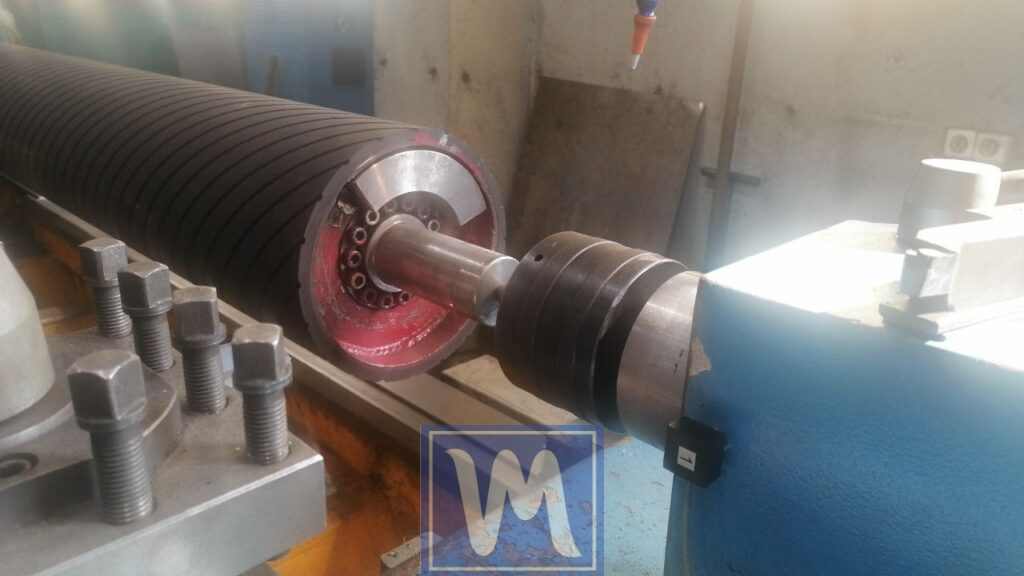
使用车床对橡胶轴进行现场动平衡
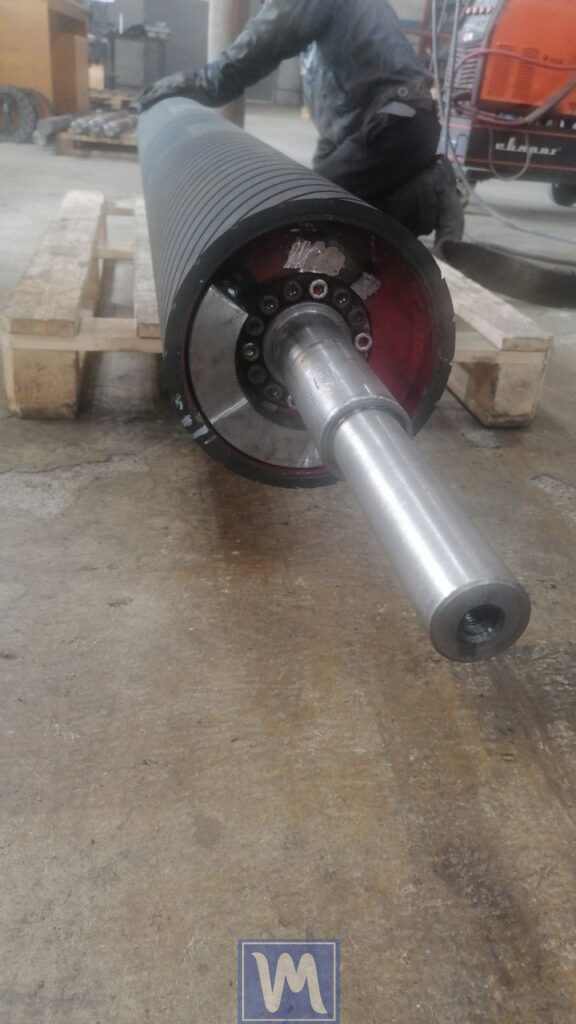
使用车床对橡胶轴进行现场动平衡
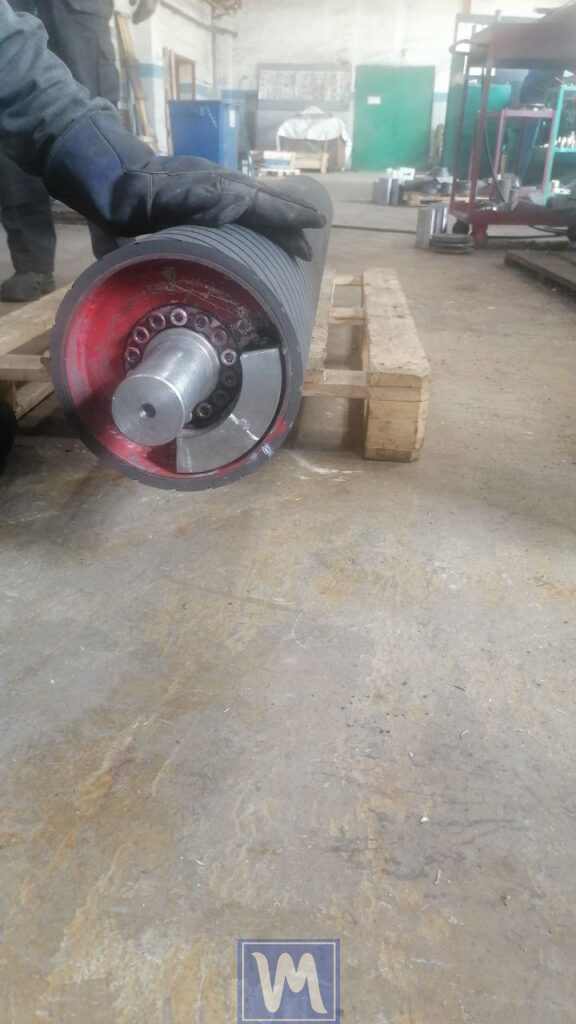
使用车床对橡胶轴进行现场动平衡

车床转子平衡的优势
成本效益
使用车床进行平衡可避免购买专用平衡设备的费用。
便利性
平衡可在转子制造过程中直接进行,从而缩短了生产时间。
高质量
现代便携式平衡机(如 Balanset-1A)具有很高的平衡精度,可降低振动水平并提高产品质量。
结论
对于希望提高产品质量和降低生产成本的企业来说,车床上的转子平衡是一种有效而经济的解决方案。使用像 Balanset-1A 这样的便携式平衡机可以使这一过程变得简单易行,即使对于小型车间来说也是如此。
重要提醒
- 为了获得最佳效果,建议使用高质量的测量仪器,并严格遵循平衡操作流程。您可以估算允许的 残余不平衡量 适用于您的转子,搭配我们的 残余不平衡计算器(ISO 1940).
在车床上平衡转子是向未来生产迈出的一步,通过提高产品质量、降低成本和增强企业竞争力来获得回报。

Nikolai Shelkovenko
Nikolai Shelkovenko是一名振动分析工程师,也是Vibromera的创始人兼首席执行官。 15年多来,他一直在现场——而非在试验台上——为旋转设备进行平衡:粉碎机、工业风机、破碎机、离心机、轴和主轴。正是这些实际工作催生了Balanset系列仪器——它们被设计为一种专业人员可以随身携带到机器旁、在现场独立使用的工具,而非实验室设备。 Vibromera成立于2017年,自2023年起总部设于葡萄牙波尔图。Balanset系列产品的研发、组装与支持均在此完成。旗舰产品是Balanset-1A,一款用于单平面及双平面平衡和振动诊断的便携式分析仪。 Nikolai亲自参与客户支持工作,处理各种棘手的平衡案例,并参与软件开发。他以任何语言为全球客户提供服务。


0 评论