← Balanset-1A kunskapsbas — alla kapitel
Nyckelfaktum från åratal av support: i ungefär 90 % av fallen där balanseringen inte lyckas beror problemet på ett mekaniskt fel i maskinen eller på resonans, inte på enheten eller obalans. Enheten mäter ärligt, men balansering kan inte bota spel, en spricka eller en resonans.
Diagnostikträdet
Arbeta igenom stegen uppifrån och ner.
Steg 1. Är avläsningarna överhuvudtaget stabila?
Ta 2–3 mätningar i följd vid samma varvtal, utan att ändra något. Amplituden måste upprepas inom ~10–20 %, fasen inom ~10–20°.
Avläsningarna ”flyter” → det är för tidigt att balansera. Orsaker till instabilitet:
- Lagerspel — vicka på rotorn med en brytstång, remmarna av.
- En lös konstruktion — sprickor, olåsta bultar, vandrande fästen, fritt hängande klaffar/ramar.
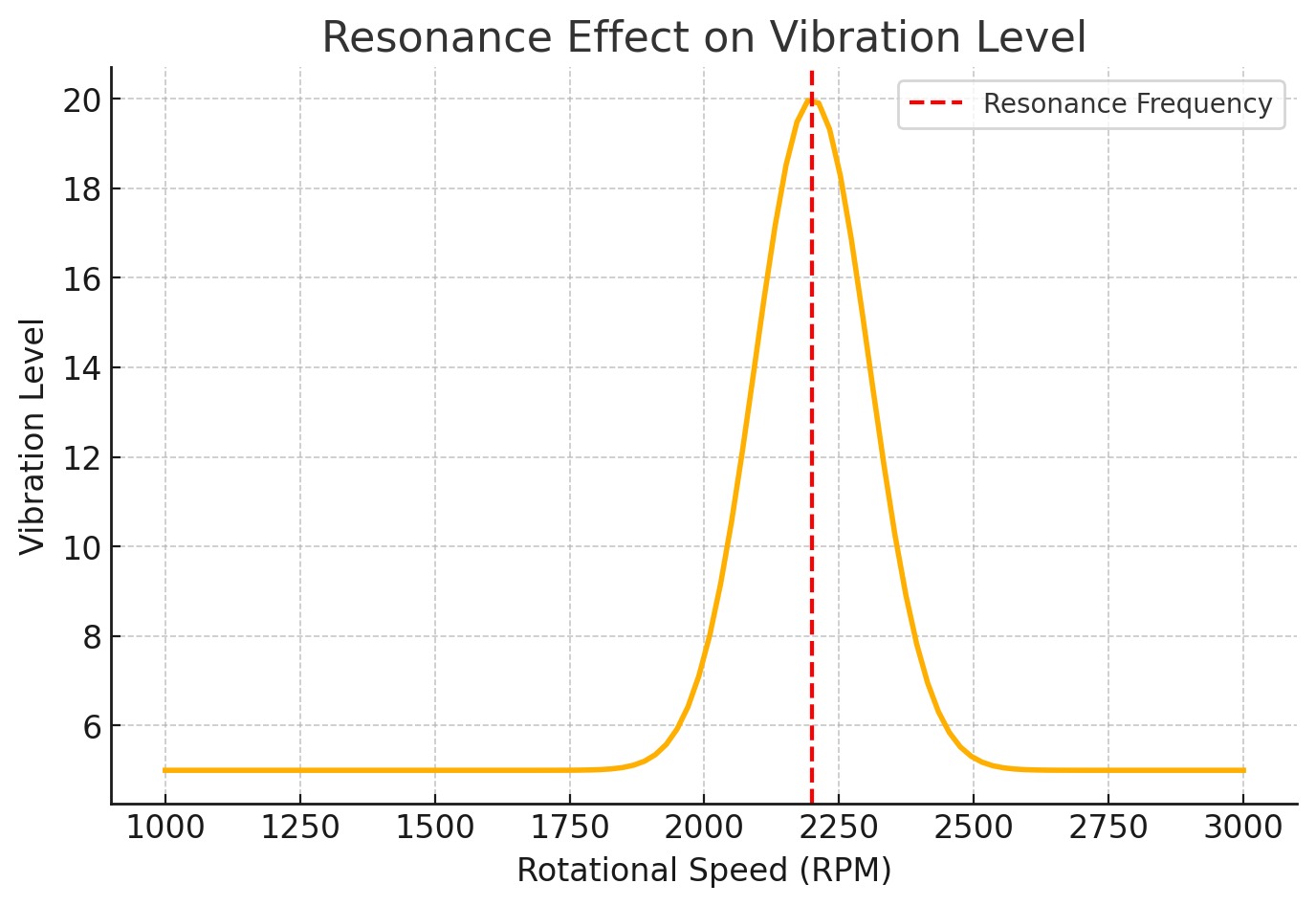
- Resonans — ändra varvtalet med 50–100: om vibrationen ändras flera gånger om är du på eller nära en resonans.
- Hoptorkat/lossnande material på rotorn, vandrande fria knivar.
- Tachometerproblem — dubbla triggningar, bländning (se kapitel 08): fasen hoppar på grund av falska markeringar.
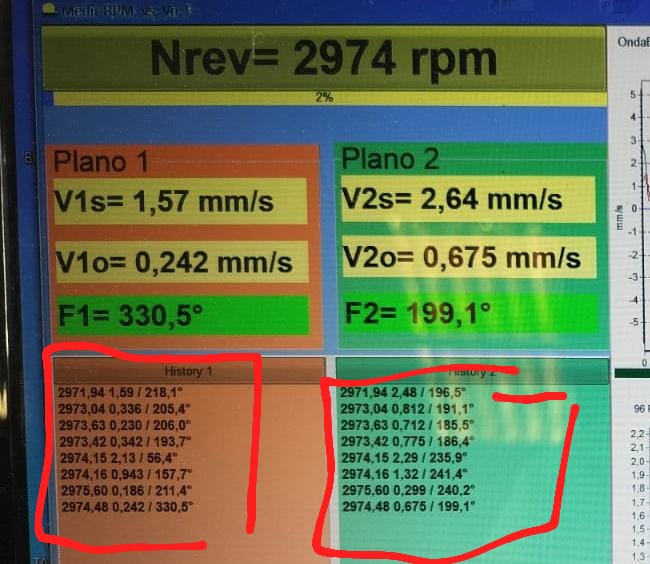
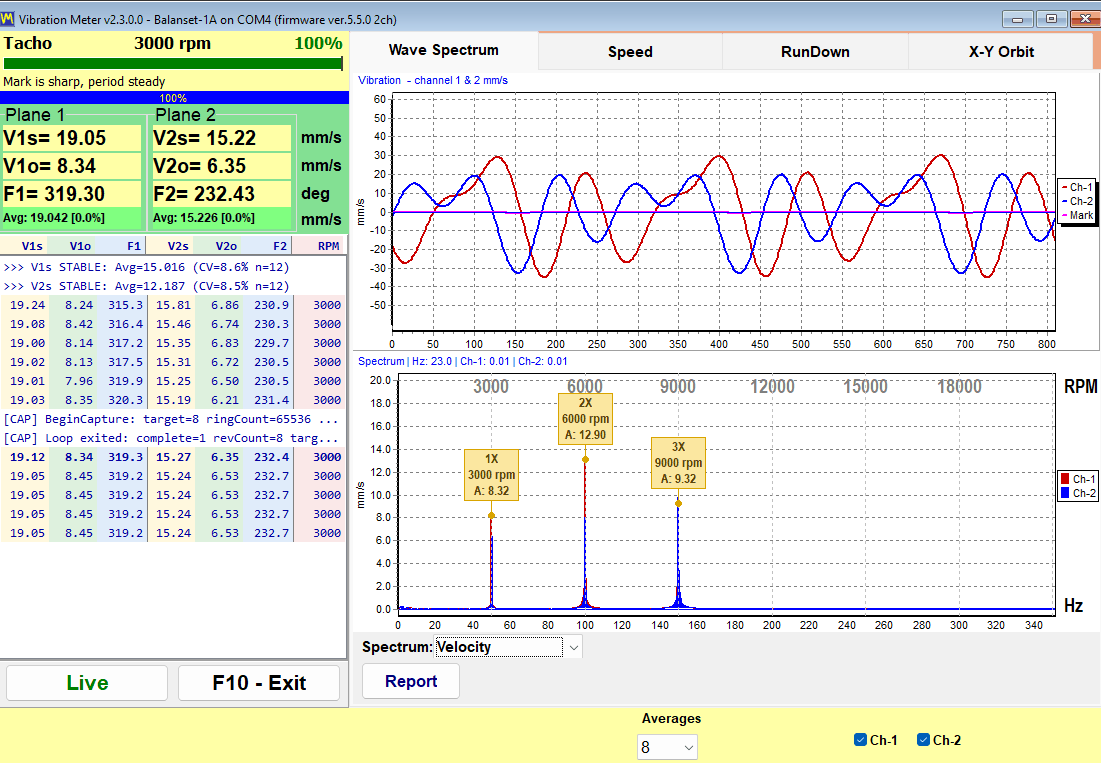
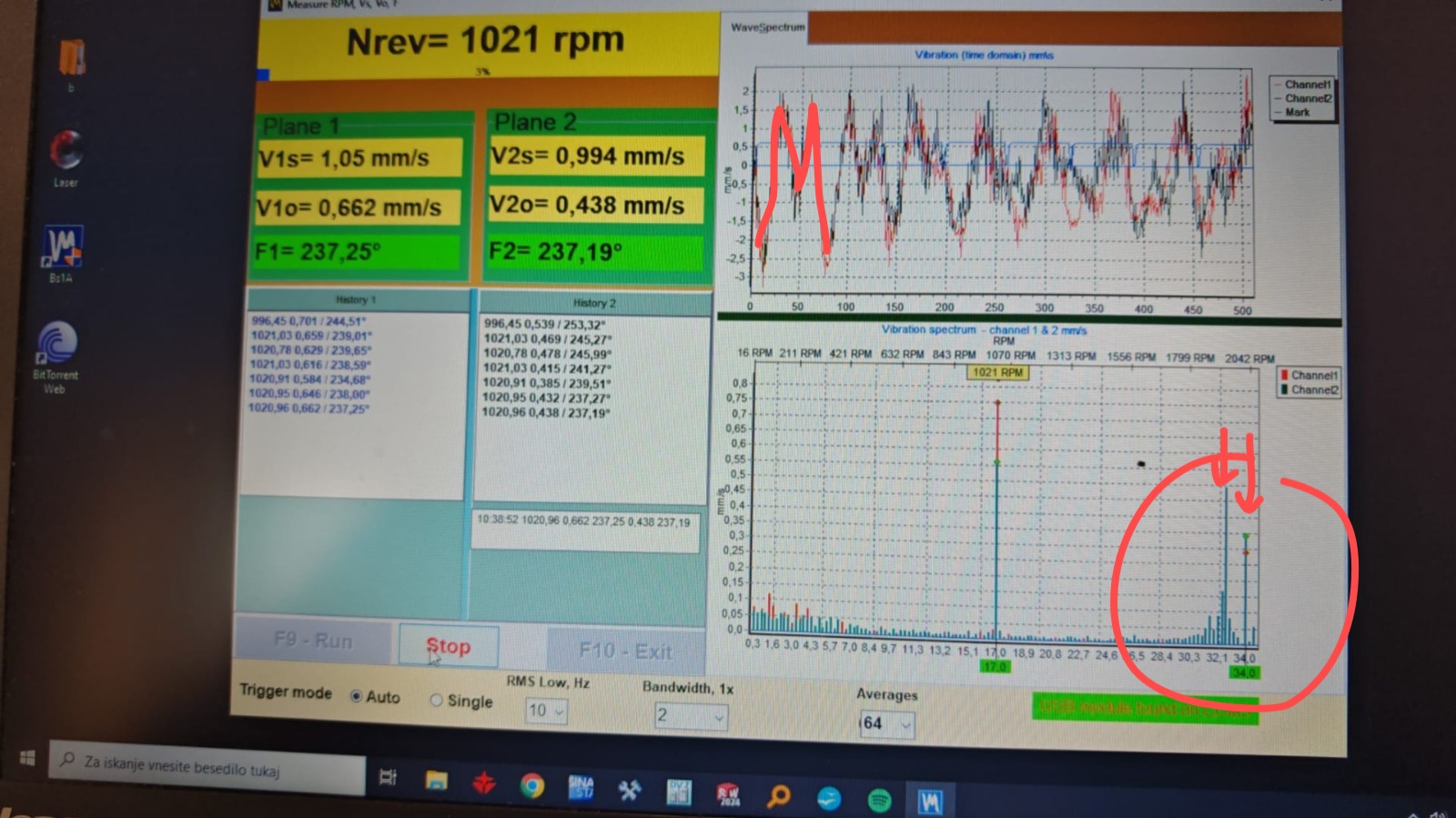
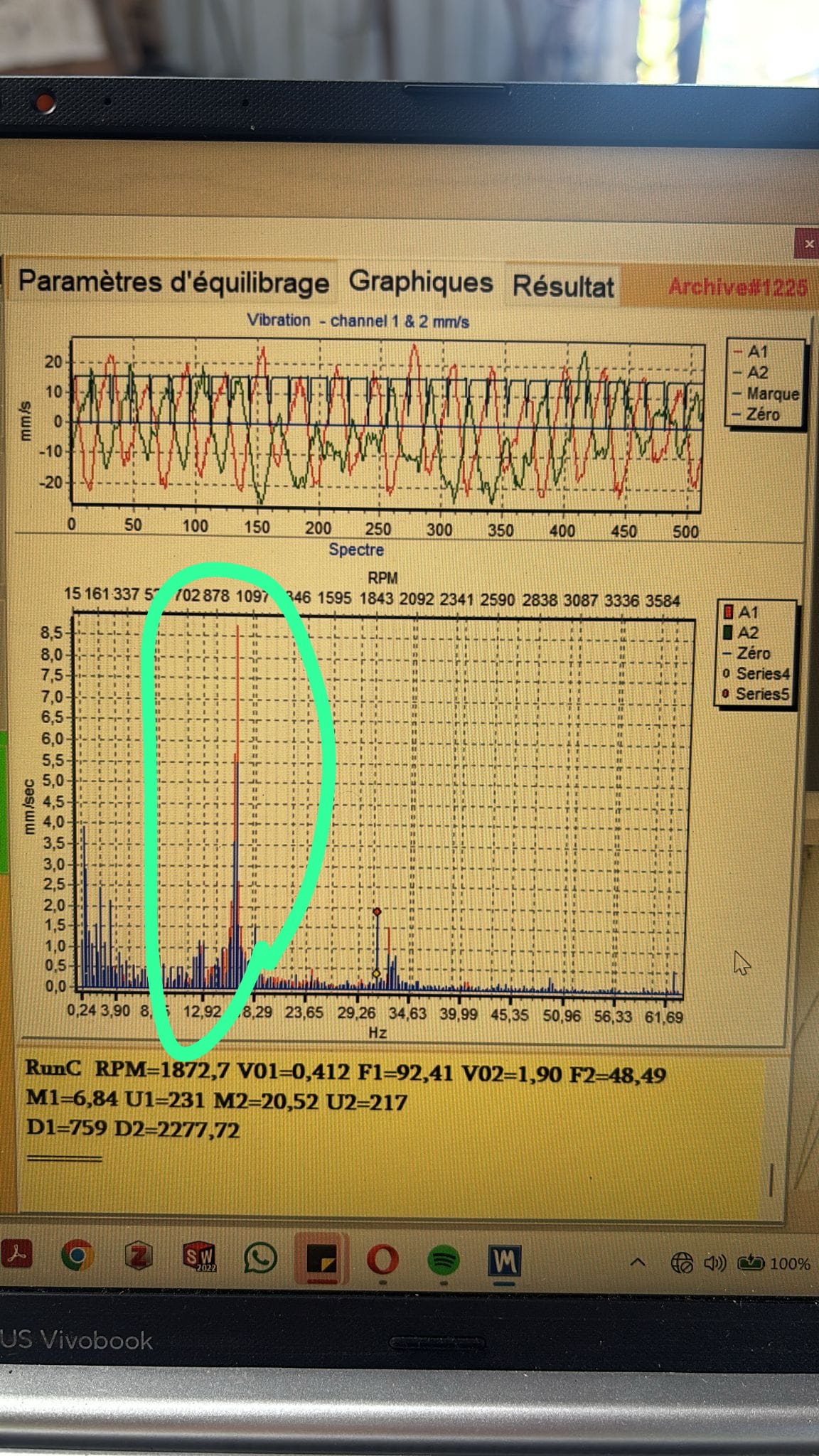
Steg 2. Titta på spektrumet (FFT) — vad är det som skakar?
| Spektrumbild | Trolig orsak | Vad man ska göra |
|---|---|---|
| 1x dominerar | Obalans | Balansera — du är på rätt väg |
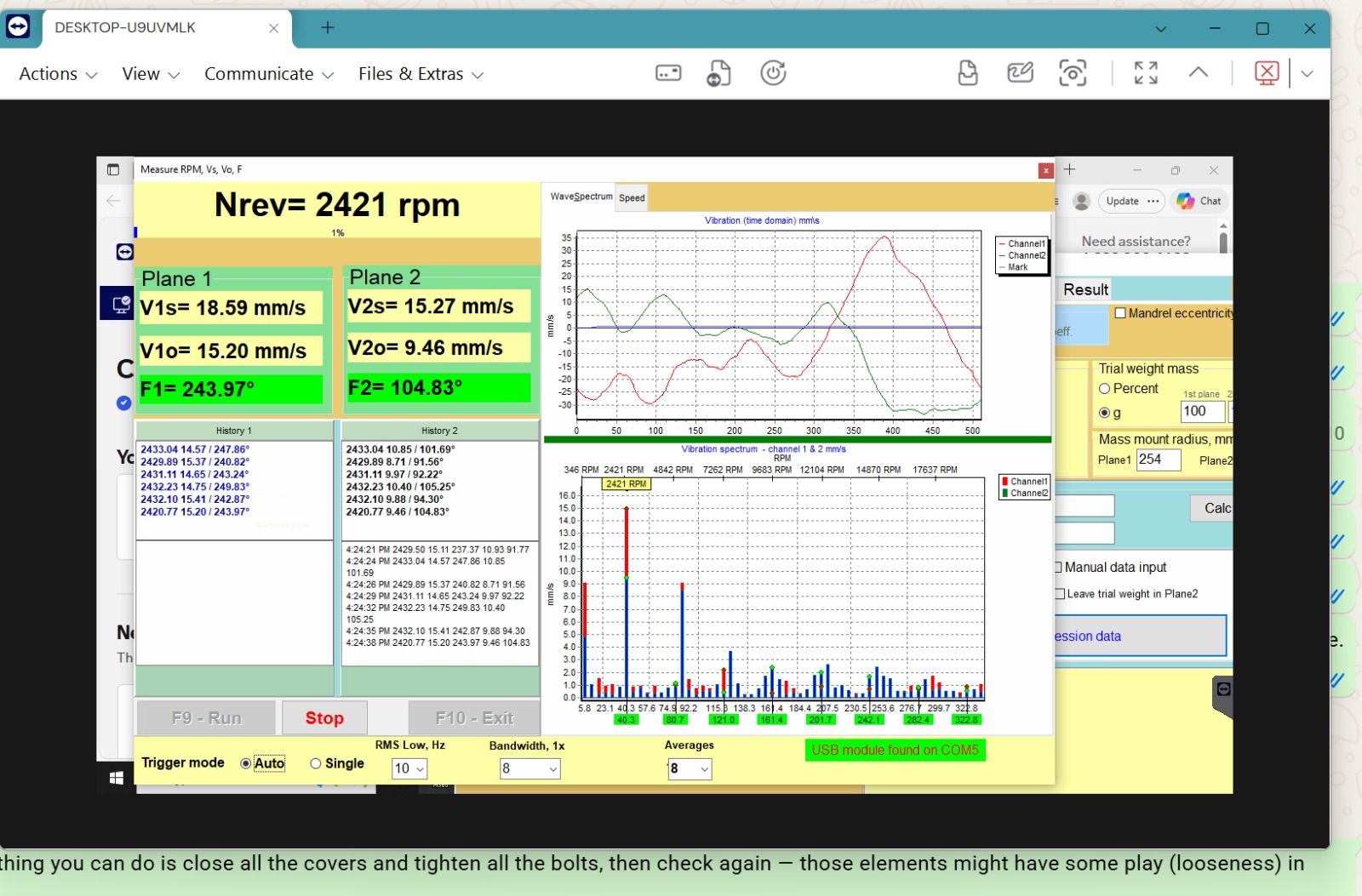
| 2x över 1x | Axelfellinjering (60–70 %), glapp (20–30 %) | Kontrollera kopplingar/uppriktning, fästelement. Balansera först efter att ha åtgärdat |
| En ”skog” av 3x-, 5x- och 6x-övertoner | Mekaniskt glapp: bultar, passningar, spel i upplaget, en spricka | Maskinöversyn |
| En stor topp utanför rotationsfrekvensen | En annan källa: en intilliggande axel, remdrift, växellåda | Ta reda på vad som roterar med den frekvensen |
| En topp vid en multipel av nätfrekvensen (300 Hz = 6×50) | Elektromagnetiska störningar från frekvensomriktaren | Stäng av frekvensomriktaren under utrullningen: toppen försvinner → det är elektriskt. Jordning, ferritringar, filter |
| Toppen ligger kvar när varvtalet ändras | Strukturell resonans eller en extern källa | RunDown, ändra balanseringsvarvtalet |
| En högfrekvent ”matta” | Lager | Byt ut lagren |
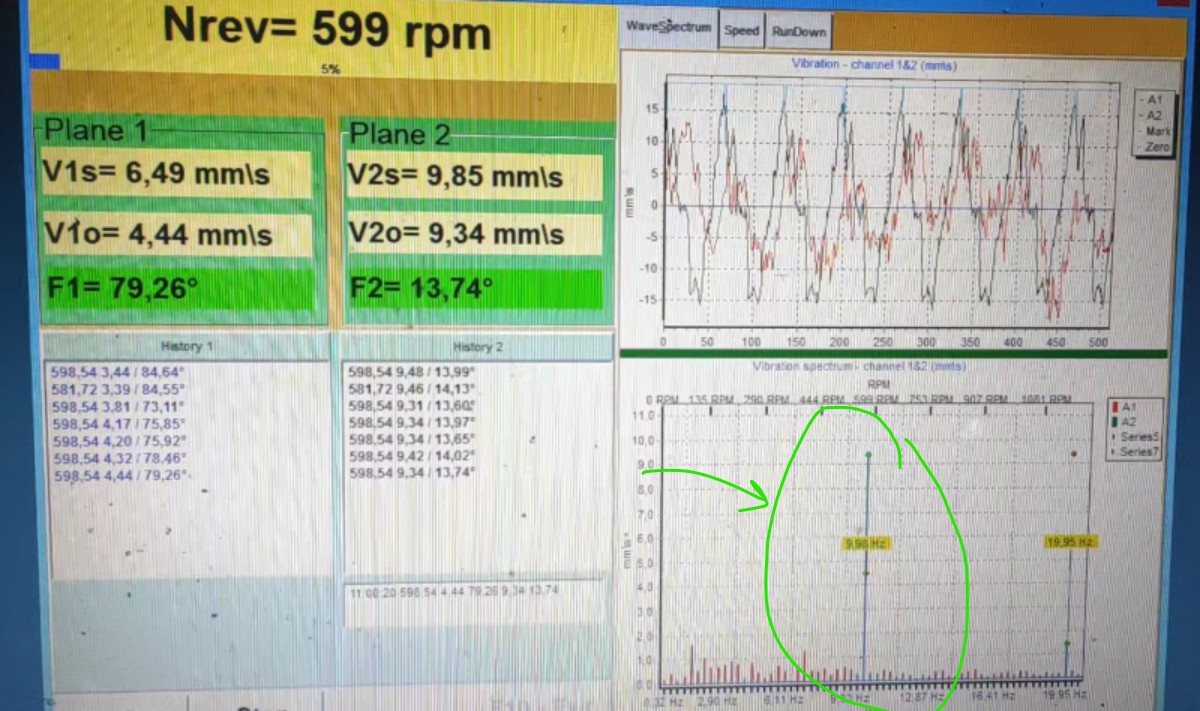
| En lågfrekvent topp vid några Hz, inte 1x | Aerodynamik/fundament | Exempel: en fläkt dominerad av ~10 Hz — kanalaerodynamik, inte obalans |
Steg 3. Tecken på resonans
- Efter montering av den beräknade vikten ökade vibrationen;
- enheten begär allt mer massa vid varje iteration;
- en liten varvtalsändring → en stor vibrationsändring;
- fasen svänger kraftigt när varvtalet ändras.
Lösning:
-
Registrera ett RunDown-diagram (utrullning): kör upp varvtalet → koppla ur drivningen → enheten loggar amplitud och fas mot varvtal. Toppar = resonanszoner; i en resonanszon gör fasen en skarp “knyck”.
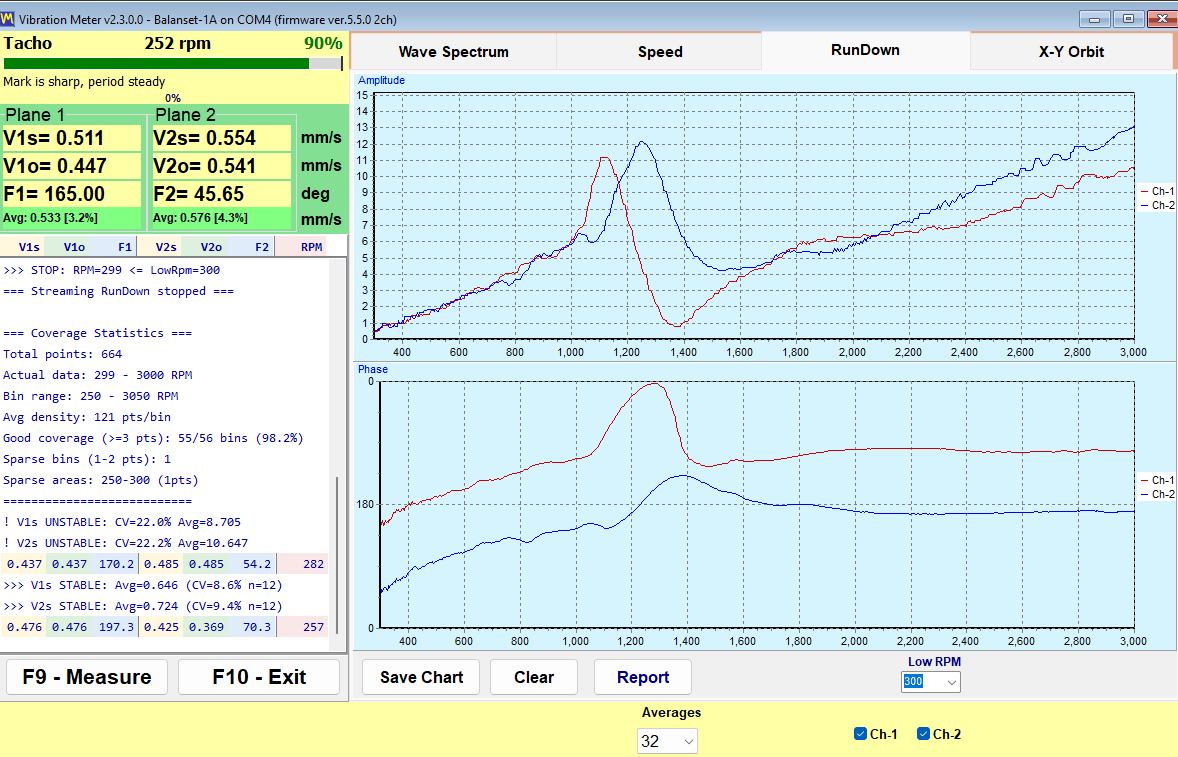
RunDown-skärmen: övre diagrammet — amplitud, nedre — fas. Toppen vid ~1100–1300 rpm med en kraftig fasändring är en resonanszon; balansera utanför den. 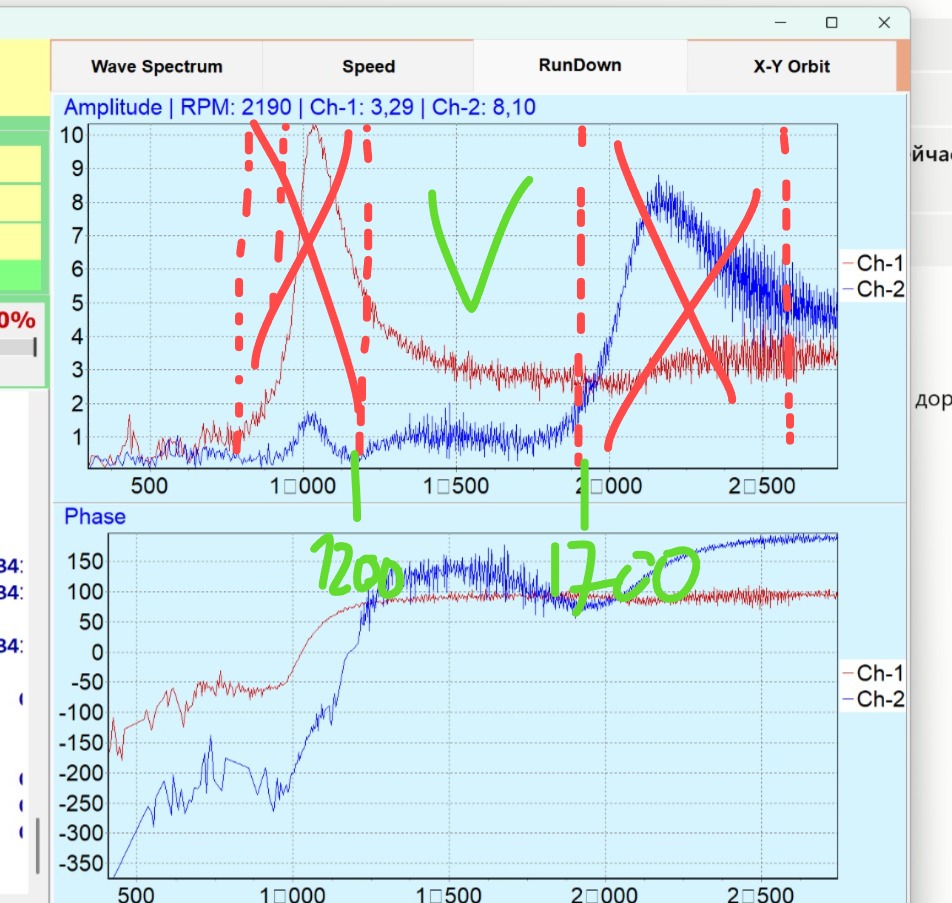
Utan RunDown, sök resonanser med vibrometern: höj varvtalet i steg om 50–100 rpm från lågt varvtal och observera vibrationen — en kraftig ökning vid något steg avslöjar resonanszonen. Verkligt exempel: från 650 till 750 rpm ökade vibrationen fem gånger → resonans nära 755. Ett annat: 70 mm/s vid 1300 rpm men 50 vid 1400 → resonans nära 1300; balansera vid 800.
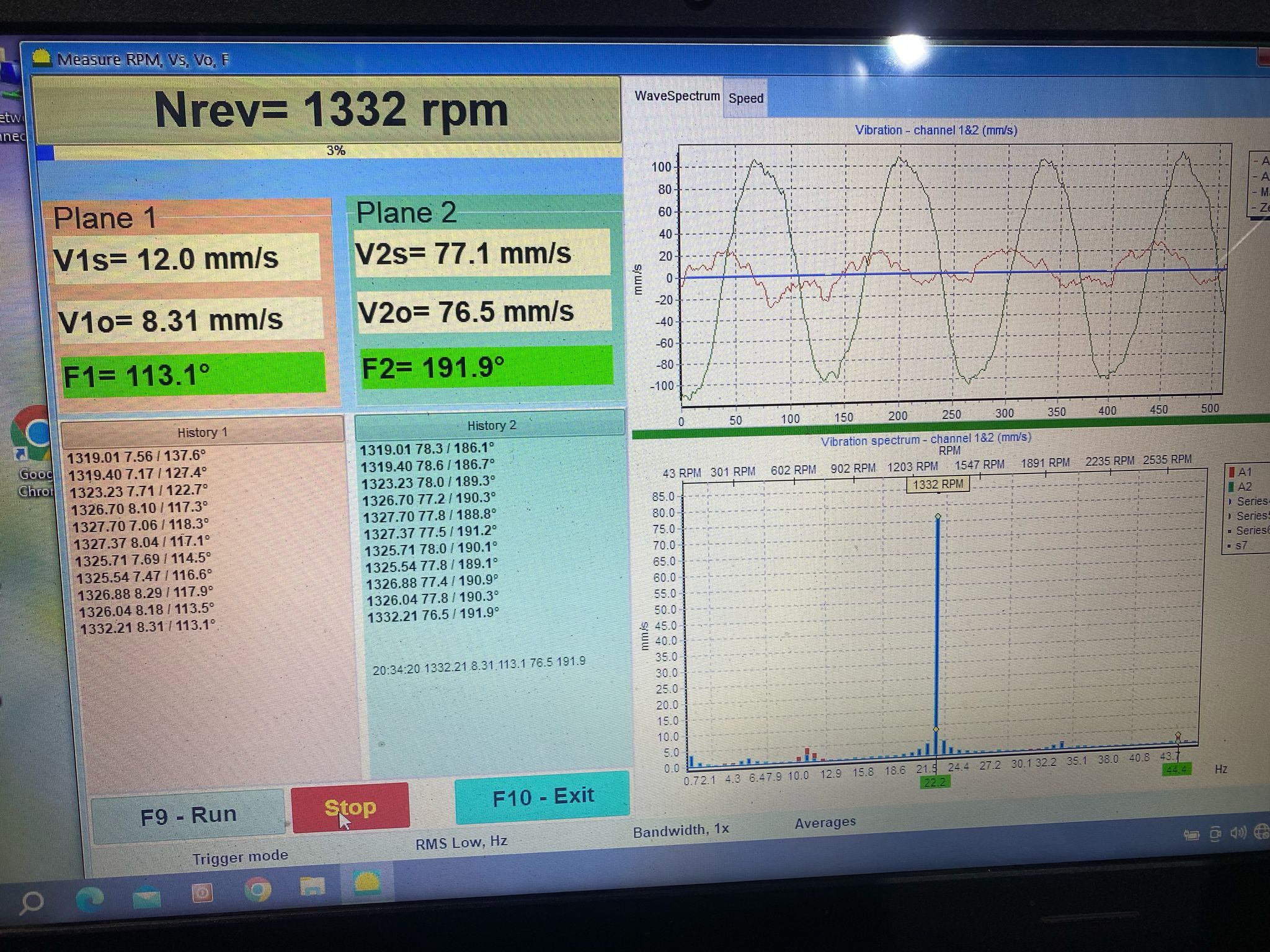
Arbete nära en resonans: 77 mm/s. - Välj balanseringsvarvtal utanför resonanszonerna — vanligtvis klart under (600–900 rpm för mulchermaskiner). Exempel: resonanser vid ~420 och ~644 rpm → balansering vid ~844 rpm; ett annat fall: ingen framgång vid 1600, bra vid 1000 rpm.
- Efter balansering vid ett varvtal utanför resonanszonerna höjer du till arbetsvarvtalet och finjusterar.
- En genomgripande åtgärd: ändra konstruktionens styvhet (förstärk ramen, stötta den eller byt upplagen). En maskin som står med bar metall direkt mot betong beter sig ofta dåligt; vibrationsdämpare eller fjädrar hjälper.
Steg 4. Olinjäritet — ”jag monterar vikten men responsen stämmer inte”
Tecken: responsen på en vikt är oproportionerlig; när vikten tas bort återgår vibrationen inte till ursprungsvärdet (något i maskinen förskjuts/hänger löst).
- Installera en halva eller en tredjedel av den beräknade massan per iteration.
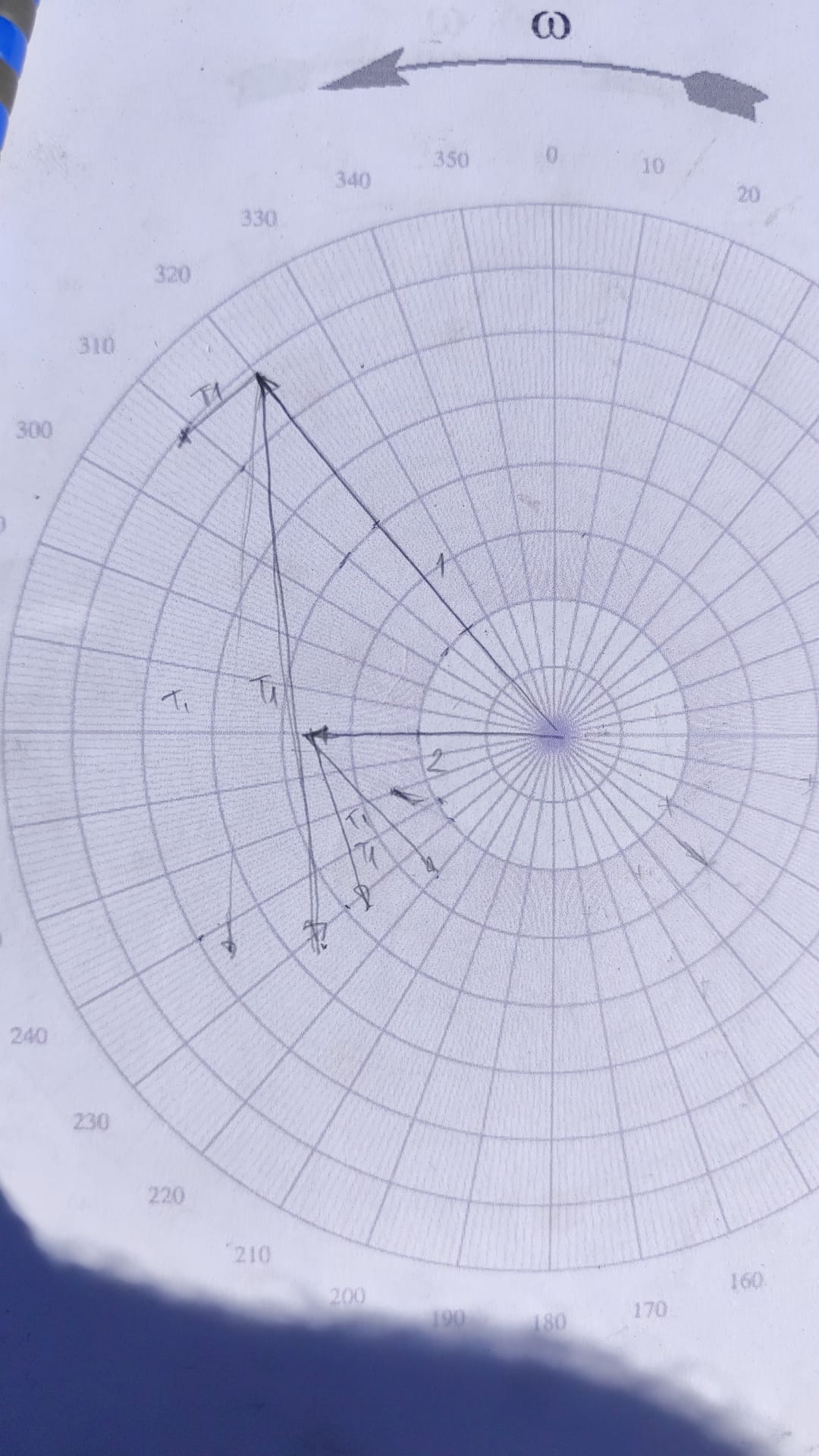
- Kontrollera om provvikten är för stor: förändringen den orsakar bör vara 20–30 % men högst ~100 %. En för tung provvikt bryter den linjära modellen och leder till överkorrigering.
- Om den ursprungliga vibrationen är mycket låg (<1 mm/s) kan även 100–200 g orsaka en kraftig topp. Minska då provmassan.
- Om vibrationen inte återgår till ursprungsvärdet när vikterna tas bort, leta efter ett mekaniskt fel (något förskjuts: en passning, en kil eller en spricka).
Steg 5. Kontrollera dina egna misstag
Gå igenom kapitel 09. De vanligaste:
- vinkeln räknad mot rotationen (symptom: vibrationen ungefär fördubblades istället för att minska);
- procent istället för gram (radien inte angiven);
- kryssrutan ”remove mass” är markerad medan du svetsar på vikter;
- takomarkeringen flyttades mellan körningarna;
- sensorer monterade axiellt eller X1/X2 omkastade;
- varvtalet ändrades mitt i serien;
- provvikten inte borttagen när programmet antog att den var det;
- balansering utan knivarna/hamrarna som monterades efteråt.
Steg 6. Fel som hittats i verkliga fall
Verkliga orsaker från praktiken, när balanseringen inte lyckades:
- en förstörd koppling (dubbelskiva) — trasiga delar inuti, osynliga utifrån; instabil vibration;
- en böjd axel — 4–20 mm kast; balansering kompenserar bara delvis, resultatet blir sämre än vanligt (11 mm/s istället för 3);
- spel i motorns bakre lager — en topp vid ~85 Hz; väntade på en ny motor;
- en spricka i en remskiva;
- trasiga fästen/upphängningar på mulchermaskinen som sprack igen efter reparation;
- ett slitet lagersäte — åtgärdat med påsvetsning och ombearbetning av axeltappen;
- takometern räknade 2 remskivehål som 2 markeringar — varvtalet ”fördubblades”, vilket gjorde beräkningen meningslös;
- aerodynamik — kanalsug med otillräcklig styvhet: inget att balansera; rengör filtren och förstyva konstruktionen;
- frekvensomriktaren — en topp vid 300 Hz (6×50) som försvann när frekvensomriktaren stängdes av.
Steg 7. När man ska sluta
Vissa maskiner kan inte balanseras i fält förrän de har reparerats. Även erfaren support har haft ett fåtal avslag på 10+ år (en skördetröskehack, en 2,5 m röjningsklippare, en grävmaskinsmonterad flismaskin). Om mekaniken är defekt — säg det ärligt till kunden: reparera först (lager, axel, ram), sedan balansering. Det är en professionell slutsats, inte ett nederlag.
Snabböversikt: Varför ökade vibrationen efter montering av vikten?
- Fel räkneriktning för vinkeln → kontrollera att du räknat med rotationen.
- Kryssrutan ”remove mass” markerad medan du svetsar på vikter → vänder resultatets tecken.
- Resonans → RunDown, annat varvtal.
- För stort steg (hela massan på en olinjär maskin) → halva massan.
- Mekanik (glapp/spricka) → översyn.
- Falska takomarkeringar → fasen blir fel, se kapitel 08.

