Meet Vibromera.com — our new international website. Visit Vibromera.com →

動平衡校正服務 › 輥筒與滾筒

輥筒與滾筒動平衡校正 — 原位、於生產速度下進行

紙機輥筒、印刷壓印輥、壓光機滾筒、乾燥輥與輸送滾筒具有一共同特性:即使微小的質量偏心,在生產速度下也會產生巨大的離心力。我們對其進行動平衡校正 在設備原位、運轉速度下 — 無需拆解、無需運送車間 — 在單次現場作業中消除產品缺陷、軸承故障與紙幅斷裂的根本原因。
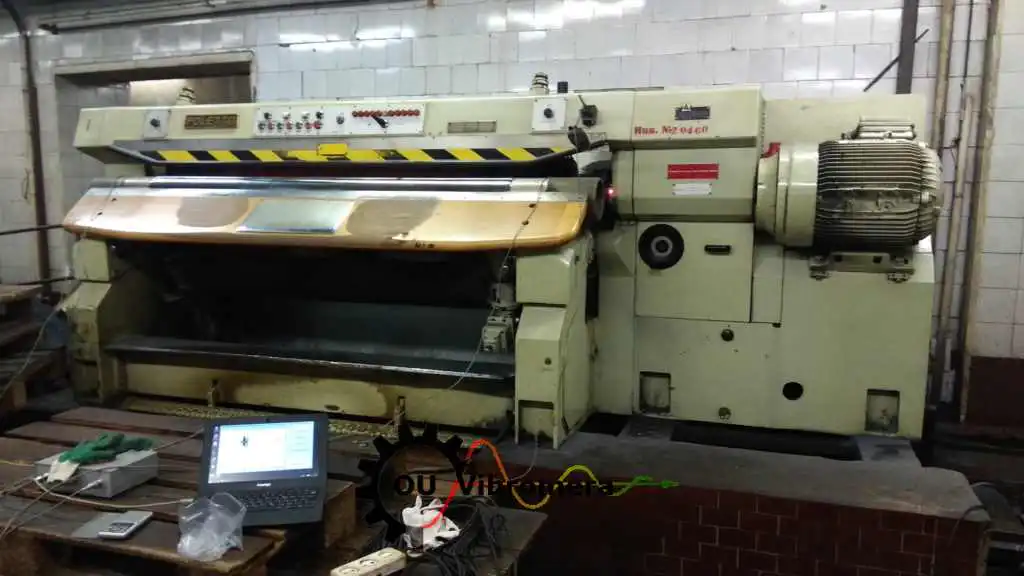
Roll and drum in-situ field balancing on a production line with Balanset-1A

簡言之: 輥筒與滾筒動平衡校正於正常生產速度下原位進行,採用雙平面影響係數法。安裝於兩側軸承座的振動感測器與安裝於軸上的雷射轉速計捕捉不平衡狀態;Balanset-1A 計算輥筒每端精確的校正質量與角度。無需拆卸,除安裝感測器外無需停線 — 多數作業在一小時內完成,振動降低 70 % 以上,消除產品品質缺陷,並將軸承壽命延長八倍以上。

您的輥筒或滾筒出現不平衡的徵兆

輥筒與滾筒通常運轉數小時後操作員才會察覺異常。以下是不平衡正在作用的訊號:

產品出現條紋或帶狀痕跡 間距與輥筒周長相符的週期性表面痕跡,顯示印刷、塗佈或壓光過程中因振動引起的壓輥壓力變化 — 這是可直接追溯至旋轉不平衡的產品品質缺陷。
1× RPM 處的振動 鎖定於軸基頻的振動峰值是質量不平衡最清晰的頻譜指紋。它隨速度的平方上升,且在生產批次間永不消失。
軸承快速磨損 每數月即需更換軸承的輥筒,承受著軸承從未設計用於承受的旋轉動態負荷。將該負荷減半,可使 L10 壽命延長約八倍。
紙幅斷裂或套印不准 振動的壓輥會使紙幅張力不穩定,導致印刷與加工線出現斷裂、卡紙或色與色之間的套印錯誤。
隨速度上升的噪音 跟隨軸速且在較高生產速率下變大的嗡嗡聲或轟鳴聲,指向不平衡,而非軸承噪音(軸承噪音出現於特徵故障頻率)。
基礎螺栓疲勞 不平衡輥筒產生的週期性力每轉一圈便敲擊機架,導致螺栓開裂或鬆脫,最終造成底架結構損壞。

輥筒與滾筒為何會失去平衡 — 以及其代價

新研磨的輥筒離開車間時符合嚴格的平衡公差,但使用條件會持續破壞該狀態。 塗層不均或橡膠磨損 在輥筒表面逐漸重新分配質量; 物料堆積 乾燥殘留物不對稱地積聚於中空乾燥滾筒內部; 重新包覆或重新研磨 作業非均勻地去除材料;且熱壓光過程中的熱變形會使有效質心在生產班次間偏移。由於離心力與角速度的 平方 成正比,低速下看似無害的次毫米級偏心,在全速生產 RPM 下會變成破壞性的動態負荷。

忽視輥筒不平衡的下游成本會迅速累積:浪費不合格產品卷、為更換軸承而計劃外停機、縮短輥筒使用壽命的重新研磨週期,以及機架結構疲勞。現場動平衡從源頭解決所有這些問題,且通常在其首次防止計劃外停機時即可收回成本。

×10振動減半時的軸承壽命
−70%單次校正後的典型振動降幅
2一次到訪校正的平面數
<1h典型現場作業

為何振動減半能倍增軸承壽命

ISO 281 將滾動軸承額定壽命定義為 L10 = (C/P)p,其中 P 為軸承承受的動態負荷,指數 p = 3 適用於滾珠軸承,10/3 適用於滾子軸承。殘餘不平衡 該旋轉負荷 P,且振動振幅直接追蹤它 — 因此將振動減半可使 P 減半,並將軸承壽命倍增 2p:約 滾珠軸承約 8×,滾子軸承約 ~10× (210/3 ≈ 10)。在我們的 軸承壽命計算器.

我們如何校正輥筒或滾筒的平衡 — 逐步說明

Balanset-1A 採用適應輥筒與滾筒安裝幾何與存取限制的影響係數法。您的維護團隊可在現場執行相同的系統化作業:

  1. 安裝感測器。 振動加速規固定於兩側端軸承座,雷射轉速計對準軸或端板上的反光貼。機器全程以正常生產速度運轉 — 無需拆解、無需移除管線或機架。
  2. 測量基線。 以全生產速度運轉一次,記錄兩軸承平面的振動振幅與相位角,確立輥筒每端當前的不平衡狀態(大小與方向)。
  3. 添加試重。 將已知試重夾緊或螺栓固定於一側輥筒端板、軸套或軸頸的指定角度位置。第二次運轉顯示各平面對該已知擾動的響應 — 即該輥筒與該速度的影響係數。
  4. 讓設備進行計算。 Balanset-1A 求解雙平面影響係數方程式,並輸出輥筒或滾筒本體每端的校正質量與時鐘角度。
  5. 安裝校正配重。 校正配重以螺栓、焊接或夾緊方式固定於滾筒本體或輥筒軸頸兩端的計算位置。除非試重構成解決方案的一部分,否則將其移除。
  6. 驗證並記錄。 以生產速度進行最終運轉,確認殘餘不平衡值在 ISO 21940-11 標準要求的輥筒等級與運轉速度範圍內。Balanset-1A 產生報告,記錄校正前後的不平衡值,供您留存維護紀錄。

我們校正的部件

  • 紙機壓輥、乾燥輥與壓光輥
  • 印刷與柔版印刷壓印輥
  • 塗佈與複合輥
  • 輸送機頭尾滾筒
  • 橡膠包覆與聚氨酯包覆輥
  • 皮革加工與壓花輥
  • 鋼製與鑄鐵工業製程滾筒
  • 紡織壓光與整理輥
  • 旋轉乾燥滾筒與窯爐
  • 客製化中空圓筒與芯軸

公差與標準

ISO 21940-11 (前身為 ISO 1940-1)定義剛性轉子的殘餘比不平衡限值,其為使用速度與平衡品質等級 G 的函數。紙機壓輥與乾燥輥通常校正至 G 1.0 或 G 2.5 因為即使生產速度下的微小振動也會造成可測量的產品缺陷;重型輸送與製程滾筒可接受 G 6.3.

For paper-machine rolls specifically, the TAPPI TIP series provides additional guidance on roll vibration acceptance limits at running speed, including critical-speed margins and nip-pressure uniformity requirements; rolls operating above their first critical speed additionally fall under the flexible-rotor balancing criteria of ISO 21940-12 (前身為 ISO 11342)。我們會在每次作業結束後,提供一份記載所達平衡等級的殘餘不平衡報告。請使用我們的 paper-machine roll balance calculator to pre-calculate the permissible residual unbalance for your roll dimensions and speed before starting the job.

Balanset-1A — 您的完整現場動平衡套件

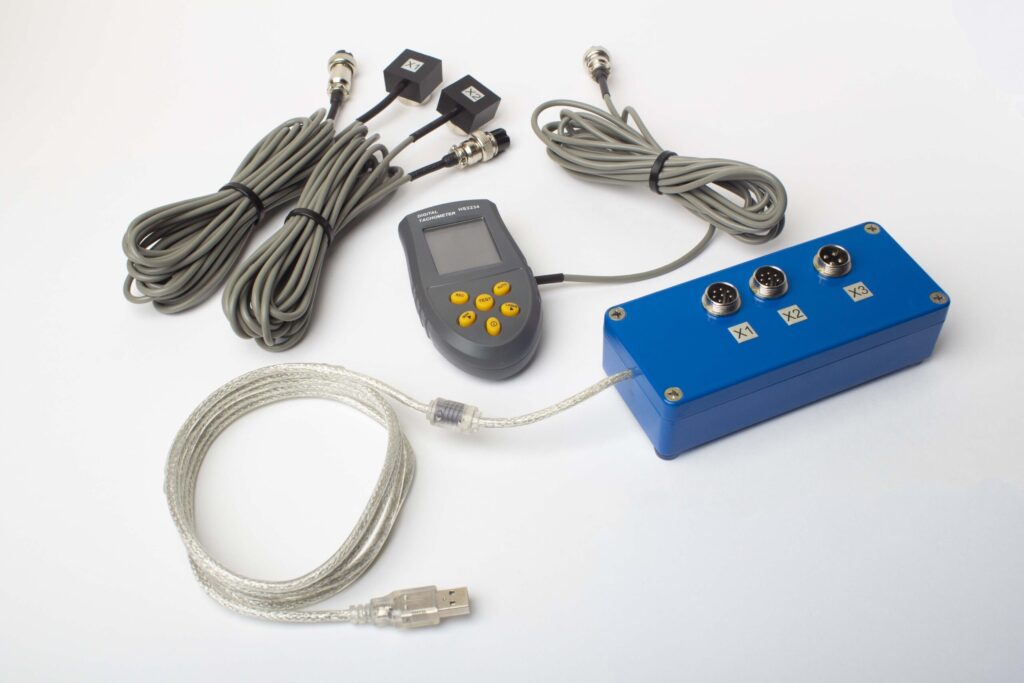
本頁所述的所有作業皆使用單一便攜式儀器完成: Balanset-1A. It is a two-channel dynamic balancer and vibration analyzer that balances rolls and drums in their own bearings, at production speed, using the 3-run influence-coefficient method — the software calculates the exact correction mass and angle for each end of the roll and saves a documented report.

Complete Balanset-1A balancing kit with sensors, laser tachometer, scale and case

完整套件內容

€1,975 · 完整套件,現貨供應,附增值稅發票

  • 介面測量單元(USB,2 通道)
  • 兩支振動加速規(4 m 電纜,10 m 可選)
  • 雷射轉速計 / 光學相位感測器(50–500 mm)
  • 感測器用磁性支架
  • 試重與校正配重用數位秤
  • Windows 動平衡與分析軟體
  • 塑膠運輸箱
推薦

完整套件

Unit · 2 sensors · laser tachometer · magnetic stand · digital scale · software · transport case. Everything needed to start balancing rolls and drums out of the box.

OEM

OEM 套件

Unit · 2 sensors · laser tachometer · software. For integrators who already have a stand, scale and case, or who embed the unit into a dedicated roll-balancing machine.

主要技術規格
參數數值
測量通道2(單平面與雙平面動平衡)
振動速度範圍0.2–80 mm/s RMS
頻率範圍5–1000 Hz(>550 Hz 時振幅誤差 ≤10%)
測量精度±5% 滿量程
方法三次運行影響係數法(1 或 2 平面)
分析1× 振幅與相位、FFT 頻譜與波形、已儲存報告
筆記型電腦未包含(Windows PC,可依需求提供)
現貨供應 DHL 葡萄牙 €35 DHL 全球 €110 兩年保固 增值稅發票 工程師支援

Field balancing vs balancing machine — which is right for your roll?

Comparison: in-situ field balancing vs dedicated roll-balancing machine
係數現場動平衡(Balanset-1A)動平衡機(車間)
Roll removed from the line?否 — 原地運轉Yes — full dismounting required
Production line shutdown?僅安裝感測器(<15 分鐘)Hours to days (remove, transport, balance, reinstall)
校正速度Actual production speed & temperatureSeparate low-speed spindle, room temperature
Accounts for thermal distortionYes — roll balanced at operating temperatureNo — cold-state only
Accounts for shaft/coupling flexYes — full assembly balanced in own bearingsRoll body only
符合標準ISO 21940-11、TAPPI TIPISO 21940-11
設備成本€1,975(完整套件)€15,000 – €80,000+
典型作業時間<1 小時(現場)總計 1–3 天

Field balancing is the preferred choice whenever the roll can run and the rotor rigidity criterion is satisfied. A workshop machine remains appropriate for new-build rolls where zero run time is available, or for rolls with thermal instability so severe that they cannot reach a stable balance state at operating temperature without structural repair first.

Roll & drum balancing FAQ

Can a roll be balanced without removing it from the machine?
Yes. Field balancing is done with the roll running in its own bearings and housings at normal production speed. No dismounting, no sending the roll to a workshop. Access to both end-bearing housings is required to mount the sensors, and there must be a way to attach correction weights to each end of the roll — typically bolted or clamped to an end-plate, collar or journal.
Why does a freshly re-covered roll vibrate more than the old one?
Re-covering or re-grinding removes and adds rubber or coating at varying rates around the circumference, easily shifting the mass centre by several tenths of a millimetre. Balancing after any re-covering or re-grinding operation is standard practice and explicitly recommended in ISO 21940-11. The Balanset-1A makes this a quick on-machine procedure rather than a workshop round-trip.
What balance grade is required for a printing cylinder?
High-speed printing cylinders typically require ISO 21940-11 grade G 1.0 because even a small residual unbalance produces nip-pressure variation that appears as a repeating band pattern on the printed product. Use the 殘餘不平衡計算器 to work out the exact allowance for your cylinder diameter, length and running speed before starting the job.
Our conveyor drum vibrates but the belt looks fine — is it the drum?
Not necessarily. First confirm that the vibration peak is at exactly 1× RPM — a frequency proportional to shaft speed. Belt-frequency vibration, misalignment (2× RPM) and bearing defects produce different spectral patterns. The Balanset-1A measures both amplitude and phase so you can confirm the source before adding any correction weight, avoiding unnecessary intervention.
How long does a typical roll-balancing job take?
Most single-roll jobs are complete in under an hour: a baseline run, a trial-weight run, fit the corrections and a verification run. Wide rolls with severe initial unbalance may need a second iteration, but two iterations are still usually finished within a normal maintenance window without disrupting the production schedule.
我們能使用 Balanset-1A 自行操作嗎?
Yes. The Balanset-1A is designed for maintenance teams to operate without specialist vibration training. It guides you through each measurement run, solves the two-plane influence-coefficient equations automatically, and outputs the correction mass and angle for each roll end. Full software documentation and our 社群論壇 are available if you encounter an unusual roll geometry or want to verify your approach with an engineer.

Balance your rolls and drums — in place, at production speed

The Balanset-1A performs two-plane field balancing on any roll or drum at production speed, calculates the exact correction mass and angle for each end, and delivers a documented residual-unbalance result to ISO 21940-11. No dismounting, no shipping to a workshop, no lost production — just consistent product quality, quieter machinery and bearings that last.

WhatsApp
Balanset-1A · €1975Ask engineer