

Meet Vibromera.com — our new international website. Visit Vibromera.com →

了解軟腳

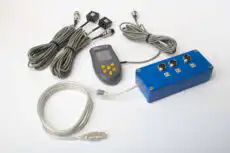
便攜式平衡機 & 振動分析儀 Balanset-1A

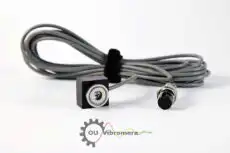
振動感測器

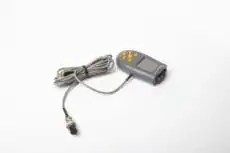
光學感測器(雷射轉速計)

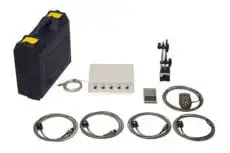
Balanset-4

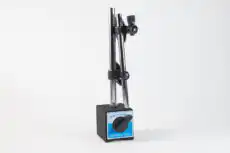
磁吸支架 Insize-60-kgf

反光膠帶

動平衡機「Balanset-1A」OEM

軟腳 is a common condition in rotating machinery in which one or more of a machine’s mounting feet fail to make full, flat contact with the baseplate or foundation they are bolted to. When the hold-down bolts are tightened, the machine’s frame or casing is forced to bend and distort to conform to the uneven mounting surface. That distortion induces significant internal stresses, and those stresses are the hidden root cause of a surprising range of reliability problems — elevated 振動, premature bearing failure, and the inability to hold a precision 對中 among them.

A simple analogy is a four-legged chair that rocks because one leg is slightly short. When someone sits on it, the chair’s frame twists until all four legs touch the floor. A machine with a soft-foot condition suffers exactly this kind of frame distortion every single time it is bolted down — except that the “chair” is a precision assembly whose bearing bores and shaft must stay true to within fractions of a millimetre.

1. The Four Types of Soft Foot

Soft foot comes in four recognised forms, and identifying which one you have dictates how you fix it:

  1. Parallel soft foot: the most common type, in which one foot is simply shorter than the others, leaving a flat, parallel air gap between the foot and the baseplate. It is corrected by adding shims of the measured thickness.
  2. Angular soft foot: occurs when a foot is bent, or the baseplate is sloped, so the foot touches down at an angle. Tightening the bolt forces the foot to bend flat against the base, springing the frame. A tapered shim or remachining is needed, not a flat stack.
  3. Squishy (induced) soft foot: caused by excessive corrosion, trapped debris, paint, or too many shims (more than four or five) under a foot. When the bolt is tightened the compressible material squashes down, producing a spongy soft foot. The cure is to clean the surface and consolidate the shim pack.
  4. External-force soft foot: created by outside forces — pipe strain, conduit, or structural bracing — pulling or pushing on the frame and lifting a foot off the base. No amount of shimming fixes it; the offending external load must be relieved (this is closely related to pipe-strain–induced distortion).

2. Why Soft Foot Is a Major Problem

The frame distortion that soft foot causes is a documented root cause of numerous machinery faults:

  • 振動增加: the internal stresses and distortion create a pre-loaded condition that can sharply raise vibration, frequently showing at 運轉轉速 (1×) and its 諧波 (2×, 3×, and so on) — which makes it easy to mistake for 不平衡 or misalignment. The distorted frame can also lower the structure’s stiffness toward a frame resonance, compounding the problem.
  • Alignment difficulties: precision alignment is impossible while a soft foot exists. As bolts are tightened and loosened during the alignment process the frame shifts unpredictably, so the readings will not repeat. Correcting soft foot is a mandatory prerequisite for precision alignment — every alignment job should begin with a soft-foot check.
  • 軸承與密封失效: distortion of the casing distorts the bearing bores, putting uneven loads on the bearings and driving premature 軸承磨損 and failure. It can also pull seals open, producing leaks and the friction patterns associated with seal defects.
  • Shaft and coupling stress: the distortion causes internal misalignment of the bearings, which can bend the shaft (a forced 軸彎曲) and overload the coupling, accelerating 聯軸器缺陷.

Soft foot is also frequently entangled with general 機械鬆動基座鬆動, so a thorough investigation checks for all three together rather than treating them in isolation.

3. How to Detect and Correct Soft Foot

Soft foot is normally found and fixed during a precision-alignment job, using dial indicators or a laser shaft-alignment system. The workflow has three stages:

  1. Initial check: with every bolt loosened, slide a feeler gauge under each foot to find any obvious gaps. This quick pass often reveals the worst offenders before instruments are even set up.
  2. Systematic measurement: for a precise result, mount a dial indicator (or the laser system’s soft-foot routine) at each foot. Zero the indicator with the bolt tight, then loosen that one bolt and read how far the foot springs up. A movement greater than about 0.05 mm (0.002 in) typically indicates a soft foot that needs correction. Loosen only one bolt at a time so you isolate each foot’s contribution.
  3. 校正: add high-quality, pre-cut stainless-steel shims under the soft foot to fill the measured gap, then re-check. Repeat across all feet until loosening any single bolt produces movement within tolerance. Keep the shim count low — stacking too many shims simply re-creates a squishy soft foot.

Calculators that speed the job

Two free tools turn these measurements into action: a soft foot calculator helps quantify the frame distortion from your indicator readings, and a 墊片厚度計算器 converts the measured gap into the exact shim pack to install. Once the feet are flat, a shaft alignment tolerance calculator sets realistic offset and angularity limits for the alignment that follows.

4. 軟腳在振動診斷中的影響

由於軟腳在頻譜中會模擬不平衡與不對心的特徵——強烈的 1× 及其諧波——這成為分析師容易掉入的經典陷阱。關鍵線索在於:當鬆開機腳螺栓時,症狀會發生變化;若鬆開單一螺栓後 1× 振動明顯下降,則問題出在機架變形(而非重點或 軸彎曲)。實務上的確認方法是使用便攜式雙通道 振動分析儀 例如 Balanset-1A 於各軸承處量測振幅與相位,然後依序鬆開各機腳螺栓,觀察 1× 向量如何變化;若某個機腳導致相位大幅偏移或振幅驟降,即為軟腳所在。先排除軟腳問題,可確保後續的動平衡校正或對心作業量測的是轉子真實狀態,而非追逐由變形機架與受損 基礎剛性.


← 返回主索引

WhatsApp
Balanset-1A · €1975Ask engineer